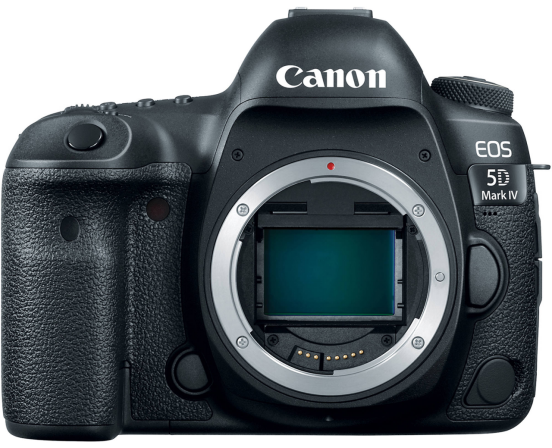
In the world of professional photography, Canon’s full-frame DSLR lineup has long been the gold standard for reliability, image quality, and performance. The EOS 5D and 1D X series represent two distinct philosophies for professional users. The 5D series is celebrated for its versatility and high-resolution sensors, making it a favorite among portrait, landscape, and wedding photographers. In contrast, the 1D X series is the undisputed king of speed and durability, built to withstand the harshest conditions for sports, wildlife, and photojournalism. This guide provides an in-depth analysis of three iconic models: the versatile Canon EOS 5D Mark IV, the classic speedster Canon EOS-1D X Mark II, and the technological flagship, the Canon EOS-1D X Mark III. By dissecting their core features, we will help you understand their unique strengths and identify the perfect tool for your creative and professional demands.
Canon EOS 5D Mark IV: The All-Around Workhorse
The Canon EOS 5D Mark IV stands as a testament to balance and versatility. It masterfully blends a high-resolution sensor with robust performance features, making it a true “jack-of-all-trades” in the professional camera market. It’s the logical evolution of a legendary line, trusted by professionals who need to deliver exceptional quality across a wide range of shooting scenarios without the extreme specialization of the 1D X series.
Core Specifications and Sensor Performance
At the heart of the 5D Mark IV is a 30.4-megapixel full-frame CMOS sensor. This resolution provides a significant advantage for photographers who require large prints or have the flexibility to crop images without a substantial loss in detail. The sensor, paired with the DIGIC 6+ image processor, delivers excellent image quality with a native ISO range of 100-32,000 (expandable to 50-102,400). A key innovation introduced in this model is Dual Pixel RAW, which allows for micro-adjustments to focus, bokeh, and ghosting in post-production, offering an extra layer of creative control.
Autofocus and Performance
The 5D Mark IV features a 61-point High-Density Reticular AF system, with 41 cross-type points for enhanced accuracy. However, its most celebrated feature is the Dual Pixel CMOS AF for Live View and video recording. This technology provides smooth, fast, and accurate rack focusing, making it a game-changer for videographers and photographers using the rear LCD screen. While its continuous shooting speed of 7 frames per second (fps) is modest compared to the 1D X series, it is more than sufficient for many applications like wedding photography and studio work.
Video Capabilities
This camera was a significant step up in video for the 5D line. It offers DCI 4K (4096×2160) video recording at up to 30 fps. It is important to note that 4K recording incurs a significant 1.64x crop, which affects the field of view of your lenses. Despite this limitation, the quality of the footage, combined with Dual Pixel AF and a fully functional touchscreen for focus pulling, makes it a highly capable tool for hybrid shooters who need both high-quality stills and professional video.
Build and Ideal Use Cases
With a weather-sealed magnesium alloy body, the 5D Mark IV is durable and built to withstand professional use. It is considerably lighter and more compact than the 1D X models, making it a more portable option. It is the ideal camera for:
- Wedding and Event Photographers: Who need a balance of resolution, low-light performance, and reliable AF.
- Portrait and Studio Photographers: Who can leverage the 30.4MP sensor for detailed, high-resolution images.
- Landscape Photographers: Who benefit from the dynamic range and detail rendition for large prints.
- Hybrid Videographers: Who require competent 4K video and industry-leading autofocus for controlled shoots.

Canon EOS-1D X Mark II: The Classic Speed Demon
The Canon EOS-1D X Mark II is a camera built for one primary purpose: capturing action at its peak. As the former flagship, it cemented Canon’s reputation in professional sports, wildlife, and photojournalism. It prioritizes blistering speed, an infallible autofocus system, and a tank-like build over sheer megapixel count, delivering a tool that simply does not miss the shot when timing is critical.
Unmatched Speed and Burst Shooting
The defining feature of the 1D X Mark II is its raw speed. It can shoot at an incredible 14 fps through the optical viewfinder with full autofocus and auto-exposure tracking. By locking the mirror up in Live View, this can be pushed even further to 16 fps. This level of performance, combined with a deep buffer that can handle a large number of RAW files, ensures that photographers can capture long, decisive sequences of action without interruption. This capability is powered by dual DIGIC 6+ processors.
Autofocus System for Action
To keep up with its burst rate, the camera is equipped with the 61-point High-Density Reticular AF II system, which features an expanded AF point coverage area. All 61 points are sensitive down to f/8, a crucial feature for wildlife photographers who frequently use teleconverters with their super-telephoto lenses. The AF system is renowned for its “sticky” tracking, tenaciously holding onto fast and erratically moving subjects, from a bird in flight to a sprinting athlete.
Robust Build and Professional Handling
The 1D X Mark II is built to endure the most demanding professional environments. Its integrated vertical grip, magnesium alloy chassis, and extensive weather sealing provide protection against dust, moisture, and physical shock. The ergonomics are designed for fast, intuitive operation, with every button and dial placed for immediate access without taking your eye from the viewfinder. It uses one CFast 2.0 card slot and one CompactFlash slot, with the CFast card being essential for unlocking the camera’s full video and buffer capabilities.
Video Features for Its Time
This model was a pioneer, bringing DCI 4K video at up to 60 fps to Canon’s DSLR line. This was a major specification at its release and remains highly relevant. Like the 5D Mark IV, it relies on the powerful Dual Pixel CMOS AF for smooth focusing during video recording. The combination of high frame rate 4K and reliable AF made it a popular choice for high-end video production and broadcast work.

Canon EOS-1D X Mark III: The Pinnacle of DSLR Technology
The Canon EOS-1D X Mark III represents the culmination of decades of DSLR engineering, seamlessly blending the traditional strengths of an optical viewfinder with the advanced technologies of mirrorless systems. It is not just an incremental upgrade; it is a revolutionary camera that redefined what a professional DSLR could be, setting a new benchmark for speed, autofocus, and video performance.
Revolutionary Autofocus with Deep Learning
The standout feature of the 1D X Mark III is its completely redesigned autofocus system. When shooting through the viewfinder, it utilizes a new 191-point AF sensor with a dedicated DIGIC 8 processor. More impressively, the AF algorithm was developed using deep-learning technology, allowing it to offer incredible head and face tracking, even when a subject’s face is obscured or turned away. In Live View, it offers the same Dual Pixel CMOS AF system but with 3,869 selectable AF positions covering nearly the entire sensor, providing mirrorless-like performance.
Blazing Speed and Buffer Performance
Powered by the new DIGIC X processor, the 1D X Mark III pushes the boundaries of speed. It achieves 16 fps through the viewfinder and a stunning 20 fps in Live View, with full AF/AE tracking in both modes. Paired with dual CFexpress card slots, the buffer is virtually limitless, capable of capturing over 1,000 RAW images in a single burst. This makes it the ultimate tool for capturing action where a missed frame is not an option.
Groundbreaking Video: 5.5K RAW
The 1D X Mark III is a cinema-grade video camera in a DSLR body. It is the first Canon EOS camera to offer 5.5K 12-bit internal RAW video recording, providing maximum flexibility in post-production. It can also shoot oversampled DCI 4K at up to 60 fps using the full width of the sensor, eliminating the crop factor found in its predecessors. With Canon Log and the ability to record in 10-bit 4:2:2, it is a truly professional filmmaking tool.
Next-Generation Connectivity and Workflow
Understanding the needs of professionals on tight deadlines, Canon equipped the 1D X Mark III with built-in Wi-Fi, Bluetooth, and GPS. It also features a high-speed Gigabit Ethernet port for stable, fast image transfer in stadium environments. The introduction of the HEIF (High Efficiency Image File) format allows for 10-bit images with more color data than JPEGs but in a similar file size, perfect for modern workflows.

Head-to-Head Comparison: Key Differentiators
While all three cameras are exceptional professional tools, their specifications and target audiences differ significantly. Understanding these differences is key to making the right investment. Below is a detailed comparison of their core features.
| Feature | Canon EOS 5D Mark IV | Canon EOS-1D X Mark II | Canon EOS-1D X Mark III |
|---|---|---|---|
| Sensor | 30.4MP Full-Frame CMOS | 20.2MP Full-Frame CMOS | 20.1MP Full-Frame CMOS (New Design) |
| Image Processor | DIGIC 6+ | Dual DIGIC 6+ | DIGIC X |
| Max Burst (Viewfinder) | 7 fps | 14 fps | 16 fps |
| Max Burst (Live View) | 4.3 fps | 16 fps | 20 fps |
| Autofocus System (OVF) | 61-Point AF (41 cross-type) | 61-Point AF II (41 cross-type) | 191-Point AF (155 cross-type) with Deep Learning |
| Max 4K Video | 4K DCI at 30p (1.64x Crop) | 4K DCI at 60p | 4K DCI at 60p (Oversampled, No Crop) |
| RAW Video | No | No | 5.5K 12-bit Internal RAW |
| Media Cards | 1x CF, 1x SD UHS-I | 1x CFast 2.0, 1x CF | 2x CFexpress Type B |
| Primary Audience | Versatile Professionals (Weddings, Portraits, Landscape) | Action Professionals (Sports, Wildlife) on a Budget | Uncompromising Professionals (Top-tier Sports, Journalism, Video) |

Choosing Your Canon Pro DSLR: A Buyer’s Guide
Selecting the right camera from this elite trio depends entirely on your primary shooting discipline, workflow requirements, and budget. Each model offers a distinct value proposition tailored to a specific type of professional.
For the Hybrid Shooter and Generalist: EOS 5D Mark IV
If your work spans multiple genres—from studio portraits and landscapes to event coverage and corporate video—the EOS 5D Mark IV is the most logical choice. Its 30.4MP sensor provides the resolution needed for detailed commercial work and large prints. Its excellent Dual Pixel AF in video, combined with a more compact form factor, makes it a flexible and highly capable tool for creators who need to do a bit of everything without compromising on quality.
For the Budget-Conscious Action Photographer: EOS-1D X Mark II
For professionals specializing in sports or wildlife who need top-tier speed and durability but are working with a more constrained budget, the EOS-1D X Mark II remains a phenomenal value. Its 14 fps burst rate and legendary AF system can still keep pace with most professional demands. While it lacks the advanced deep-learning AF and video features of its successor, it is a proven, reliable workhorse that continues to deliver world-class results in the hands of a skilled photographer.
For the Uncompromising Professional: EOS-1D X Mark III
The EOS-1D X Mark III is for the professional who demands the absolute best and for whom missing a shot is not an option. This is the camera for Olympic sports photographers, top-tier photojournalists, and high-end wildlife cinematographers. Its deep-learning AF, virtually infinite buffer, 20 fps burst speed, and groundbreaking 5.5K RAW video capabilities place it in a class of its own. It is an investment in ultimate performance, speed, and future-proof technology.
Frequently Asked Questions (FAQ)
- Q1: Is the 30.4MP sensor of the 5D Mark IV significantly better than the ~20MP sensors in the 1D X models?
- The higher megapixel count of the 5D Mark IV is a distinct advantage for photographers who require fine detail for large-scale printing or have the need to crop images heavily. For disciplines like landscape, architecture, and studio portraiture, this extra resolution is highly valuable. However, for sports, wildlife, and news, where speed of delivery and low-light performance are paramount, the ~20MP sensors of the 1D X models are optimized for faster readout speeds and superior high-ISO noise control.
- Q2: What is the real-world advantage of the 1D X Mark III’s deep-learning autofocus?
- The deep-learning AF in the 1D X Mark III is a game-changer for tracking subjects. Traditional AF systems rely on color and contrast to follow a subject. The 1D X Mark III’s system has been trained on a massive database of images, allowing it to identify and track a human head or face with incredible accuracy, even if the person turns away, is momentarily blocked, or is wearing a helmet. This results in a much higher keeper rate for complex, fast-moving action sequences.
- Q3: Why do the 1D X models use different memory cards like CFast and CFexpress?
- The choice of memory card is dictated by performance needs. The 1D X Mark II introduced a CFast 2.0 slot because standard CompactFlash cards were not fast enough to handle its 4K/60p video data rates and deep burst buffer. The 1D X Mark III moved to dual CFexpress Type B slots because this newer standard offers even faster read/write speeds, which are essential for its 5.5K RAW internal recording and its virtually limitless RAW photo buffer at 20 fps.
- Q4: Can the 1D X Mark II still be considered a professional camera today?
- Absolutely. While the Mark III offers superior technology, the Canon EOS-1D X Mark II is still a formidable camera that was the top choice for professionals worldwide just a few years ago. Its speed, autofocus performance, and durability are still well above what is required for most professional action photography. For many, it represents the best value for a high-performance, rugged DSLR for sports and wildlife.
- Q5: Does the 4K video crop on the 5D Mark IV make it unusable for professional work?
- Not at all, but it requires planning. The 1.64x crop factor means your full-frame lenses will have a field of view similar to what they would on an APS-C camera. This can be a disadvantage for wide-angle shots but can be an advantage for telephoto work, as it gives you extra “reach.” Many professional videographers have successfully used the 5D Mark IV by planning their lens choices around this crop factor, and its excellent Dual Pixel AF often outweighs this limitation for many projects.