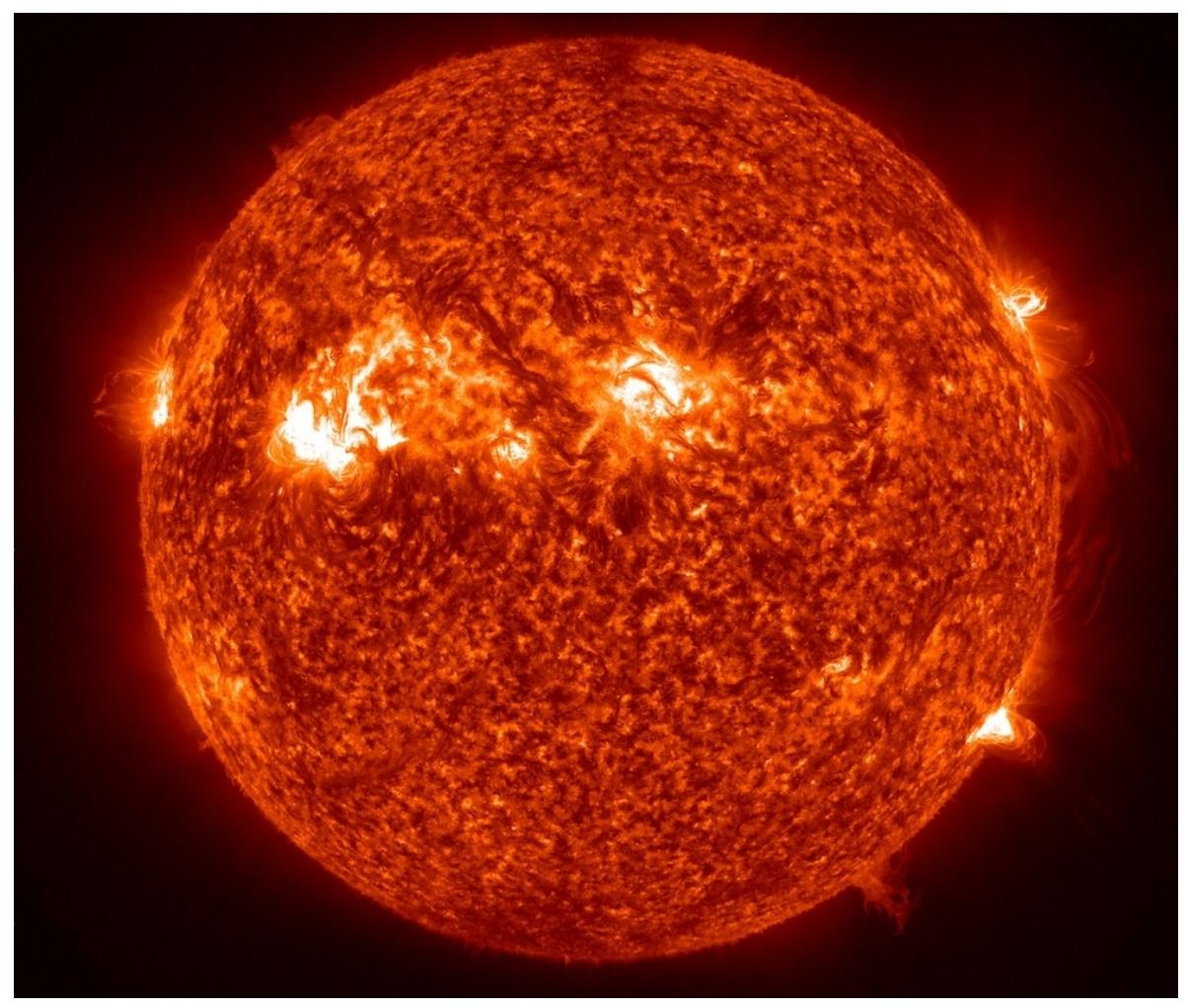
The universe is a canvas of immense power and enduring structures, from the radiant heart of our Sun to the ancient, densely packed globular clusters orbiting distant galaxies. For centuries, humanity has strived to comprehend the fundamental mechanisms governing these celestial phenomena. This comprehensive guide delves into the historical scientific pursuit to explain the Sun’s energy generation before the revolutionary insights of Einstein and nuclear physics, alongside an in-depth exploration of the complex gravitational ballet that allows globular star clusters to remain intact over cosmic timescales. We will reconstruct the progression of astronomical thought, detail the physical principles at play, and highlight the interconnectedness of these grand cosmic mysteries.
The Quest for Solar Power: Early Theories and Misconceptions
Before the 20th century dawned with its profound revelations in physics, the source of the Sun’s prodigious energy was one of astronomy’s most perplexing riddles. For millennia, explanations ranged from the mythical to rudimentary scientific conjectures, each attempting to reconcile observation with the limited understanding of the physical world. Early astronomers and natural philosophers grappled with the sheer scale of the Sun’s output, realizing that conventional terrestrial energy sources fell woefully short of explaining its sustained brilliance.
Pre-Scientific Notions and Chemical Burning Hypotheses
In antiquity, explanations for the Sun’s light and heat were often rooted in philosophical or religious beliefs, attributing its power to divine forces or an inexhaustible, magical fire. As scientific inquiry began to take root, more mechanistic explanations emerged, albeit still constrained by the knowledge of the era. One of the earliest scientific hypotheses proposed that the Sun was simply a massive ball of burning fuel, akin to a cosmic bonfire. This “chemical burning” theory suggested that the Sun was consuming some form of combustible material, releasing energy through exothermic chemical reactions.
- Limitations of Chemical Burning: While chemically plausible for smaller fires, calculations quickly revealed the inadequacy of this model for the Sun. Even if the entire Sun were made of the most efficient chemical fuel known (like coal), it would burn out in a mere few thousand years. Geological evidence, even in the 19th century, indicated Earth was far older, rendering the chemical burning hypothesis untenable for explaining the Sun’s longevity.
- Contradiction with Earth’s Age: Pioneers in geology, like Charles Lyell, were already proposing Earth’s age to be in the millions of years, a timeframe vastly exceeding the lifespan predicted by chemical combustion for the Sun. This disparity highlighted a fundamental gap in understanding the Sun’s true energy source.
The Kelvin-Helmholtz Contraction Mechanism
By the mid-19th century, with advancements in thermodynamics, a more sophisticated theory emerged from the brilliant minds of Lord Kelvin and Hermann von Helmholtz. This model, known as the Kelvin-Helmholtz mechanism, proposed that the Sun’s energy was generated not by chemical reactions, but by gravitational contraction. The idea was elegantly simple: as the Sun slowly contracts under its own immense gravity, its constituent gas particles fall inward, converting gravitational potential energy into kinetic energy, which manifests as heat and light.
- Mechanism Details: The continuous inward pull of gravity causes the Sun’s core to compress and heat up. This heat then radiates away, causing the Sun to cool slightly, which in turn leads to further contraction. This cycle provides a continuous, albeit slow, energy release.
- Estimated Lifespan: Calculations based on the Kelvin-Helmholtz mechanism suggested that the Sun could sustain its luminosity for tens of millions of years, perhaps 20 to 30 million years. This was a significant improvement over chemical burning and initially seemed plausible, especially given the lack of precise geological dating at the time.
- The Darwinian Dilemma: However, this lifespan still clashed dramatically with the emerging understanding of Earth’s history, particularly Charles Darwin’s theory of evolution by natural selection, which required hundreds of millions of years for life to diversify. Geologists were also finding increasingly older rock formations. This discrepancy created a major scientific tension, dubbed “Lord Kelvin’s timescale problem,” which challenged both physics and biology.
The Kelvin-Helmholtz mechanism, while a monumental step forward and the correct explanation for the initial heating of protostars, ultimately failed to account for the Sun’s observed age. It pointed to the need for an even more potent and long-lasting energy source, a quest that would eventually lead to the atomic realm.

Decoding Globular Cluster Stability: A Gravitational Marvel
While astronomers were pondering the Sun’s internal furnace, another profound mystery unfolded in the cosmic landscape: the enduring stability of globular clusters. These magnificent spherical collections of stars, found primarily in the halos of galaxies, defy simple explanation. Despite their incredible density—sometimes hundreds of thousands to millions of stars packed into a relatively small volume—they remain gravitationally bound and intact for billions of years, making them some of the oldest structures in the universe. Understanding their longevity requires delving into complex gravitational dynamics and stellar interactions.
Defining Globular Clusters and Their Characteristics
Globular clusters are distinct from open clusters. They are typically much older, far more massive, and significantly more compact. They are characterized by:
- High Stellar Density: Stars are incredibly close together, especially towards the core. In some globular cluster cores, stars can be only light-weeks or even light-days apart, leading to frequent close encounters.
- Spherical Symmetry: Their distinct spherical shape is a direct consequence of their strong self-gravity, pulling stars into the most efficient packing arrangement.
- Old Stellar Populations: Globular clusters are predominantly composed of very old, metal-poor stars, often dating back to the early universe (10-13 billion years old). This makes them invaluable relics for studying early galactic evolution.
- Location: They are typically found in the halo of galaxies, orbiting the galactic center in highly eccentric paths, rather than within the galactic disk.
The sheer number of stars and their proximity mean that gravitational interactions are constant and profound, yet the clusters maintain their structural integrity against destructive forces.
Gravitational Binding and Virial Equilibrium
The primary reason for a globular cluster’s stability is its overwhelming self-gravity. The collective gravitational pull of millions of stars on each other creates a deep potential well, binding them together. However, gravity alone isn’t enough; a dynamic balance is required, explained by the Virial Theorem.
The Virial Theorem, in its simplest form, states that for a stable, self-gravitating system in equilibrium, the total kinetic energy (T) of the system’s components is equal to half of the absolute value of its total gravitational potential energy (U). Mathematically, this is expressed as 2T + U = 0. This fundamental principle dictates how stars within the cluster move:
- Kinetic Energy (T): This is the energy of motion of individual stars as they orbit the cluster’s common center of mass. Stars are not static; they are in constant, complex motion.
- Potential Energy (U): This is the energy stored in the gravitational field of the cluster due to the arrangement of its stars. The closer and more massive the stars, the more negative (stronger) the potential energy.
This equilibrium ensures that the cluster neither collapses rapidly under its own gravity nor disperses due to the kinetic energy of its stars. It’s a delicate dance where stellar motions continually adjust to the gravitational field, preventing catastrophic instability over billions of years.
Internal Dynamics and Stellar Interactions
The high stellar density within globular clusters leads to frequent and significant stellar interactions, which play a crucial role in their evolution and long-term stability. These interactions are not merely destructive; they also facilitate energy exchange and can lead to new stellar configurations.
- Close Encounters: Stars regularly pass very close to each other, altering their trajectories and exchanging kinetic energy. This process tends to “heat” the cluster, meaning some stars gain enough energy to escape the cluster’s gravitational pull (known as “evaporation”), while others lose energy and sink towards the core.
- Binary Star Formation: Close encounters can lead to the formation of binary star systems or the disruption of existing ones. Binary stars act as “energy sinks” within the cluster, absorbing kinetic energy from single stars and helping to stabilize the core.
- Stellar Mergers and Collisions: While rare, direct collisions or mergers can occur, especially in the very dense cores. These events can form exotic stars like blue stragglers, which appear younger and hotter than other stars in the cluster, or even intermediate-mass black holes.
- Core Collapse: Over cosmic timescales, the cumulative effect of these interactions can lead to a phenomenon known as “core collapse,” where the very center of the cluster becomes extremely dense. However, other mechanisms, like the presence of binary stars or a central black hole, can halt or reverse this collapse.
External Influences and Tidal Forces
While internal dynamics are key, globular clusters are not isolated systems. They are subject to the gravitational influence of their host galaxy, primarily through tidal forces. Tidal forces arise from the differential gravitational pull of the galaxy on different parts of the cluster.
- Tidal Stripping: The outer regions of a globular cluster are more susceptible to the galaxy’s tidal forces. As the cluster orbits the galactic center, stars on the side closer to the galaxy experience a stronger pull than those on the far side, stretching the cluster. Stars that gain enough energy through internal interactions or are already loosely bound can be stripped away, forming tidal tails.
- Galactic Encounters: Close passages with the galactic disk or other massive structures can significantly perturb a cluster, accelerating its evaporation.
- Dark Matter’s Role: The distribution of dark matter within the galaxy’s halo influences the gravitational field that globular clusters orbit within. While dark matter doesn’t primarily bind the cluster internally, its overall gravitational contribution shapes the tidal environment and the cluster’s orbital dynamics, affecting its long-term survival against external disruption.
Despite these external pressures and the continuous internal reshuffling of stars, the strong gravitational binding and the dynamic equilibrium maintained by the Virial Theorem ensure that the vast majority of globular clusters endure as ancient, stable beacons in the galactic halo.

Bridging Cosmic Scales: From Stellar Engines to Galactic Relics
The journey from understanding the Sun’s energy source to comprehending the stability of globular clusters spans vast scales of cosmic inquiry, yet profound connections exist between these seemingly disparate phenomena. Both investigations highlight humanity’s relentless pursuit of fundamental physical laws and the intricate interplay of forces that shape the universe. The evolution of our understanding demonstrates a progressive refinement of scientific models, moving from macroscopic observations to microscopic interactions, and back to grand cosmic structures.
The Unifying Power of Fundamental Physics
At the heart of both solar energy generation and globular cluster stability lies the pervasive force of gravity and the principles of energy conservation. Before the discovery of nuclear fusion, gravity was the leading candidate for the Sun’s power, albeit insufficient in its classical form. For globular clusters, gravity remains the dominant binding force, with the Virial Theorem illustrating how gravitational potential energy balances kinetic energy to maintain equilibrium.
- Energy Transformation: In the Sun, mass is converted to energy via nuclear fusion, a process described by Einstein’s E=mc². This energy pushes outward, counteracting gravity’s inward pull, maintaining hydrostatic equilibrium.
- Gravitational Dynamics: In globular clusters, gravity dictates the orbits of millions of stars, leading to complex interactions that redistribute energy and mass, but ultimately preserve the cluster’s overall structure against dispersal.
- Interconnectedness of Stellar Evolution: The stars within globular clusters undergo their own life cycles, powered by nuclear fusion. The collective evolution of these stars, including the formation of white dwarfs, neutron stars, and even black holes, contributes to the cluster’s internal dynamics and long-term stability, influencing its mass distribution and gravitational potential.
These examples underscore how fundamental physical laws, from thermodynamics to general relativity, provide the bedrock for understanding phenomena across all cosmic scales, from the smallest atomic interactions to the largest stellar aggregations.
The Ongoing Journey of Astronomical Discovery
The scientific narratives surrounding the Sun’s power and globular cluster stability are testaments to the iterative nature of scientific progress. Each discarded theory, like the Kelvin-Helmholtz mechanism for the Sun’s primary energy source, was not a failure but a crucial stepping stone that refined our questions and pushed the boundaries of knowledge. Similarly, the study of globular clusters continues to evolve, with new observations from advanced telescopes revealing more about their internal dynamics, the role of black holes, and their formation history in the early universe.
- Technological Advancements: Modern telescopes like the Hubble Space Telescope and the James Webb Space Telescope provide unprecedented detail, allowing astronomers to resolve individual stars in distant globular clusters and study the Sun’s surface and interior with greater precision.
- Theoretical Models and Simulations: Sophisticated computer simulations now model the complex N-body interactions within globular clusters, predicting their long-term evolution and comparing these predictions against observational data. Similarly, solar models continue to refine our understanding of nuclear processes within the Sun.
- New Frontiers: The search for intermediate-mass black holes in globular clusters and the exploration of the Sun’s helioseismology (study of solar vibrations) are just two examples of how these fields continue to be active areas of research, promising further insights into the universe’s fundamental workings.
From the early speculations about solar fire to the intricate models of stellar dynamics and galactic tides, the human quest to understand the cosmos is an unending journey of curiosity, discovery, and the profound realization that everything is ultimately governed by a few elegant, universal laws.

Conclusion: The Enduring Legacy of Cosmic Inquiry
Our exploration into what astronomers thought powered the Sun before Einstein and why globular clusters remain intact over time reveals a fascinating tapestry of scientific endeavor. The progression from rudimentary chemical theories to the Kelvin-Helmholtz contraction mechanism, and finally to the triumphant understanding of nuclear fusion, marks a pivotal chapter in our comprehension of stellar energy. Simultaneously, the study of globular clusters showcases the remarkable resilience of gravitationally bound systems, where a delicate balance of internal dynamics and external forces ensures their survival across billions of years. These two narratives, while distinct in their immediate focus, are profoundly interconnected by the underlying principles of physics and the relentless human drive to uncover the universe’s deepest secrets. The journey of astronomical discovery is continuous, with each answer leading to new questions, further enriching our understanding of the cosmos and our place within it.
Frequently Asked Questions (FAQ)
- Q1: What was the primary theory for the Sun’s power before nuclear fusion was understood?
- Before the discovery of nuclear fusion, the leading theory for the Sun’s energy source was the Kelvin-Helmholtz contraction mechanism. Proposed by Lord Kelvin and Hermann von Helmholtz, this theory suggested that the Sun generated heat and light by slowly contracting under its own gravity, converting gravitational potential energy into thermal energy. While a significant scientific advancement for its time, it predicted a lifespan of only tens of millions of years, which conflicted with geological and biological evidence for Earth’s much older age.
- Q2: How does the Virial Theorem explain the stability of globular clusters?
- The Virial Theorem is crucial for explaining the long-term dynamic stability of globular clusters. It states that for a stable, self-gravitating system in equilibrium, the total kinetic energy (energy of stellar motion) is equal to half the absolute value of its total gravitational potential energy (energy stored in the gravitational field). This balance ensures that the cluster neither collapses under its immense self-gravity nor disperses due to the random motions of its constituent stars, allowing it to maintain its structure for billions of years.
- Q3: Why couldn’t chemical burning explain the Sun’s energy?
- Chemical burning was quickly dismissed as a viable energy source for the Sun because it could only power the star for a few thousand years at most. Even if the entire Sun were composed of the most efficient chemical fuel, its energy output would rapidly diminish, a timeframe that vastly contradicted observational evidence and geological findings indicating Earth and the Sun were much older. This inadequacy highlighted the need for a far more potent and sustained energy generation mechanism.
- Q4: What role do stellar interactions play in globular cluster dynamics?
- Stellar interactions, such as close encounters, binary star formation, and even rare collisions, are fundamental to globular cluster dynamics. These interactions lead to the exchange of kinetic energy among stars; some stars gain enough energy to escape the cluster (evaporation), while others lose energy and sink towards the core. Binary stars can act as “energy sinks,” helping to regulate the core’s stability. These processes, while leading to slow evolution, are part of the dynamic equilibrium that allows the cluster to persist.
- Q5: How do external tidal forces affect globular clusters?
- Globular clusters are subject to tidal forces from their host galaxy. As a cluster orbits the galactic center, the galaxy’s gravitational pull is stronger on the side of the cluster closer to the galaxy than on the side farther away. This differential pull stretches the cluster, particularly affecting its outer, more loosely bound stars. These stars can be stripped away, forming tidal tails, which can slowly erode the cluster over cosmic time. Despite this, the cluster’s dense core remains robustly bound due to its strong internal gravity.