The search for life beyond Earth is no longer confined to the observation of distant planets; it has evolved into a multi-disciplinary reconstruction of the universe’s history. Understanding habitability requires a deep dive into the chemical enrichment of the early cosmos, the specific mechanics of the most common stars in our galaxy, and the invisible magnetic forces that either protect or destroy planetary atmospheres. By synthesizing data from the first generation of stars to the potential technosignatures of advanced civilizations, we can map the “Cosmic Blueprint” that governs the existence of life in the universe.
The Primordial Origins of Life-Sustaining Water
Water is the fundamental solvent for life as we know it, but its presence in the universe was not immediate. The early universe consisted almost entirely of hydrogen and helium. The transition to a “wet” universe required the birth and death of the very first stars, known as Population III stars. These massive, short-lived giants were the crucibles where heavier elements like carbon and oxygen were first forged through nuclear fusion.
The Role of First-Generation Stars
Population III stars operated under extreme conditions, being hundreds of times more massive than our Sun. When these stars reached the end of their lifecycles, they exploded as supernovae, dispersing oxygen into the surrounding primordial gas clouds. Recent astrophysical models suggest that water vapor could have formed in the interstellar medium much earlier than previously thought—perhaps as early as a billion years after the Big Bang. This suggests that the ingredients for life were distributed across the cosmos while the universe was still in its infancy.
Chemical Enrichment of the Early Interstellar Medium
The enrichment process was not uniform. As oxygen atoms bonded with the abundant hydrogen, water molecules began to coat dust grains, forming the seeds for future planetary systems. This early “hydration” of the cosmos means that even the oldest planetary systems in the galaxy may have had access to the necessary chemical precursors for biological evolution. Understanding this timeline is crucial for identifying which regions of the galaxy have had the longest “habitability window.”

The Habitability Paradox of Red Dwarf Systems
Red dwarfs, or M-dwarfs, are the most numerous stars in the Milky Way, accounting for approximately 75% of the stellar population. Because they are smaller and cooler than the Sun, their “habitable zone”—the region where liquid water can exist—is located much closer to the star. This proximity creates a complex paradox for habitability, where the very factors that make these stars attractive for study also pose the greatest threats to life.
Tidal Locking and Atmospheric Stability
Because planets in the habitable zone of a red dwarf must orbit very closely, they are often subject to tidal locking. This means one side of the planet permanently faces the star (eternal day) while the other faces away (eternal night). For a long time, scientists believed this would lead to atmospheric collapse, with the atmosphere freezing on the dark side. However, modern climate models suggest that thick atmospheres or global oceans could redistribute heat effectively, potentially creating “twilight zones” where life could thrive.
Longevity vs. Volatility
Red dwarfs are incredibly long-lived, capable of burning for trillions of years. This provides an immense amount of time for life to evolve. However, young red dwarfs are notoriously “active,” frequently emitting massive solar flares and high-energy X-ray radiation. This volatility can strip a planet of its atmosphere entirely if the planet does not possess a strong enough magnetic field or a sufficiently dense atmosphere to replenish lost gases. The question of whether life can survive the “active” phase of a red dwarf remains a central focus of modern astrobiology.

Stellar Magnetic Activity and Planetary Protection
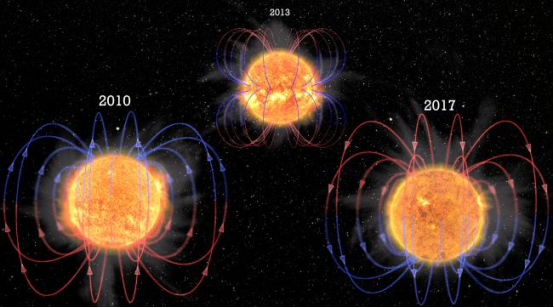
The habitability of a planet is not determined solely by its distance from a star; it is also dictated by the stellar magnetic field. A star’s magnetic activity influences the “space weather” of its system, creating a dynamic environment that can either shield or erode planetary environments. The interplay between a star’s magnetic field and a planet’s own magnetosphere is a critical factor in the retention of water and atmosphere over billions of years.
Coronal Mass Ejections and Atmospheric Stripping
Stars with high magnetic activity produce frequent Coronal Mass Ejections (CMEs). These are massive bursts of solar wind and magnetic fields that slam into planetary atmospheres. For planets orbiting close to their stars—like those around red dwarfs—the impact of CMEs is significantly magnified. Without a robust planetary magnetic field to deflect these particles, the atmosphere can be slowly “sputtered” away into space, eventually leaving the planet a barren rock similar to Mars.
The Importance of Planetary Magnetospheres
A planet’s magnetosphere acts as a primary defense mechanism. On Earth, our magnetic field deflects the majority of the solar wind, protecting our atmosphere and the life within it. In exoplanetary systems, the strength of this protection depends on the planet’s internal composition and rotation rate. Research indicates that for planets in the habitable zone of active stars, a magnetic field several times stronger than Earth’s may be required to maintain long-term habitability against the onslaught of stellar magnetic activity.

Detecting Extraterrestrial Intelligence Through Greenhouse Gases
As our observational technology improves, we are moving beyond looking for simple biosignatures (like oxygen or methane) and starting to look for technosignatures. One of the most intriguing possibilities is the detection of artificial greenhouse gases in the atmospheres of distant exoplanets. This approach assumes that an advanced civilization might intentionally or unintentionally alter its planet’s climate.
Artificial Gases as Technosignatures
Certain gases, such as chlorofluorocarbons (CFCs) or sulfur hexafluoride, do not occur naturally in significant quantities. If detected in an exoplanetary atmosphere, they would serve as a powerful indicator of industrial activity. Unlike oxygen, which can be produced by geological or photochemical processes, these complex molecules are “smoking guns” for technology. Furthermore, these gases have specific spectral signatures that can be identified using high-resolution spectroscopy.
Future Observational Capabilities
With the advent of the James Webb Space Telescope (JWST) and upcoming missions like the Habitable Worlds Observatory, our ability to probe the chemical makeup of exoplanet atmospheres is reaching unprecedented levels. By analyzing the light filtering through a planet’s atmosphere as it transits its star, astronomers can detect the presence of these “unnatural” gases. This search for technosignatures complements the search for biological life, expanding our “search net” to include civilizations that may be more advanced than our own.
Frequently Asked Questions (FAQ)
- Q1: Why are red dwarfs considered the best place to look for life if they are so volatile?
- Red dwarfs are the most common stars, and because they are small, it is easier for telescopes to detect the “dip” in light when a planet passes in front of them. Their extreme longevity also means that if life can survive the star’s early active phase, it has billions of years to evolve without the star running out of fuel.
- Q2: How did water form in the early universe without many stars?
- Water did not form immediately after the Big Bang. It required the first generation of stars to create oxygen through fusion. Once those stars exploded, the oxygen mixed with the abundant hydrogen in the universe, allowing water molecules to form in cooling gas clouds and on the surface of interstellar dust grains.
- Q3: Can a planet stay habitable if it is tidally locked?
- Yes, it is possible. While one side is always hot and the other cold, a thick atmosphere or a deep global ocean can act as a conveyor belt, moving heat from the day side to the night side. This creates a stable temperature across the planet, potentially leaving a ring of habitable land near the “terminator line” or twilight zone.
- Q4: What is the difference between a biosignature and a technosignature?
- A biosignature is a chemical or physical marker that provides evidence of past or present life (like oxygen or microbial mats). A technosignature is evidence of advanced technology, such as radio signals, mega-structures (Dyson spheres), or artificial chemicals like CFCs in an atmosphere.
- Q5: How does a star’s magnetic field affect a planet’s chance for life?
- A star’s magnetic field drives solar winds and flares. If the field is very active, it can strip away a planet’s atmosphere. However, the interaction between the star’s field and the planet’s field can also create a protective environment. Understanding this “magnetic coupling” is essential for determining if a planet can hold onto its water and air.