The pursuit of astronomical knowledge has transitioned from mere observation to active synthesis and exploration. As we deploy more advanced telescopes and deep-space probes, the data returning to Earth paints a picture of a universe that is both terrifyingly vast and surprisingly inviting. Central to this new era of discovery are three primary pillars: the identification of habitable exoplanets, the study of extreme stellar evolution, and the statistical probability of life beyond our solar system. By examining the specific case studies of Kepler-725c and Stevenson 2-18, we can better understand the environmental extremes and biological possibilities that define our galaxy.
The Discovery of Kepler-725c: A New Frontier for Humanity
The term “immigrant planet” has recently entered the astronomical lexicon, referring to exoplanets that offer conditions so similar to Earth that they could potentially host human colonies in the distant future. Kepler-725c stands as a primary candidate in this category. Located within its host star’s “Goldilocks Zone,” this planet represents a significant milestone in our search for a second home. The significance of this discovery lies not just in its existence, but in the specific atmospheric and geological signatures it presents to our sensors.
Understanding the Habitable Zone and Orbital Dynamics
The habitability of Kepler-725c is determined by its precise distance from its parent star. This distance ensures that surface temperatures are moderate enough to allow for the existence of liquid water—a fundamental prerequisite for life as we know it. Unlike gas giants, Kepler-725c is believed to possess a rocky composition, providing a stable surface for potential biological development. Its orbital period and axial tilt further suggest a seasonal cycle that, while different from Earth’s, could support complex ecological systems.
Atmospheric Composition and Biosignatures
Spectroscopic analysis is the primary tool used by astronomers to “sniff” the atmosphere of distant worlds. For Kepler-725c, initial data suggests a mix of gases that could potentially shield the surface from harmful stellar radiation. The search for biosignatures—chemical indicators such as oxygen, methane, and carbon dioxide in specific ratios—is ongoing. The presence of these gases in an unstable equilibrium would be a strong indicator of biological processes occurring on the planet’s surface.
- Liquid Water Potential: Evidence of surface temperature ranges between 0°C and 100°C.
- Geological Stability: Indications of a silicate-based crust and potential tectonic activity.
- Radiation Protection: A magnetic field strong enough to deflect solar winds.

Stevenson 2-18: Exploring the Largest Known Star in the Universe
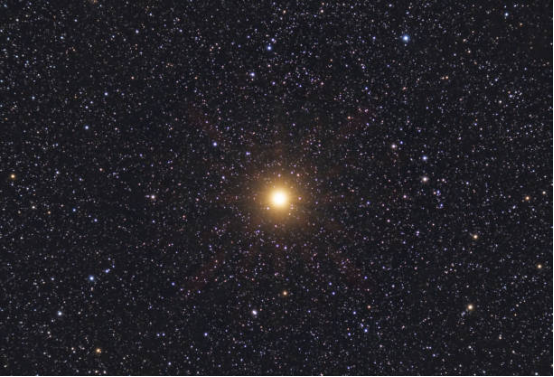
While Kepler-725c represents the potential for life, Stevenson 2-18 represents the sheer scale and power of the cosmos. As a red hypergiant, Stevenson 2-18 currently holds the title of the largest known star in the universe. Its dimensions are so vast that they defy traditional human comprehension, serving as a reminder of the extreme physical states that matter can achieve under intense gravitational and nuclear forces.
The Staggering Scale of a Red Hypergiant
To understand the size of Stevenson 2-18, one must compare it to our own Sun. If Stevenson 2-18 were placed at the center of our solar system, its outer layers would extend far beyond the orbit of Saturn. With a radius approximately 2,150 times that of the Sun, it occupies a volume nearly 10 billion times greater. This massive expansion is the result of the star reaching the late stages of its evolutionary cycle, where the core’s nuclear fusion has shifted to heavier elements, causing the outer envelope to swell outward.
| Feature | Our Sun | Stevenson 2-18 |
|---|---|---|
| Radius | 1 Solar Radius | ~2,150 Solar Radii |
| Type | G-type Main Sequence | Red Hypergiant |
| Volume Comparison | 1x | ~10 Billion x |
| Ultimate Fate | White Dwarf | Supernova / Black Hole |
The Transience of Stellar Giants
The magnificence of Stevenson 2-18 is matched only by its transience. Because hypergiants burn through their nuclear fuel at an incredible rate, their lifespans are measured in millions of years rather than billions. The internal pressure required to support such a massive structure is immense, leading to significant mass loss through powerful stellar winds. Eventually, the core will collapse, resulting in a Type II Supernova that will briefly outshine the entire galaxy before leaving behind a neutron star or a black hole.

The Eternal Question: Is There Alien Life in the Vastness of Space?
The existence of planets like Kepler-725c and stars like Stevenson 2-18 naturally leads to the question of biological diversity in the universe. Is life a cosmic fluke, or is it an inevitable consequence of physics and chemistry? From a spatial perspective, the sheer number of galaxies, stars, and planets suggests that the probability of Earth being the only inhabited world is statistically near zero. However, the Fermi Paradox—the contradiction between the high probability of extraterrestrial life and the lack of evidence for it—remains the central mystery of modern astrobiology.
The Drake Equation and Statistical Probability
The Drake Equation serves as a probabilistic framework for estimating the number of active, communicative extraterrestrial civilizations in the Milky Way galaxy. It considers factors such as the rate of star formation, the fraction of stars with planets, and the likelihood of life developing intelligence. While many variables remain speculative, the discovery of thousands of exoplanets in the last decade has significantly increased the “fraction of stars with planets” variable, making the existence of alien life more statistically likely than ever before.
Searching for Technosignatures and Intelligence
Modern SETI (Search for Extraterrestrial Intelligence) efforts have expanded beyond radio waves to include the search for technosignatures. These include anomalies such as Dyson spheres (megastructures built around stars to capture energy), atmospheric pollutants that could only be produced by industrial activity, or laser pulses used for interstellar communication. By looking for these signs, scientists hope to bypass the limitations of biological detection and find evidence of civilizations that have surpassed our own technological level.

Future Implications for Interstellar Exploration and Colonization
The synthesis of these discoveries—habitable planets, massive energy sources, and the potential for alien neighbors—is driving a new era of space exploration. We are no longer content with observing from afar; the goal has shifted toward interstellar migration and the long-term survival of the human species. This transition requires not only technological breakthroughs but also a fundamental shift in our ethical and philosophical approach to the cosmos.
Technological Hurdles and Propulsion Systems
Reaching a planet like Kepler-725c remains a monumental challenge. Current chemical rockets are insufficient for interstellar travel, as the journey would take tens of thousands of years. Research into Nuclear Thermal Propulsion, Ion Thrusters, and even theoretical concepts like Alcubierre Warp Drives is essential. Furthermore, the development of “generation ships” or advanced cryo-sleep technology will be necessary to sustain human life across the vast voids between stars.
The Ethical Dimensions of Space Expansion
As we look toward other worlds, we must consider the ethics of colonization. If a planet like Kepler-725c already hosts microbial life, do we have the right to introduce Earth-based organisms that might outcompete the local biology? The concept of Planetary Protection is now a critical part of mission planning, ensuring that we do not contaminate other worlds before we have had the chance to study them in their pristine state. Our expansion into the universe must be guided by a respect for the potential diversity of life we may encounter.
Frequently Asked Questions (FAQ)
- Q1: How far is Kepler-725c from Earth and can we reach it?
- Kepler-725c is located hundreds of light-years away. With current technology, a journey would take several millennia. However, it remains a primary target for future high-speed robotic probes designed to reach a fraction of the speed of light.
- Q2: Why is Stevenson 2-18 so much larger than the Sun?
- Stevenson 2-18 is in a late evolutionary stage known as a red hypergiant. It has exhausted the hydrogen in its core and is now fusing heavier elements, which creates massive internal pressure that causes the outer layers of the star to expand dramatically.
- Q3: Does the size of Stevenson 2-18 mean it has more planets?
- Not necessarily. In fact, the intense radiation and powerful stellar winds produced by such a massive star would likely strip away the atmospheres of nearby planets or prevent stable planetary formation altogether in its immediate vicinity.
- Q4: What is the most likely form of alien life we might find?
- Most scientists believe that microbial life is far more common than complex or intelligent life. We are likely to find bacteria-like organisms in the subsurface oceans of moons or in the atmospheres of exoplanets before we encounter technological civilizations.
- Q5: What happens when Stevenson 2-18 runs out of fuel?
- Once it can no longer sustain nuclear fusion, the star will undergo a catastrophic gravitational collapse. This will result in a supernova explosion, potentially leaving behind a black hole due to the star’s immense initial mass.