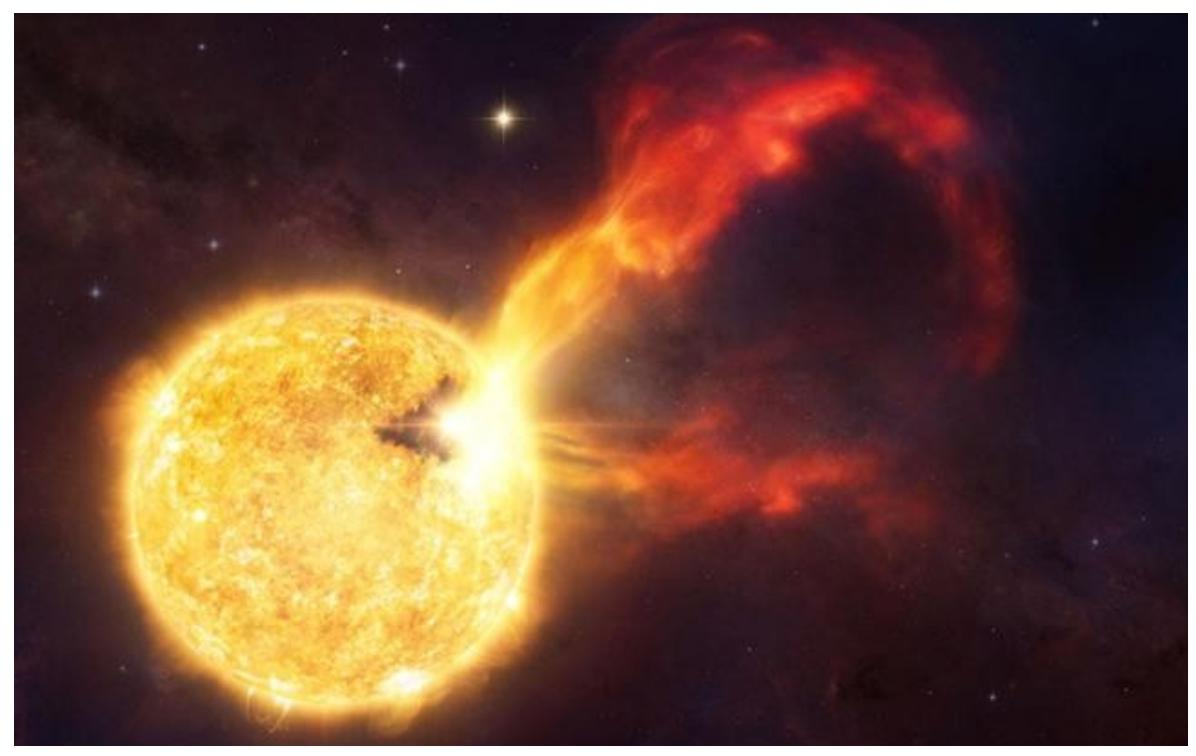
The study of stellar evolution has long painted a picture of sun-like stars as stable, life-giving anchors of planetary systems. However, recent astrophysical data from missions like Kepler and TESS, combined with high-precision spectroscopic surveys, reveal a far more turbulent reality. Sun-like stars, specifically G-type main-sequence stars, are prone to extreme energetic outbursts known as superflares and frequently engage in the gravitational destruction of their own planetary progeny. Understanding these phenomena is not merely a matter of celestial curiosity; it is vital for assessing the long-term habitability of Earth and the frequency of stable solar systems in the Milky Way galaxy.
The Volatile Nature of Sun-Like Stars
Sun-like stars are characterized by their temperature, mass, and spectral type, but their magnetic activity is what truly dictates the environment of their surrounding planets. While our Sun appears relatively calm on human timescales, it belongs to a class of stars capable of releasing energy on a scale thousands of times greater than anything recorded in modern history. These events, termed superflares, involve the sudden release of magnetic energy stored in the stellar atmosphere.
Defining the G-Type Stellar Environment
G-type stars, including our Sun, operate through a complex dynamo mechanism where the differential rotation of the star twists magnetic field lines. When these lines snap and reconnect, they release vast quantities of radiation across the electromagnetic spectrum. In “quiet” stars like our Sun, these flares are frequent but relatively low-energy. However, data suggests that even mature sun-like stars are not immune to the much more devastating superflare events that define the early lives of younger, faster-rotating stars.
The Role of Starspots in Energy Accumulation
The primary indicator of a star’s potential for a superflare is the presence of large starspots—regions of intense magnetic activity and reduced surface temperature. Observations indicate that for a star to produce a superflare, it must host starspots that cover a significant percentage of its surface area. While the Sun’s spots are usually small, other sun-like stars have been observed with spots covering up to 10% or more of their visible disk, providing the “fuel” necessary for a catastrophic magnetic reconnection event.

Understanding the Mechanics of Stellar Superflares
A superflare is defined as a flare that releases more than 10^33 ergs of energy. To put this in perspective, the most powerful solar flare ever recorded—the Carrington Event of 1859—is estimated to have released roughly 10^32 ergs. Superflares can reach 10^38 ergs, making them millions of times more powerful than a typical solar eruption. The physics behind these events is rooted in the “short-circuiting” of stellar magnetic fields.
Magnetic Reconnection and Plasma Acceleration
The process begins in the stellar corona. As magnetic flux tubes are pushed together by the motion of the stellar plasma, they eventually reach a breaking point. The resulting magnetic reconnection converts magnetic energy into kinetic energy and heat. This accelerates charged particles to near-relativistic speeds, which then strike the lower layers of the stellar atmosphere (the chromosphere and photosphere), causing them to glow brilliantly in X-rays, ultraviolet light, and visible light.
Comparative Energy Scales of Solar Events
To understand the magnitude of these events, it is helpful to compare standard solar activity with the superflares observed in the wider galaxy.
| Event Type | Energy Output (Ergs) | Frequency (Sun-like Stars) | Impact Level |
|---|---|---|---|
| Common Solar Flare | 10^29 – 10^31 | Daily/Weekly | Minor Satellite Interference |
| Carrington-class Event | ~10^32 | Once per 150-500 years | Global Power Grid Failure |
| Small Superflare | 10^33 – 10^34 | Once per 100-1,000 years | Atmospheric Ozone Depletion |
| Large Superflare | 10^35 – 10^38 | Rare (Age dependent) | Potential Mass Extinction |

The Frequency and Impact of Superflare Events
Statistical analysis of thousands of sun-like stars monitored by the Kepler space telescope has provided a startling revelation: stars almost identical to our Sun experience superflares approximately once every 100 to 1,000 years. This suggests that the Earth has likely been struck by the radiation from such events multiple times throughout its history, though perhaps not during the era of modern technological civilization.
Atmospheric Stripping and Biological Consequences
If a superflare were to strike a planet like Earth today, the consequences would be two-fold. First, the intense UV and X-ray radiation would trigger chemical reactions in the upper atmosphere, significantly depleting the ozone layer. This would allow harmful solar UV radiation to reach the surface, leading to increased mutation rates in plants and animals and disrupting the foundations of the food chain. Second, the associated Coronal Mass Ejections (CMEs) could physically strip away portions of the atmosphere over repeated events, a process that likely contributed to Mars losing its habitability.
Technological Vulnerability in the Modern Era
In the context of modern society, a superflare would be an existential threat to our infrastructure. The induced currents from the magnetic storm would likely destroy high-voltage transformers globally, leading to a multi-year power outage. Satellite constellations, including GPS and communication networks, would be rendered useless as their electronics are fried by high-energy protons. The economic and social cost would be measured in trillions of dollars.

Planetary Engulfment: When Stars Consume Their Worlds
Beyond the threat of radiation, the very existence of planets is often at risk due to the gravitational appetite of their host stars. Recent studies of “twin” stars—binary systems where both stars formed from the same cloud of gas—have shown that planetary engulfment is a common occurrence in the universe. Approximately one in four sun-like stars shows evidence of having swallowed at least one of its planets.
The Mechanics of Orbital Instability
Planetary systems are not always the stable, clockwork mechanisms we observe in our own solar system. Gravitational interactions between large gas giants, or the influence of a passing star, can kick smaller terrestrial planets into highly eccentric orbits. If a planet’s orbit takes it too close to the host star, tidal forces begin to drain its orbital energy. Eventually, the planet crosses the Roche limit and is torn apart, or it simply spirals into the stellar photosphere and is consumed.
The “Twin Star” Study Methodology
Researchers utilize binary star systems to identify engulfment because twins should, theoretically, have identical chemical compositions. When one star in a pair exhibits a significantly higher concentration of “rock-forming” elements like iron, magnesium, and lithium compared to its sibling, it serves as a “smoking gun” for planetary consumption. Because stars are primarily hydrogen and helium, the addition of a terrestrial planet (rich in heavy elements) creates a detectable chemical signature in the star’s outer layers.

Chemical Fingerprints: Identifying Cannibalistic Stars
The detection of planetary engulfment relies on high-resolution spectroscopic analysis. By breaking down the light from a star into its constituent colors, astronomers can identify the absorption lines of specific elements. Stars that have recently (on an astronomical timescale) consumed a planet show an “enrichment” of refractory elements.
The Lithium Anomaly
Lithium is a particularly useful tracer. In most sun-like stars, lithium is gradually destroyed over time as it is circulated into the hot stellar interior. However, planets are rich in lithium. If a star suddenly shows an unusually high lithium content for its age, it strongly suggests it has recently absorbed a planetary body. This chemical “pollution” eventually mixes into the star and disappears, meaning the 25% observation rate likely undercounts the true frequency of engulfment over a star’s entire lifespan.
Iron and Refractory Element Ratios
Beyond lithium, astronomers look for a specific pattern of enrichment. If a star has swallowed a planet, it will show higher levels of elements with high melting points (refractory elements) like iron, nickel, and silicon, relative to volatile elements like carbon and oxygen. This specific ratio distinguishes planetary engulfment from other processes, such as the star simply being born in a more metal-rich environment.

The Rarity of Stable Planetary Systems
The combination of superflare frequency and the prevalence of planetary engulfment suggests that the Solar System may be an outlier. The stability of Earth’s orbit and the relative “calmness” of the Sun over the last four billion years may be the exception rather than the rule for G-type stars.
Implications for the Search for Earth 2.0
When astronomers search for habitable exoplanets, they must look beyond the “Habitable Zone” (the distance where liquid water can exist). They must also consider the magnetic history of the star and the dynamical stability of the system. A planet in the habitable zone of a star that produces a superflare every century may never have the chance to develop complex life, as its atmosphere would be constantly under assault.
The Solar System as a Benchmark
Our Sun’s lack of superflares and the absence of chemical evidence for planetary engulfment suggest that our system underwent a particularly “civilized” formation process. Understanding why some systems become chaotic while others remain stable is the next great frontier in astrophysics. This research helps us refine our “Goldilocks” criteria for life, moving from a simple focus on temperature to a holistic view of stellar and orbital peace.
Frequently Asked Questions (FAQ)
- Q1: How often does our Sun experience a superflare?
- Current data suggests that our Sun is a “quiet” G-type star. While it can produce flares like the Carrington Event, truly massive superflares (10-100 times stronger) are estimated to occur on sun-like stars once every 100 to 1,000 years. There is no evidence the Sun has produced a 10^35 erg flare in recorded human history.
- Q2: What happens to a planet when it is “engulfed” by its star?
- As a planet spirals inward due to orbital decay, it is first stripped of its atmosphere by intense heat. Once it crosses the Roche limit, the star’s gravity overcomes the planet’s own gravity, breaking it into debris. This debris eventually falls into the star, melting and mixing with the stellar plasma, which alters the star’s chemical composition.
- Q3: Can we predict when the next superflare will occur?
- Currently, we cannot predict specific flare events. However, by monitoring starspot activity, astronomers can estimate the “risk” level. The larger and more complex the magnetic fields in a starspot group, the higher the probability of a major flare. For the Sun, we monitor this in real-time via satellites like SDO (Solar Dynamics Observatory).
- Q4: Why do some stars eat their planets while others don’t?
- It largely depends on the initial conditions of the protoplanetary disk. Systems with multiple large gas giants are more prone to “gravitational scattering,” where the giants’ gravity flings smaller planets inward or outward. Systems with more circular, spaced-out orbits, like ours, are much more stable over billions of years.
- Q5: Does a star’s age affect its superflare frequency?
- Yes. Younger stars rotate much faster, which generates a more powerful magnetic dynamo and more frequent, energetic flares. As stars age, they lose angular momentum and slow down, generally leading to a decrease in the frequency and intensity of flares. However, mature stars like the Sun are still capable of producing significant events.