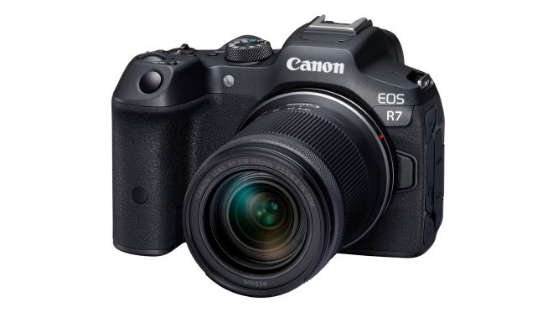
The Canon EOS R7 represents a pivotal moment in the evolution of the EOS R system. As the spiritual successor to the legendary EOS 7D series, it bridges the gap between enthusiast-level APS-C DSLRs and professional full-frame mirrorless performance. By integrating a high-resolution 32.5-megapixel sensor with the cutting-edge DIGIC X processor, Canon has created a powerhouse designed specifically for speed-intensive genres like wildlife, sports, and action photography.
High-Resolution Imaging: The 32.5MP APS-C Sensor
At the heart of the EOS R7 is a newly developed 32.5-megapixel CMOS sensor. Unlike full-frame sensors, the APS-C format provides a 1.6x “reach” advantage, effectively turning a 300mm lens into a 480mm equivalent. This makes it an invaluable tool for photographers who need to get closer to distant subjects without the bulk of massive telephoto glass.
Image Quality and Dynamic Range
The sensor is paired with the DIGIC X image processor, which optimizes signal-to-noise ratios. While APS-C sensors traditionally struggle in low light compared to full-frame counterparts, the R7 maintains impressive clarity up to ISO 12,800. The dynamic range is robust, allowing for significant shadow recovery in post-processing, which is essential for outdoor photography where lighting can be unpredictable.

Unprecedented Speed: 30fps and the DIGIC X Engine
Speed is the defining characteristic of the EOS R7. It offers mechanical shutter speeds of up to 15 frames per second (fps) and a blistering 30fps when using the electronic shutter. This level of performance was previously reserved for flagship models like the EOS R3.
RAW Burst Mode and Pre-Shooting
A standout feature for action photographers is the RAW Burst mode. This includes a “Pre-shooting” function that starts capturing images 0.5 seconds before the shutter button is fully pressed. This ensures you never miss the exact moment a bird takes flight or a player strikes a ball, effectively compensating for human reaction time.

Next-Generation Autofocus: Deep Learning and Subject Tracking
The EOS R7 utilizes Canon’s Dual Pixel CMOS AF II system, which covers 100% of the sensor area. More importantly, it inherits the deep-learning artificial intelligence algorithms found in professional full-frame bodies.
- People Tracking: Precision eye, face, and head detection for portraiture and sports.
- Animal Detection: Specifically tuned for birds, cats, and dogs, including eye tracking in flight.
- Vehicle Priority: Optimized for motorsports, focusing on helmets or the front of the car.
This intelligent tracking remains “sticky” even when subjects move erratically or are momentarily obscured by foreground objects, providing a hit rate that far exceeds older DSLR technology.

Professional Video Specs: 4K 60p and C-Log 3
The R7 is not just a stills camera; it is a highly capable hybrid video tool. It offers 4K video at up to 60p, with 4K Fine mode providing oversampled footage from 7K for incredible detail.
| Feature | Specification |
|---|---|
| Resolution | 4K UHD up to 60p / Full HD up to 120p |
| Color Grading | Canon Log 3 (C-Log 3) support |
| Bit Depth | 10-bit 4:2:2 internal recording |
| Stabilization | In-Body Image Stabilizer (IBIS) up to 8 stops |
The inclusion of C-Log 3 allows videographers to maximize dynamic range for professional color grading, while the In-Body Image Stabilization (IBIS) works in tandem with RF lenses to provide gimbal-like smoothness for handheld shooting.

Ergonomics and Build: Designed for the Field
Canon has innovated the physical layout of the R7 to enhance speed and comfort. The most notable change is the integration of the Quick Control Dial and the AF Multi-controller (joystick) into a single unit located right next to the viewfinder.
Weather Sealing and Dual Slots
To meet the demands of outdoor photographers, the R7 features weather sealing equivalent to the EOS 90D. It also includes dual UHS-II SD card slots, allowing for instant backup or overflow storage—a critical requirement for professional workflows where data integrity is paramount.

Expert Tips for Maximizing the EOS R7
To get the most out of this camera, photographers should consider the following strategic adjustments:
- Leverage RF-S Lenses: Use native RF-S lenses like the 18-150mm for the most compact setup, but don’t hesitate to adapt EF-mount L-series glass for superior optics.
- Customize AF Cases: Dive into the AF menu to adjust tracking sensitivity based on your specific subject (e.g., “Case 2” for ignoring obstacles).
- Use High-Speed Cards: To clear the buffer quickly during 30fps bursts, always use V60 or V90 rated SD cards.

Frequently Asked Questions (FAQ)
- Does the Canon EOS R7 have a record limit for video?
- The EOS R7 has removed the traditional 29-minute and 59-second limit, allowing for continuous recording up to 6 hours, provided there is sufficient battery and storage.
- Is the R7 good for low-light photography?
- While full-frame sensors are superior in extreme low light, the R7’s DIGIC X processor and IBIS allow for clean images at moderate ISOs and sharp handheld shots at slow shutter speeds.
- Can I use my old EF and EF-S lenses on the R7?
- Yes, using the EF-EOS R Mount Adapter, all older DSLR lenses work perfectly, often with improved autofocus performance compared to their native DSLR bodies.
- What is the battery life like?
- The R7 uses the LP-E6NH battery. It is rated for approximately 660 shots per charge when using the LCD, though real-world usage often yields higher numbers in burst modes.
- Does the R7 overheat during 4K video?
- In 4K 60p or 4K Fine modes, some heat buildup occurs, but it is significantly more resilient than the EOS R5/R6, making it reliable for most standard shooting scenarios.