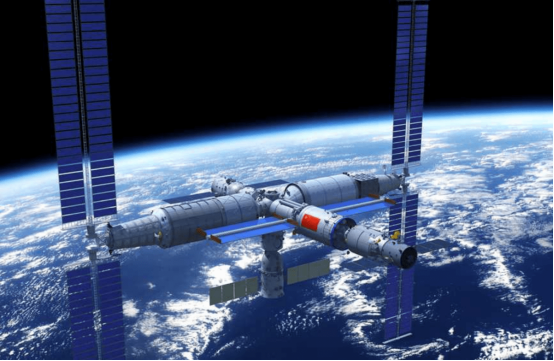
The Tiangong Space Station (CSS) marks a pivotal shift in the landscape of low-Earth orbit (LEO) habitation. Unlike previous eras defined by exclusive participation, the China Manned Space Agency (CMSA) has positioned Tiangong as a platform for “inclusive” global progress. This pillar page examines the multi-layered framework through which China is inviting the world to its celestial outpost.
The Strategic Vision of Tiangong’s International Openness
China’s approach to international space cooperation is built on the principles of equality, mutual benefit, and peaceful utilization. Through a landmark partnership with the United Nations Office for Outer Space Affairs (UNOOSA), China has opened the CSS to all UN member states, particularly focusing on developing nations that previously lacked access to orbital laboratories.
The UNOOSA-CMSA Framework
This framework serves as the primary gateway for international payloads. In the first round of selections, nine projects from 17 countries were chosen, covering fields such as space life sciences, biotechnology, and microgravity fluid physics. This demonstrates a shift from geopolitical competition to a standardized “scientific merit” model.
For research institutions looking to apply, focus on “High-Utility, Low-Mass” experiments. The CSS prioritizes projects that utilize the internal experiment racks or the external exposure platforms for long-duration material science.

Technical Standards and Modular Integration for Global Science
To facilitate international collaboration, the Tiangong Space Station utilizes standardized interfaces. However, integration requires rigorous technical alignment with China’s orbital infrastructure.
Experiment Racks and Payload Protocols
The Wentian and Mengtian lab modules are equipped with versatile experiment racks. Each rack provides standardized power, data, and cooling interfaces. Foreign researchers must ensure their hardware adheres to the “CSS Payload Interface Control Document” (ICD) to ensure electromagnetic compatibility and structural integrity during launch.
| Feature | Tiangong Standard | International Comparison |
|---|---|---|
| Docking Mechanism | APAS-Compatible (Androgynous) | Similar to NASA/ESA IDSS |
| Internal Atmosphere | 101.3 kPa (Earth-like) | Standard LEO Protocol |
| Data Transmission | High-Speed Ka-Band Relay | Comparable to TDRS System |
The Astronaut Selection and Training Protocol for Foreign Candidates
The transition from national to international crews is a complex logistical feat. Foreign astronauts will not merely be “guests” but fully integrated crew members capable of operating station systems and conducting complex repairs.
Language and Cultural Integration
A significant hurdle for international candidates is the “Language Barrier.” Unlike the ISS, where English is the primary language, the CSS internal interfaces, manuals, and ground control communications are in Mandarin Chinese. Consequently, international candidates—such as those from ESA who have already begun training—must achieve high proficiency in technical Chinese.
Survival and Systems Training
Candidates undergo grueling training at the Astronaut Center of China (ACC). This includes:
-
Sea Survival Training:
Conducted in the Yellow Sea to prepare for emergency water landings. -
Neutral Buoyancy Training:
Simulating Extravehicular Activities (EVAs) in large-scale water tanks. -
Module Operation:
Mastering the Life Support Systems (LSS) and the station’s robotic arm operations.
Future Horizons: Expanding the Tiangong Infrastructure
The current three-module configuration (Tianhe, Wentian, Mengtian) is only the beginning. CMSA has announced plans to expand the station to a six-module “cross” or “star” configuration.
The Xuntian Space Telescope
A key component of future cooperation is the Xuntian (Chinese Survey Space Telescope), which will co-orbit with Tiangong. It can dock with the station for maintenance, offering a unique opportunity for international astronomers to participate in deep-space observation projects without the need for independent, high-cost service missions.
Commercial and Multi-National Modules
There is active discussion regarding the addition of a dedicated “International Module” or commercially funded sections. This would allow sovereign space agencies to have a permanent “wing” on the station, similar to the multi-national structure of the International Space Station.
Frequently Asked Questions (FAQ)
- How can a country apply to send an astronaut to Tiangong?
- Applications are typically handled through bilateral agreements between the CMSA and the respective national space agency, or via the UNOOSA “Access to Space for All” initiative.
- Is Chinese language proficiency mandatory for foreign astronauts?
- Yes. All current systems and communication protocols on the CSS are in Mandarin. International astronauts must undergo intensive language training as part of their mission preparation.
- What types of experiments are prioritized for the CSS?
- Priority is given to microgravity fluid physics, space medicine, combustion science, and Earth observation technologies that benefit global sustainable development.
- Can private companies send payloads to the China Space Station?
- Yes, China is increasingly opening the station to commercial interests, provided the payloads meet safety standards and provide scientific or technological value.
- How does Tiangong’s lifespan affect long-term cooperation?
- The station is designed for a minimum of 10-15 years. With regular maintenance and module replacements, it is expected to be the primary orbital laboratory well into the 2030s, offering a long-term window for international research.