The Search for Extraterrestrial Artifacts: Methods and Challenges
The human fascination with life beyond Earth extends far beyond microbial existence to the tantalizing prospect of encountering advanced civilizations and their enduring legacies. This drive propels the scientific community to develop increasingly sophisticated methods for detecting what are termed “alien artifacts”—objects or structures of non-natural origin, deliberately constructed by intelligent beings. The sheer scale of the cosmos, coupled with the potential for vast technological differences, presents formidable challenges, yet the scientific pursuit remains relentless, driven by the profound implications of such a discovery.
What Constitutes an Alien Artifact?
Defining an alien artifact is crucial for guiding detection efforts. At its core, an artifact is any object that unequivocally demonstrates intelligent design and construction, distinct from natural geological, astrophysical, or biological processes. These are not merely anomalies but deliberate creations, serving a purpose for their creators, even if that purpose remains opaque to us. The spectrum of potential artifacts is immense, ranging from the mundane to the truly monumental.
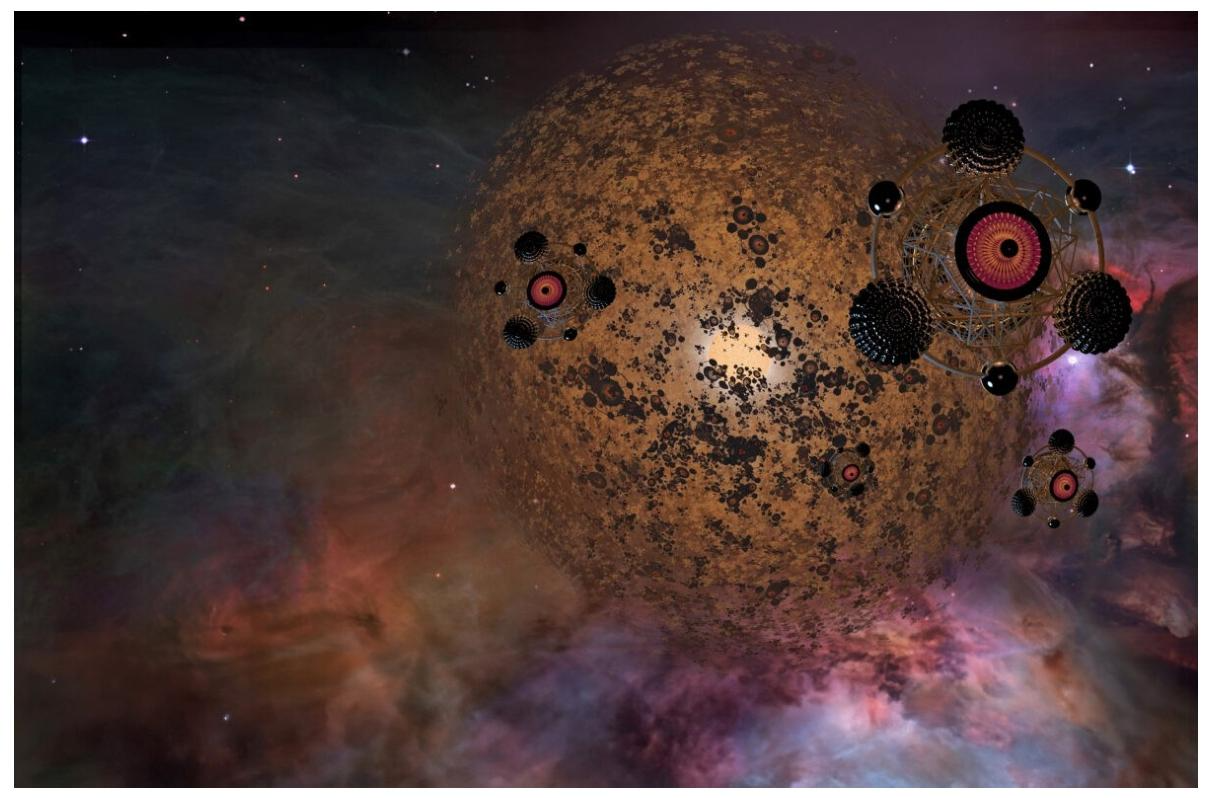
- Megastructures: These are hypothetical, large-scale constructions that could dramatically alter their environment. A prime example is a Dyson sphere or Dyson swarm, a hypothetical mega-engineering project where an advanced civilization might construct a shell or network of satellites around a star to capture a significant fraction of its energy output. Such structures would manifest as unusual infrared signatures or peculiar light curve variations from the star.
- Probes and Derelict Spacecraft: These could be smaller, interstellar vehicles, either active probes sent for exploration or communication, or remnants of past missions. Detecting such objects would require meticulous astronomical surveys looking for unusual trajectories, artificial propulsion signatures, or reflective properties inconsistent with natural space debris. The “Oumuamua” interstellar object, while ultimately classified as natural, briefly sparked discussions about its potential artificial origin due to its unusual shape and acceleration, highlighting the types of observations that could lead to artifact hypotheses.
- Mining Operations: Advanced civilizations might engage in large-scale resource extraction from asteroids, planets, or even stars. Evidence of such activities could include altered elemental compositions of celestial bodies, unusual surface modifications, or the presence of specific industrial waste products detectable through spectroscopy.
- Communication Arrays: While often associated with direct communication (SETI), the infrastructure required for such endeavors, like massive radio telescopes or laser emitters, could themselves be detectable artifacts if they are sufficiently large or produce distinct energy signatures.
Detection Strategies and Technologies
The methodologies for searching for alien artifacts span various astronomical disciplines and leverage cutting-edge technology. Each approach targets different types of potential signatures, requiring a multi-pronged investigative strategy.
- Astronomical Surveys: Large-scale sky surveys are critical for identifying anomalies.
- Unusual Energy Signatures: Telescopes search for waste heat from advanced technologies, which might appear as excess infrared radiation inconsistent with a star’s expected output. Similarly, powerful radio or laser emissions could indicate deliberate communication or energy transmission.
- Light Curve Variations: Monitoring the brightness of stars for unusual fluctuations can reveal objects transiting or orbiting them. While planetary transits are common, highly irregular, non-periodic, or asymmetric dimming events could hint at artificial structures like Dyson swarms. The star KIC 8462852 (Tabby’s Star) famously exhibited such inexplicable dips, prompting extensive research into potential megastructures before natural explanations gained traction.
- Spectral Anomalies: Analyzing the light spectrum from distant objects can reveal unusual chemical compositions in atmospheres or around stars, potentially indicative of industrial pollution or engineered environments.
- SETI (Search for Extraterrestrial Intelligence) Programs: While traditionally focused on direct communication, SETI also plays a role in artifact detection by looking for “techno-signatures”—any measurable property that indicates the presence of technology.
- Radio SETI: Large radio telescopes like Arecibo (before its collapse) and FAST constantly scan the skies for narrow-band radio signals that are unlikely to be produced by natural astrophysical processes. These signals could be deliberate broadcasts or incidental leakage from advanced technologies.
- Optical SETI: This involves searching for short, powerful laser pulses that could be used for interstellar communication, often targeting specific stars or galaxies.
- Other Techno-signatures: Beyond radio and optical, scientists are exploring searches for other techno-signatures, such as industrial pollution in exoplanet atmospheres, artificial illumination of planets, or even the deliberate restructuring of star systems.
- In-situ Exploration: For closer celestial bodies within our own solar system, direct exploration offers the highest resolution.
- Mars Rovers and Orbiters: Missions like Perseverance and Curiosity meticulously examine the Martian surface for signs of past or present life, and by extension, any potential relics. While no definitive artifacts have been found, the search continues.
- Lunar Missions: The Moon, being relatively close and geologically stable, could theoretically harbor ancient artifacts, although extensive human and natural processes complicate the search.
- Asteroid Surveys: Asteroids are ancient remnants of the solar system’s formation. Unusually shaped or composed asteroids could theoretically be monitored for signs of deliberate modification or use.
Distinguishing Artifacts from Natural Phenomena
One of the most significant hurdles in artifact detection is the imperative to definitively rule out all natural explanations. The universe is incredibly diverse and capable of producing phenomena that can mimic artificial patterns. This is where the principle of “extraordinary claims require extraordinary evidence” becomes paramount.
- Avoiding Pareidolia and Misinterpretations: The human brain is adept at finding patterns, sometimes where none exist. Scientists must rigorously guard against interpreting natural formations or astronomical anomalies as artificial simply because they appear unusual. For instance, geological structures on Mars have sometimes been misinterpreted as faces or structures, which subsequent higher-resolution imaging has debunked as natural landforms.
- The Need for Multiple Lines of Evidence: A single anomalous observation is rarely sufficient. Scientific consensus demands corroborating evidence from different instruments, different observation techniques, and ideally, independent verification. For an object to be considered an artifact, its characteristics must be irreconcilable with all known astrophysical, geological, and biological processes. This might involve demonstrating complex, non-random patterns, energy consumption far beyond natural limits, or a composition that cannot form naturally.
- Excluding Abiotic Processes: Before concluding that a structure is artificial, every possible abiotic (non-biological) explanation must be systematically investigated and disproven. This often requires deep understanding of stellar evolution, planetary geology, and atmospheric physics. For example, if an exoplanet’s atmosphere shows signs of gases typically associated with industry, scientists must first rule out all possible natural geochemical cycles that could produce those same gases.

Establishing the Discovery of Extraterrestrial Life: The Burden of Proof
While the search for artifacts focuses on technological signatures, the broader quest for extraterrestrial life encompasses everything from simple microbial organisms to complex multicellular beings. Regardless of the form, the scientific community demands an exceptionally high standard of proof before accepting any claim of life beyond Earth. This stringent protocol is designed to prevent false positives, ensure reproducibility, and maintain scientific credibility in the face of potentially world-altering news.
Defining “Life” in an Extraterrestrial Context
Before we can detect alien life, we must agree on what “life” fundamentally is. This is a complex philosophical and scientific question, even on Earth, but it becomes even more critical when considering potentially radically different extraterrestrial environments. Most astrobiologists rely on a set of core characteristics observed in terrestrial life, which are believed to be fundamental for self-sustaining, evolving systems.
- Metabolism: The ability to take in nutrients, convert them into energy, and excrete waste products. This implies a chemical system capable of harnessing energy from its environment.
- Reproduction: The capacity to create copies of oneself, ensuring the continuation of the species. This can be asexual or sexual, but involves passing on genetic or informational material.
- Adaptation and Evolution: The ability for a population to change over generations in response to environmental pressures, leading to increased fitness and diversity. This requires a mechanism for heritability and variation.
- Homeostasis: The ability to maintain a stable internal environment despite external changes.
- Cellular Organization: While not universally agreed upon for all forms of life, terrestrial life is organized into cells, which provide a distinct boundary and controlled internal environment.
The challenge intensifies when considering life that might not be carbon-based, use water as a solvent, or even be based on DNA/RNA. Hypothetical non-carbon chemistries (e.g., silicon-based life) or exotic solvents (e.g., ammonia, methane) would require re-evaluating our search parameters and detection methods, making the initial identification even more difficult.
Levels of Evidence and Scientific Consensus
The path from an initial anomalous observation to a confirmed discovery of extraterrestrial life is long and arduous, requiring multiple stages of verification and a broad scientific consensus. There is a generally accepted hierarchy of evidence that must be met.
- Initial Observations and Anomalies: This first stage involves detecting something unusual that could potentially be a biosignature. For example, an unexpected chemical compound in an atmosphere, a strange geological formation, or a peculiar energy reading. These are often exciting but remain speculative.
- Replication and Independent Verification: The anomalous observation must be repeatable. If a signal or chemical signature is detected, it must be observed again, ideally by different instruments or different research teams, to rule out instrumental error or transient phenomena. This is a cornerstone of the scientific method.
- Exclusion of All Known Terrestrial Contamination and Abiotic Explanations: This is perhaps the most critical and challenging step. Every conceivable non-biological explanation must be rigorously explored and systematically disproven.
- Terrestrial Contamination: For samples returned from space (e.g., Mars rocks), extreme measures are taken to prevent contamination by Earth microbes. Any detected biological molecules must be demonstrably extraterrestrial in origin.
- Abiotic Processes: Many molecules or structures that could be biosignatures can also be produced through natural, non-biological chemical or geological processes. For instance, methane can be produced by microbes, but also by volcanic activity or serpentinization. Scientists must understand the full range of abiotic pathways and demonstrate that they cannot account for the observed phenomenon.
- The “Five-Sigma” Standard (and its limitations for biology): In particle physics, a “five-sigma” (5σ) statistical significance is often required to claim a discovery, meaning there’s only a 1 in 3.5 million chance that the observation is a fluke. While biological discoveries don’t always fit neatly into this statistical framework due to the complexity and variability of life, the underlying principle of extremely high confidence and low probability of error remains essential. For extraterrestrial life, the standard is arguably even higher due to the profound impact of the claim.
The Role of Biosignatures and Technosignatures
The search for extraterrestrial life primarily relies on identifying specific indicators, broadly categorized into biosignatures and technosignatures.
- Biosignatures: These are substances or structures that provide scientific evidence of past or present life.
- Chemical Biosignatures: These include specific organic molecules (e.g., amino acids, fatty acids, complex polymers) that are characteristic products of biological processes. The detection of certain atmospheric gases in exoplanets, like a significant imbalance of oxygen and methane simultaneously, can be a strong indicator, as these gases tend to react and disappear quickly without constant biological replenishment. Chiral imbalances (where one “handedness” of a molecule is preferred) can also be a strong sign of life.
- Morphological Biosignatures: These are physical structures, such as microfossils (like those found in ancient Earth rocks), stromatolites (layered microbial mats), or macroscopic structures that show clear signs of biological activity or organization. The challenge here is distinguishing them from mineral formations that can mimic biological shapes.
- Isotopic Fractionation: Living organisms often preferentially use lighter isotopes of certain elements (e.g., carbon-12 over carbon-13) in their metabolic processes. Detecting an unusual ratio of isotopes in a sample could indicate biological activity.
- Technosignatures: As discussed in the context of artifacts, these are any observable manifestations of technology. While distinct from biosignatures, they represent an indirect form of life detection, pointing to intelligent, technologically capable life. They include:
- Radio Signals: Narrow-band, pulsed, or modulated radio emissions that cannot be explained by natural astrophysical phenomena.
- Laser Emissions: Powerful, coherent light pulses aimed at Earth or detectable across interstellar distances.
- Waste Heat: Excess infrared radiation from energy-intensive technological processes.
- Atmospheric Pollution: The presence of industrial gases (e.g., chlorofluorocarbons) in an exoplanet’s atmosphere that are unlikely to be produced naturally.

Case Studies and Hypothetical Scenarios in Alien Detection
While definitive proof of alien life or artifacts remains elusive, scientific missions continue to yield intriguing data, prompting extensive research and fueling hypothetical scenarios. Our solar system and the vast expanse of exoplanets offer diverse environments where life might have arisen or technology could leave its mark.
Mars: A Prime Candidate for Past or Present Life
Mars has long been a focal point for astrobiological research, primarily due to evidence suggesting it once harbored conditions favorable for life. The Red Planet’s past was significantly wetter and warmer than it is today, with ancient riverbeds, lakebeds, and polar ice caps hinting at a once dynamic hydrological cycle.
- Evidence of Liquid Water: Orbital and rover missions have confirmed the past presence of extensive liquid water on Mars, a fundamental requirement for all known life. Minerals like hematite, clays, and sulfates, which form in the presence of water, have been widely detected. More recently, evidence for transient liquid brine flows on the surface and vast subsurface ice reservoirs has been found, raising the possibility of present-day habitable niches.
- Organic Molecules: Rovers like Curiosity have detected organic molecules (carbon-containing compounds) within Martian rocks. While organic molecules are not direct proof of life (they can form abiotically), their presence is a crucial prerequisite for life and suggests that the building blocks were available. The challenge lies in determining if these organics are truly biotic in origin or if they formed through geological processes, or were delivered by meteorites.
- Methane Plumes: Periodic detections of methane in the Martian atmosphere, which is unstable and should quickly dissipate, have sparked intense interest. On Earth, methane is largely produced by biological activity. While abiotic sources (e.g., serpentinization, clathrate decomposition) are also possible, these plumes keep the possibility of extant Martian microbial life alive, perhaps deep underground where conditions are more stable.
- Challenges of Sample Return and Contamination: Future missions, such as Mars Sample Return, aim to bring Martian rock and soil samples back to Earth for more detailed analysis. This endeavor faces immense challenges related to preventing terrestrial contamination of the samples and, conversely, preventing any potential Martian microbes from contaminating Earth’s biosphere. Strict planetary protection protocols are in place to mitigate these risks.
Ocean Worlds: Europa and Enceladus
Beyond Mars, some of the most promising candidates for extraterrestrial life in our solar system are the “ocean worlds”—moons of gas giants that are believed to harbor vast subsurface liquid water oceans beneath icy shells. Europa (a moon of Jupiter) and Enceladus (a moon of Saturn) stand out.
- Subsurface Oceans and Hydrothermal Vents: Both Europa and Enceladus show strong evidence of global oceans of liquid water, kept warm by tidal heating from their parent planets. Crucially, observations suggest these oceans are in contact with rocky cores, potentially leading to hydrothermal activity similar to the deep-sea vents on Earth that support thriving ecosystems without sunlight. These vents provide chemical energy and mineral nutrients, forming a prime environment for chemosynthetic life.
- Enceladus Plumes: The Cassini mission directly observed plumes of water vapor and ice particles erupting from Enceladus’s south pole, containing salts, silicates, and complex organic molecules, including hydrogen and methane. This provides direct access to the subsurface ocean’s composition without needing to drill through kilometers of ice. The presence of hydrogen, in particular, suggests ongoing hydrothermal activity that could fuel microbial life.
- Future Missions and Detection Strategies: Upcoming missions like NASA’s Europa Clipper and ESA’s Jupiter Icy Moons Explorer (JUICE) will conduct detailed flybys of Europa, mapping its surface, probing its ocean, and searching for active plumes. Future concepts include landers or even submersibles designed to penetrate the ice and directly explore these oceans for biosignatures.
Exoplanets and Atmospheric Signatures
The discovery of thousands of exoplanets has shifted a significant portion of the life search to distant star systems. While direct imaging of exoplanet surfaces is still largely beyond our current capabilities, analyzing their atmospheres offers a powerful indirect method for detecting biosignatures.
- JWST and Future Telescopes: The James Webb Space Telescope (JWST) is revolutionizing exoplanet atmospheric characterization, capable of detecting the chemical composition of exoplanet atmospheres through transmission spectroscopy as they pass in front of their stars. Future observatories, both space-based and ground-based (like the Extremely Large Telescope), will offer even greater sensitivity.
- Searching for Atmospheric Biosignatures: Scientists look for combinations of gases that are strongly indicative of life. For example, a planet simultaneously possessing high levels of oxygen (produced by photosynthesis) and methane (produced by microbial activity) would be highly suggestive of life, as these gases rapidly react and would not persist in equilibrium without constant biological replenishment. Other potential biosignatures include nitrous oxide, ammonia, or even complex organic aerosols.
- The Problem of False Positives: A significant challenge is distinguishing true biosignatures from “false positives”—gases or anomalies that can be produced by non-biological geological or atmospheric processes. For instance, volcanic activity can release various gases, and some abiotic chemical reactions can mimic biological ones. Rigorous modeling of planetary chemistry and geology is required to rule out all non-biological scenarios before a biosignature claim can be made. The context of the planet (its star, orbital parameters, temperature) is crucial for interpretation.

Ethical and Societal Implications of Discovery
The discovery of extraterrestrial life or definitive alien artifacts would undoubtedly be the most profound scientific revelation in human history, triggering widespread ethical, philosophical, and societal repercussions. Preparing for such an event is as crucial as the scientific pursuit itself, requiring careful consideration of how humanity would react and what protocols would be necessary.
The Impact on Human Philosophy and Religion
A confirmed discovery of life beyond Earth, particularly intelligent life or its technological remnants, would fundamentally alter humanity’s perception of its place in the cosmos. For centuries, many philosophies and religions have centered on humanity’s unique status or divine creation. The existence of other life forms could challenge these anthropocentric views, prompting a re-evaluation of our origin stories, spiritual beliefs, and the very definition of consciousness and purpose.
- Re-evaluating Our Place: The knowledge that we are not alone could foster a sense of cosmic humility and interconnectedness, or conversely, provoke existential anxieties about our significance. It could inspire new philosophical movements and theological interpretations seeking to integrate this new reality into existing frameworks.
- Potential for Unity or Division: While some hope that such a discovery would unite humanity, fostering a common identity as “Earthlings” in the face of the unknown, others warn that it could exacerbate existing divisions or trigger societal upheaval if not managed carefully.
Protocols for Contact and Communication
Recognizing the immense implications, the scientific community has already begun to develop protocols for how to handle a confirmed detection of extraterrestrial intelligence (SETI Post-Detection Protocols). These guidelines aim to ensure a responsible and coordinated global response.
- SETI Post-Detection Protocols: These international guidelines, developed by the SETI Permanent Committee of the International Academy of Astronautics, outline steps to be taken upon detection of a credible signal. Key elements include:
- Verification: The first step is independent verification of the signal by other observatories to rule out terrestrial interference or instrumental error.
- Information Sharing: Once verified, the discovery should be announced to the international scientific community and the public through appropriate channels.
- International Consultation: Before any attempt to reply, there should be extensive international consultation to determine the appropriateness and content of a response, considering the potential risks and benefits.
- No Immediate Reply: The protocols generally advise against an immediate reply, emphasizing the need for careful deliberation and global consensus.
- Ethical Dilemmas of Reply: The decision to reply to an extraterrestrial signal is fraught with ethical complexities. Some argue that humanity has a moral imperative to make contact, while others warn of potential dangers, ranging from cultural shock to unforeseen threats from a potentially superior civilization. The “Great Filter” hypothesis, for example, suggests that intelligent civilizations face existential threats that prevent long-term survival, making contact a potentially risky endeavor.
Frequently Asked Questions (FAQ)
- Q1: What is the primary difference between a biosignature and a technosignature?
- A biosignature is evidence of life itself, past or present, such as specific organic molecules, microfossils, or atmospheric gas imbalances caused by biological processes. A technosignature, conversely, is evidence of technology created by intelligent life, like radio signals, laser emissions, or megastructures. While both can indicate extraterrestrial intelligence, biosignatures are broader and encompass all forms of life, whereas technosignatures specifically point to advanced, technological civilizations.
- Q2: Why is “extraordinary claims require extraordinary evidence” so important in astrobiology?
- This principle is critical because the discovery of extraterrestrial life or artifacts would have monumental implications for humanity. To avoid false positives and maintain scientific credibility, any such claim must be supported by an exceptionally high standard of proof that systematically rules out all known natural, non-biological, or terrestrial explanations. The universe is vast and capable of producing many unusual phenomena that can mimic signs of life or technology, necessitating extreme rigor.
- Q3: How do scientists differentiate between natural organic molecules and those produced by life?
- While organic molecules can form abiotically, life tends to produce specific types and arrangements of these molecules. Key differentiators include: 1) Chirality: Terrestrial life preferentially uses “left-handed” amino acids and “right-handed” sugars; an imbalance in extraterrestrial samples could be a strong biosignature. 2) Complexity and Polymerization: Life often creates complex polymers (like proteins, DNA) that are less likely to form spontaneously in the same organized manner. 3) Isotopic Fractionation: Biological processes often favor lighter isotopes of elements, leading to distinct isotopic ratios compared to abiotic formations. Contextual evidence, like the presence of cellular structures, also plays a vital role.
- Q4: What are the main challenges in detecting alien artifacts?
- The primary challenges include: 1) Vast Distances: Most potential artifacts are incredibly far away, making them difficult to resolve. 2) Distinguishing from Natural Phenomena: The universe produces many strange natural objects and events that can be mistaken for artificial constructs. 3) Unknown Technology: We are searching for technologies that might be vastly different from our own, making them hard
Science note: This article is educational astronomy communication for general readers. Dates, mission data, instrument results, and scientific interpretations can change as new observations are published. For research, safety, engineering, or mission decisions, consult primary papers, space-agency releases, and qualified professionals.