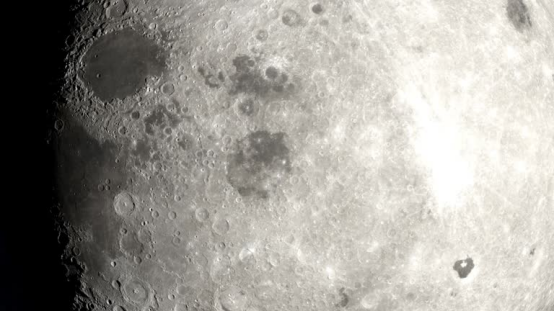
Formation and characteristics of permanent shadow areas
Some regions on the lunar surface are permanently shaded from the sun; these are called permanently shadowed areas. They are mainly located in the deep valleys and craters of polar craters. Because they cannot receive direct sunlight, the temperature remains extremely low, reaching around -270 degrees Celsius. Such low temperatures allow volatile substances, especially water ice and some volatile minerals, to exist stably for extended periods. These areas are not only ideal laboratories for astrophysical research but also important targets for future lunar base planning, as water resources have irreplaceable strategic value in space exploration and long-term habitation.
The Importance of Water Ice on the Moon
The discovery of water ice on the lunar surface offers new possibilities for human space exploration. Water resources can directly support astronauts’ lives, such as providing drinking water and oxygen, and can also be electrolyzed to produce hydrogen fuel for propulsion and energy storage. Compared to transporting water resources from Earth, in-situ utilization significantly reduces transportation costs and mission risks, providing a guarantee for long-term lunar stays and deep space exploration. Furthermore, water ice is also an important clue to studying the lunar evolutionary history. Its formation and deposition processes record information about lunar environmental changes, solar wind effects, and early meteorite impact events, providing scientific evidence for understanding planetary surface processes.
Detection techniques and methods
Techniques for detecting water ice in permanently shadowed lunar regions encompass a variety of methods, including orbital remote sensing, ground-based exploration, and in-situ analysis by landers. Orbital remote sensing primarily relies on spectroscopic imagers, infrared detectors, and radar systems to infer water ice distribution by analyzing reflection characteristics, microwave scattering, and absorption features. Ground-based exploration and in-situ analysis by landers allow for direct sampling, utilizing thermal probes, mass spectrometers, and neutron detectors to detect water ice content and physical states. Integrating multiple observation methods can reduce errors and improve the accuracy of assessing the reserves, distribution, and purity of resources in permanently shadowed regions, providing a scientific basis for lunar resource utilization.
Water ice reserves and distribution characteristics
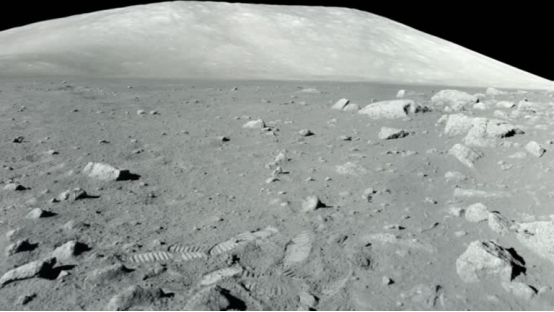
Scientific data shows that water ice in permanently shadowed lunar regions is mainly concentrated in deep craters and shadowed areas inside the polar craters, with significant differences in quantity and thickness. Some areas may contain continuous water ice layers several meters thick, while others exist in granular or mixed forms. Quantity estimates indicate that the total amount of water ice in some permanently shadowed areas of the lunar south pole could reach millions of tons. This information is of significant reference value for future base site selection and water resource development, and also helps scientists understand the long-term evolution of the lunar polar environment.
Potential for in-situ resource utilization
Future lunar base plans will prioritize in-situ resource utilization as a core strategy. Water ice can be extracted as liquid water through heating and evaporation, then filtered and electrolyzed to produce oxygen and hydrogen for breathing, drinking, and propulsion. The cryogenic environment provides natural storage conditions, reducing energy consumption. In-situ resource utilization not only lowers the cost of transporting supplies from Earth but also provides sustainable support for long-term scientific research and deep space exploration missions. Technological development also includes automated acquisition devices, storage systems, and low-energy processing facilities to ensure efficient, safe, and reliable resource utilization.
Technical Challenges and Research Progress
The utilization of lunar polar water ice faces numerous technical challenges, including extremely low temperatures, complex terrain, dust interference, and difficulties in remote operation. Data collection equipment must adapt to craters and steep slopes while ensuring long-term stable operation. Heat treatment and distillation processes require precise temperature and pressure control to prevent resource loss. In recent years, several exploration missions have made significant progress, such as orbital radar confirming the existence of water ice and lander tests validating in-situ data collection and preliminary processing technologies. Research continues to drive the development of low-power data collection, intelligent control, and modular systems, providing technological reserves for future large-scale utilization.
Scientific and strategic value
The study of water ice in the permanently shadowed regions of the Moon not only contributes to resource utilization but also provides significant scientific value. Water ice deposits record the history of lunar polar environmental changes, the influence of the solar wind, and early impact events, offering crucial clues for studying planetary evolution. Strategically, mastering the distribution and development technologies of lunar water resources will help support international lunar exploration cooperation and deep space mission deployment, laying the foundation for a long-term human presence on the Moon and other celestial bodies. The ability to develop water ice resources will directly impact the feasibility and safety of future manned deep space exploration.
International Cooperation and Future Prospects
Utilizing lunar resources is a shared goal of global space exploration. International cooperation can integrate resources from orbital exploration, lander missions, and scientific facilities, improving exploration accuracy and development efficiency. In the future, multiple countries and institutions plan to establish research bases at the lunar poles, achieving self-sufficiency through water ice extraction and in-situ resource utilization. As technology matures, lunar bases can be gradually expanded to support deep space mission resupply and energy reserves, realizing a sustainable exploration strategy. In the long term, water ice in permanently shadowed regions will not only support lunar science and exploration but also provide valuable experience for resource development on other planetary bodies.
Moral and environmental considerations
In developing lunar water ice resources, environmental protection and ethical issues must be given due consideration. Resource extraction should avoid damaging the pristine lunar environment while ensuring the sustainability of scientific research. Establishing sustainable extraction standards and monitoring systems will help balance the relationship between scientific research, resource utilization, and environmental protection. For future explorers, the rational management and utilization of lunar water resources is key to achieving a win-win situation for long-term human survival and scientific research.
Summary and Practical Implications
The detection of water ice in the permanently shadowed regions of the Moon provides a scientific and technological foundation for future lunar base construction and deep space exploration. Through remote sensing, in-situ detection, and data analysis, scientists can accurately assess the reserves and distribution characteristics of water ice. In-situ resource utilization technologies can convert water ice into drinking water, oxygen, and fuel, reducing transportation costs and supporting long-term missions. Long-term monitoring and technological innovation will ensure the safe and sustainable development of resources, providing a guarantee for a long-term human presence on the Moon and deep space exploration, while also promoting international cooperation and the development of planetary science, and accumulating valuable experience for future interplanetary exploration.