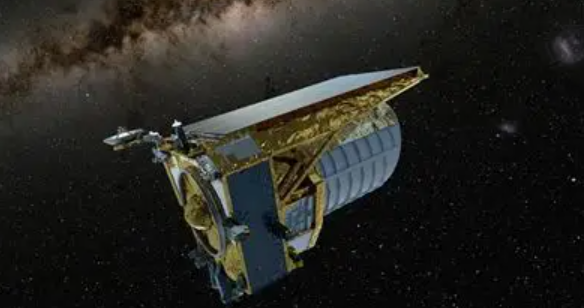
Our perception of the universe is fundamentally limited by what we can see. For centuries, astronomy relied on visible light, capturing a beautiful but incomplete picture of the cosmos. Today, a new generation of space observatories is peeling back the curtain on the invisible universe, from the vast, enigmatic structures governed by dark matter and dark energy to the dense, cool clouds of interstellar dust and gas where new stars are born. Missions like the European Space Agency’s Euclid satellite and various infrared telescopes are not just taking pictures; they are mapping the fundamental components and forces that shape reality. This guide explores the synergistic missions of these powerful tools, revealing how they are solving cosmic mysteries at both the largest and smallest scales.
Unveiling the Invisible Universe: The Role of Specialized Satellites
The universe is overwhelmingly composed of substances that do not emit, reflect, or absorb light, rendering them invisible to traditional telescopes. It is estimated that ordinary matter—everything we can see and interact with—makes up less than 5% of the cosmos. The rest is comprised of approximately 27% dark matter and 68% dark energy. To study these phenomena, we require specialized instruments that can detect their subtle effects on the visible universe. Similarly, the birthplaces of stars and planets are shrouded in thick clouds of cosmic dust, which absorb visible light and hide these crucial processes from view. This is where specialized satellites become indispensable.
Why We Need to Look Beyond Visible Light
Observing the universe in different wavelengths of the electromagnetic spectrum allows us to see different cosmic processes. While visible light reveals stars and galaxies, other wavelengths tell different stories:
- Infrared Light: This is crucial for peering through opaque dust clouds. Cooler objects, such as nascent stars (protostars) and the dust itself, radiate primarily in the infrared. Infrared astronomy is our primary tool for studying star formation and the composition of the interstellar medium.
- Gravitational Effects: Since dark matter does not interact with light, it can only be detected through its gravitational pull on the matter we can see. Satellites like Euclid are designed to map the distribution of galaxies with extreme precision to infer the underlying structure of dark matter that holds them together.
By combining data from different types of missions, astronomers can construct a multi-layered, comprehensive model of the universe. Euclid charts the large-scale cosmic web, while infrared telescopes like Spitzer and Herschel zoom in on the galactic nurseries within that web.

The Euclid Mission: Mapping the Cosmic Dark Side
Launched to address two of the most profound questions in modern cosmology, the Euclid mission is designed to create the largest and most accurate 3D map of the universe. Its primary goal is to investigate the nature of dark matter and dark energy by observing billions of galaxies out to 10 billion light-years. By understanding how the universe’s structure has evolved over time, scientists can test theories about the forces driving its accelerating expansion.
Euclid’s Core Scientific Objectives
The mission’s scientific purpose is twofold: to map the geometry of the dark universe and to study the evolution of cosmic structures. It achieves this by measuring the shapes and positions of galaxies with unprecedented accuracy. These measurements allow scientists to observe two key cosmological effects:
- Weak Gravitational Lensing: The subtle distortion of light from distant galaxies as it passes through the gravitational fields of intervening dark matter. By analyzing these tiny distortions, Euclid can map the distribution of dark matter.
- Baryon Acoustic Oscillations (BAO): These are regular, large-scale patterns in the distribution of galaxies, which act as a “standard ruler” to measure the expansion history of the universe and probe the influence of dark energy.
The Advanced Technology Aboard Euclid
To accomplish its ambitious goals, Euclid is equipped with a 1.2-meter primary mirror and two state-of-the-art scientific instruments that observe in both visible and near-infrared wavelengths:
- The Visible Instrument (VIS): This high-resolution camera captures extremely sharp images of galaxies. Its primary function is to measure the subtle shape distortions caused by weak gravitational lensing, which is essential for creating the dark matter map.
- The Near-Infrared Spectrometer and Photometer (NISP): This instrument serves two purposes. It measures the brightness of galaxies in three different near-infrared bands (photometry) and measures their spectra to determine their redshift with high precision (spectroscopy). Redshift tells us how far away a galaxy is, adding the crucial third dimension to Euclid’s cosmic map.
Together, VIS and NISP survey over a third of the sky, building a massive dataset that will allow cosmologists to create a high-fidelity map of the cosmic web—the filamentary structure of dark matter that forms the backbone of the universe.

Peering Through the Veil: Infrared Satellites and the Birth of Stars
While Euclid looks at the grandest scales, infrared satellites provide a detailed view of the microcosm within galaxies: the interstellar medium (ISM). The ISM is the repository of gas and dust between stars, serving as the raw material for future generations of stars and planets. This medium is often cold and dense, making it opaque to visible light but transparent to infrared radiation.
The Importance of Infrared Astronomy
Infrared astronomy is essential for understanding the life cycle of stars and galaxies. By detecting the heat radiated by cosmic dust and cool gas, infrared telescopes can:
- Reveal Hidden Star Nurseries: They can penetrate the dense molecular clouds where stars are born, allowing us to observe protostars and young stellar objects directly.
- Trace the Distribution of Gas and Dust: Mapping the ISM helps us understand galactic structure and the processes that trigger star formation.
- Study the Chemistry of Space: Infrared spectroscopy can identify the chemical composition of interstellar clouds, including complex organic molecules that are the building blocks of life.
How Infrared Telescopes Observe the Microcosm
To detect faint infrared signals from space, the telescopes themselves must be incredibly cold. If the telescope were warm, its own heat radiation would overwhelm the faint cosmic signals. Therefore, infrared satellites are equipped with sophisticated cooling systems, often using liquid helium to bring the detectors to temperatures just a few degrees above absolute zero. Missions like the Spitzer Space Telescope and the Herschel Space Observatory have provided groundbreaking infrared views of the universe, mapping everything from planet-forming disks around nearby stars to the dust content of the most distant galaxies.
These observations reveal a dynamic and complex environment. We can see shockwaves from supernova explosions compressing gas to trigger new star formation, and we can observe the intricate filamentary structures within molecular clouds where dense cores collapse under gravity to form the next generation of stars.

A Unified Vision: Connecting the Macro and Micro Cosmos
The discoveries made by Euclid and infrared satellites are not isolated; they are deeply interconnected. Understanding the processes within galaxies, such as star formation, is crucial for interpreting the large-scale structures that Euclid observes. The properties of galaxies—their brightness, shape, and star formation rate—are influenced by their position within the cosmic web and the amount of gas they can accrete.
How Local Physics Informs Global Cosmology
The data from infrared missions provides essential “ground truth” for cosmological models. For example, to use galaxies as tracers of the cosmic web, we must understand their intrinsic properties. The light from a distant galaxy, which Euclid observes, has been traveling for billions of years. Its properties are a snapshot of a much younger universe. Infrared observations of nearby and distant galaxies help us understand how star formation rates and dust content have evolved over cosmic time. This knowledge is critical for calibrating the measurements used to study dark energy and dark matter.
The Interplay Between Galaxy Evolution and the Cosmic Web
The cosmic web, mapped by Euclid, is not just a static scaffold. It acts as a network of cosmic highways, funneling cold gas along its filaments into the nodes where galaxies form and grow. Infrared satellites can observe this gas and the resulting bursts of star formation within these galaxies. By combining Euclid’s map of the dark matter distribution with infrared maps of star-forming activity, scientists can directly study the relationship between the large-scale environment and the lifecycle of galaxies. This unified approach allows us to build a complete narrative of the universe, from the initial quantum fluctuations to the formation of stars, planets, and ultimately, us.
Frequently Asked Questions (FAQ)
- What is the main difference between the Euclid satellite and an infrared satellite like Spitzer?
- The primary difference lies in their scientific goals and observational wavelengths. Euclid is a cosmology mission designed to map the large-scale structure of the universe in visible and near-infrared light to study dark matter and dark energy. Its focus is on the distribution and shapes of billions of galaxies. An infrared satellite like Spitzer or Herschel is designed to observe in longer infrared wavelengths to study cooler objects. Its focus is on the microcosm: the processes of star and planet formation hidden within clouds of interstellar dust and gas.
- Why can’t the Hubble Space Telescope do what Euclid does?
- While the Hubble Space Telescope can take incredibly detailed images, its field of view is very small (like looking through a keyhole). It would take centuries for Hubble to survey the vast area of the sky that Euclid will map in just a few years. Euclid is a survey telescope, designed for wide-field observations to capture statistical data on billions of galaxies, which is necessary for cosmological analysis like measuring weak gravitational lensing across the entire sky.
- How does interstellar dust affect observations of dark energy?
- Interstellar dust can absorb and scatter light, a phenomenon known as “extinction.” When observing distant objects like supernovae, which are used as standard candles to measure cosmic distances and probe dark energy, this dust can make them appear fainter and redder than they actually are. Infrared observations are crucial for quantifying the amount of dust along the line of sight, allowing astronomers to correct for this effect and obtain accurate distance measurements, which are vital for understanding dark energy.
- Can dark matter be directly observed by infrared telescopes?
- No, dark matter cannot be directly observed by any telescope, including infrared ones, because it does not interact with electromagnetic radiation (light) in any known way. We can only infer its presence through its gravitational effects. Euclid maps dark matter by observing how its gravity bends the light of distant galaxies. Infrared telescopes contribute indirectly by helping us better understand the properties of those visible galaxies, which improves the accuracy of the dark matter maps.
- Are the cosmic web and the interstellar medium related?
- Yes, they are related by scale. The cosmic web is the largest known structure in the universe, a vast network of dark matter filaments spanning millions of light-years. Galaxies form at the nodes of this web. The interstellar medium (ISM) is the gas and dust found *inside* these individual galaxies. The cosmic web feeds galaxies with pristine gas from intergalactic space, which then becomes part of the galaxy’s ISM, fuels star formation, and contributes to the galaxy’s growth and evolution.