Understanding the Impact of Urban Light Pollution on Deep-Sky Imaging
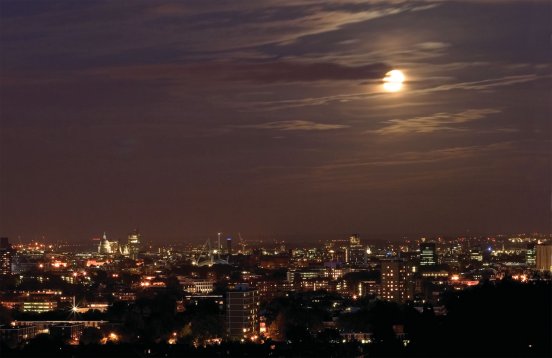
Capturing the faint light of distant galaxies, nebulae, and star clusters from an urban backyard is a significant challenge. The primary obstacle is skyglow—the artificial radiance caused by human-made light sources such as LED streetlights, high-pressure sodium lamps, and general urban illumination. This light scatters in the atmosphere, creating a background noise that overwhelms the subtle photons emitted by deep-sky objects.
The Physics of Skyglow
Skyglow is not uniform. It consists of specific wavelengths of light. Older sodium-vapor lights emit light primarily in the yellow-orange spectrum, while modern broad-spectrum white LEDs emit light across the entire visible spectrum. Understanding this spectral composition is the first step in selecting the correct filtering technology to isolate your target signal.

Comparative Principles of Broadband and Narrowband Filtering
To combat urban light, astrophotographers utilize specialized optical filters. These are categorized into two main types: broadband (Light Pollution Reduction/LPR) and narrowband (Multi-bandpass or Line filters).
Broadband Filters: The General Solution
Broadband filters work by suppressing specific wavelengths associated with common street lighting while allowing the rest of the visible spectrum to pass through. These are best suited for broadband targets like galaxies and star clusters, where you need a full-color representation of the object.
Narrowband Filters: The Urban Specialist
Narrowband filters are extremely selective, allowing only a very thin slice of the spectrum to pass—typically the light emitted by ionized gases like Hydrogen-Alpha, Oxygen-III, and Sulfur-II. Because these filters block almost everything except the specific emission lines of nebulae, they are incredibly effective at rendering high-contrast images, even from the center of a major city.
| Filter Type | Best For | Urban Efficiency | Color Accuracy |
|---|---|---|---|
| Broadband (LPR) | Galaxies, Reflection Nebulae | Moderate | High |
| Narrowband (Dual-Band) | Emission Nebulae | Very High | False Color (SHO/HOO) |
| CLS (City Light Suppression) | General Purpose | Moderate | Good |
Strategic Implementation and Pro Tips
Choosing the right filter is only half the battle. To truly excel in urban astrophotography, you must balance your equipment choices with proper acquisition techniques.
- Calibrate Your Background: Always take flat frames and dark frames, especially when using aggressive narrowband filters, to ensure the filter’s vignetting or artifacts are removed during stacking.
- Prioritize Targets: If you are in a Bortle 8 or 9 zone, prioritize emission nebulae that respond well to narrowband filters. Galaxies will remain difficult regardless of the filter used.
- The “Less is More” Rule: Do not over-process your images. Urban images often require careful background extraction (using tools like GraXpert) to remove the residual gradient left by local light domes.
Frequently Asked Questions (FAQ)
- Can I use a light pollution filter for solar system imaging?
- Generally, no. Light pollution filters are designed for deep-sky objects. Planets and the moon are bright enough that these filters often create unnecessary color shifts or reduce image sharpness.
- Do I need a filter if I am shooting with a cooled CMOS camera?
- Yes. While cooled cameras reduce thermal noise, they do not block external light pollution. A filter is still required to improve the signal-to-noise ratio against the urban sky background.
- What is the difference between a CLS filter and a UHC filter?
- CLS filters are typically designed for light-polluted skies to maintain color balance, whereas UHC filters are more aggressive and designed to increase the contrast of emission nebulae specifically.
- Are there any downsides to using narrowband filters?
- The primary downside is exposure time. Because narrowband filters block so much light, you will need significantly longer total integration times to achieve a clean signal compared to shooting from a dark sky site.