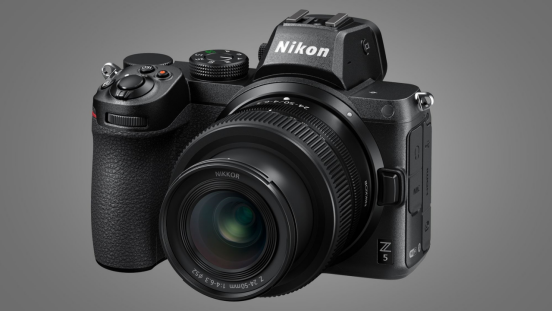
The transition from APS-C (crop sensor) to full-frame photography has historically been a significant financial hurdle for most photographers. However, the Nikon Z5 has effectively dismantled this barrier. Positioned as the entry point to Nikon’s prestigious Z-series full-frame lineup, the Z5 does not compromise on the essentials that professional photographers demand. By balancing cost-effective hardware choices with high-end ergonomics and features, Nikon has created a “gateway” camera that provides the depth of field, dynamic range, and low-light performance inherent to larger sensors.
The Evolution of Full-Frame Accessibility
For decades, full-frame sensors were the exclusive domain of professional DSLRs. The advent of mirrorless technology allowed for smaller bodies, but prices remained high. The Nikon Z5 changes the narrative by utilizing a 24.3-megapixel CMOS sensor that, while not back-illuminated like its sibling the Z6, delivers stunning image quality that far surpasses any crop-sensor alternative in the same price bracket.
The Why Behind the Sensor Choice
Nikon opted for a traditional CMOS design to keep the Z5 affordable. While BSI (Back-Side Illuminated) sensors offer a slight edge in extreme high-ISO situations, the Z5’s sensor performance remains exceptional up to ISO 12,800. For portrait, landscape, and street photographers, the difference is negligible, making the Z5 a strategic masterpiece in value engineering.

Technical Breakdown: Sensor and Processing Power
At the heart of the Nikon Z5 is the EXPEED 6 image-processing engine. This is the same processor found in higher-end models, ensuring that the camera handles data quickly and efficiently. Whether you are shooting in RAW or JPEG, the color science is unmistakably Nikon—natural skin tones, vibrant landscapes, and accurate white balance.
Standard ISO Range and Dynamic Range
The Z5 offers a native ISO range of 100–51,200. The dynamic range at base ISO is a standout feature, allowing photographers to recover significant detail from shadows in high-contrast scenes. This makes it an ideal tool for landscape photographers who need to capture the subtle nuances of a sunrise or sunset without losing detail to noise.

In-Body Image Stabilization and Low Light Performance
One of the most significant upgrades the Z5 offers over entry-level DSLRs is the 5-axis In-Body Image Stabilization (IBIS). This system provides up to five stops of compensation, allowing you to shoot at much slower shutter speeds than would otherwise be possible.
- Static Subjects: Achieve sharp handheld shots at 1/10th of a second.
- Video Smoothness: Reduces the “jitter” associated with handheld filming.
- Vintage Lens Support: Since the stabilization is in the body, even adapted manual-focus lenses benefit from IBIS.

Ergonomics, Durability, and Dual Card Slots
Unlike many “budget” models from competitors, Nikon did not strip away the professional build quality. The Z5 features a magnesium alloy chassis and extensive weather sealing, protecting it from dust and moisture. This is a camera designed to be used in the real world, not just in a studio.
Professional Storage Solutions
A major win for the Nikon Z5 is the inclusion of dual UHS-II SD card slots. This allows for instant backup (overflow or backup mode), which is a critical requirement for wedding and event photographers. Having two slots provides peace of mind that a single card failure won’t result in the loss of a client’s irreplaceable memories.

Strategic Comparison: Nikon Z5 vs. The Competition
When evaluating the Nikon Z5, it is important to see how it stacks up against its siblings and competitors. The following table highlights why the Z5 is often the smarter financial choice for those who don’t prioritize high-speed video.
| Feature | Nikon Z5 | Nikon Z6 II |
|---|---|---|
| Sensor Type | 24.3MP CMOS | 24.5MP BSI CMOS |
| Card Slots | 2x SD (UHS-II) | 1x CFexpress, 1x SD |
| Max Burst | 4.5 fps | 14 fps |
| Video | 4K (1.7x Crop) | 4K (Full Frame) |
| Price Point | Affordable/Budget | Mid-Range/Pro |

Expert Verdict: Who Should Buy the Nikon Z5?
The Nikon Z5 is the perfect tool for specific types of creators. If you are a portrait photographer, the Eye-Detection AF works brilliantly to keep your subject’s eyes tack-sharp. If you are a travel photographer, the USB power delivery allows you to charge the camera on the go via a power bank.
Pro Tips for Nikon Z5 Users
- Enable Eye-AF: Go into the Custom Setting Menu (a4) to ensure Auto-area AF includes face and eye detection for both humans and animals.
- Use Native Z-Lenses: While the FTZ adapter works perfectly, the native S-Line lenses take full advantage of the Z-mount’s short flange distance for maximum corner-to-corner sharpness.
- Customize the “i” Menu: Map your most-used settings like ISO, Silent Photography, and Focus Mode to the “i” button for rapid access.
Frequently Asked Questions (FAQ)
- Is the Nikon Z5 good for video?
- The Nikon Z5 is capable of 4K video, but it applies a 1.7x crop. It is excellent for 1080p content and casual 4K clips, but dedicated videographers might prefer the Z6 II for full-frame 4K.
- Does the Nikon Z5 have a built-in flash?
- No, like most professional mirrorless cameras, the Z5 does not have a built-in flash. This allows for better weather sealing and a more robust pentaprism design for the EVF.
- Can I use my old Nikon DSLR lenses on the Z5?
- Yes, by using the Nikon FTZ or FTZ II adapter, you can use almost any F-mount Nikon lens with full autofocus and auto-exposure support (for AF-S and AF-P lenses).
- How is the battery life on the Z5?
- The Z5 uses the EN-EL15c battery, which is rated for approximately 470 shots per charge. In real-world usage, you can often get over 600-700 shots, especially when using the power-saving modes.
- Is the Nikon Z5 weather-sealed?
- Yes, the Z5 features the same level of weather sealing and dust resistance as the higher-end Nikon Z6 and Z7 models, making it suitable for harsh environments.