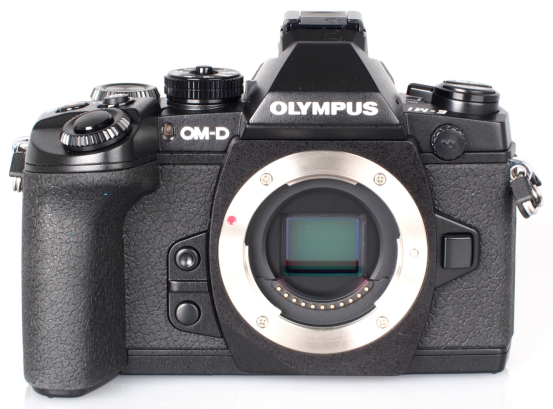
The Olympus OM-D E-M1 series stands as a testament to the potential of the Micro Four Thirds (MFT) system. Since its inception, this flagship line has consistently challenged the dominance of full-frame DSLRs and mirrorless rivals by prioritizing portability, ruggedness, and cutting-edge computational photography. For professional photographers and enthusiasts alike, the E-M1 series represents a unique balance where technological innovation meets ergonomic perfection. Whether it is the pioneering spirit of the original E-M1 or the high-speed capabilities of the Mark II and Mark III, each iteration has pushed the boundaries of what a compact camera system can achieve in demanding environments.
The Original Olympus OM-D E-M1: A Mirrorless Pioneer
When the original Olympus OM-D E-M1 was released, it served as a critical bridge between the legacy Four Thirds DSLR system and the emerging Micro Four Thirds mirrorless ecosystem. It was designed to satisfy professionals who were hesitant to abandon their high-quality Zuiko Digital lenses while transitioning to a smaller form factor. The E-M1 achieved this through a sophisticated Dual FAST AF system that utilized both Contrast Detection and Phase Detection pixels directly on the sensor, ensuring that legacy lenses performed with the same speed and accuracy as native MFT glass.
Bridging the Gap Between DSLR and Mirrorless
The integration of the 16.3-megapixel Live MOS sensor was a significant leap forward. While some critics questioned the resolution compared to full-frame sensors, the E-M1 proved that image quality is a multi-faceted equation involving sensor readout speed, processor efficiency, and lens quality. The removal of the low-pass filter allowed for sharper details, while the TruePic VII image processor effectively managed noise at higher ISO settings. This camera wasn’t just a replacement for the E-5 DSLR; it was a declaration that mirrorless technology had reached professional maturity.
Rugged Design and Ergonomic Excellence
One of the defining characteristics of the E-M1 was its robust build. Featuring a magnesium alloy body and extensive weather sealing, it could operate in temperatures as low as -10°C and withstand heavy rain or dust. The ergonomics were equally impressive, featuring a deep, comfortable grip that allowed for stable handling even when paired with larger telephoto lenses. This focus on “field-readiness” became the hallmark of the E-M1 series, appealing to wildlife and landscape photographers who required equipment that could survive the elements.

Olympus OM-D E-M1 Mark II: Speed and Precision Redefined
The arrival of the Olympus OM-D E-M1 Mark II marked a monumental shift in performance, particularly in the realm of speed. Olympus engineered this camera to compete directly with high-end sports DSLRs, introducing a new 20.4-megapixel Live MOS sensor and the powerful TruePic VIII dual quad-core processor. This combination enabled the camera to achieve staggering burst rates that were previously unheard of in the mirrorless segment, making it a favorite for action photographers.
Pro-Level Speed and the Pro Capture Mode
The Mark II’s headline feature was its ability to shoot at 60 frames per second (fps) with AF/AE lock using the electronic shutter, and up to 18 fps with continuous autofocus. To complement this speed, Olympus introduced Pro Capture Mode. This innovative feature begins recording frames the moment the shutter button is half-pressed, buffering up to 35 images. Once the shutter is fully depressed, those buffered images are saved, ensuring that photographers never miss the decisive moment due to human reaction time or shutter lag.
Revolutionary Image Stabilization and 4K Video
The In-Body Image Stabilization (IBIS) system was significantly upgraded in the Mark II, offering up to 5.5 stops of compensation on its own, and up to 6.5 stops when paired with Sync IS-compatible lenses. This allowed for handheld long exposures that would be impossible on other systems. Furthermore, the Mark II was the first in the series to embrace high-end video, offering Cinema 4K (4096 x 2160) at a bit rate of up to 237 Mbps. This made the camera a versatile tool for hybrid shooters who needed professional video quality in a portable package.

Olympus OM-D E-M1 Mark III: The Computational Powerhouse
The Olympus OM-D E-M1 Mark III took the foundation of the Mark II and infused it with advanced computational photography features driven by the TruePic IX processor. While it retained the 20.4MP sensor, the internal logic was overhauled to simplify complex photographic tasks, such as long exposures and high-resolution imaging, without the need for bulky accessories like tripods or external filters.
Intelligent Features: Live ND and Starry Sky AF
One of the most celebrated additions was Live ND, which digitally simulates the effect of a neutral density filter. This allows photographers to capture smooth water or cloud movement in broad daylight without needing physical glass filters. Another breakthrough was Starry Sky AF, a dedicated autofocus algorithm specifically designed to lock onto stars with pinpoint accuracy. This eliminated the frustrating manual focusing process typically required for astrophotography, making the E-M1 Mark III an essential tool for night-sky enthusiasts.
Handheld High Res Shot and Enhanced IBIS
The Mark III pushed the boundaries of stabilization even further, reaching 7.0 stops of compensation (and up to 7.5 stops with Sync IS). This stability enabled the Handheld High Res Shot mode, where the camera quickly captures 16 images and merges them into a single 50-megapixel file. This feature provided the resolution of a medium-format camera while maintaining the freedom of handheld shooting. Additionally, the improved Face and Eye Priority AF algorithms ensured that portrait photographers could rely on the camera to track subjects accurately even in crowded scenes.

Olympus E-M1X: The Professional Monster for Sports and Wildlife
The Olympus E-M1X was designed as a specialized professional tool, prioritizing absolute durability, thermal management, and advanced AI-driven subject tracking. Unlike the standard E-M1 bodies, the E-M1X features an integrated vertical grip, housing two batteries and providing identical controls for both horizontal and vertical shooting. This “monster-level” camera was built specifically for the rigors of professional sports and wildlife photography.
AI-Powered Subject Detection and Tracking
The E-M1X introduced Intelligent Subject Detection AF, powered by dual TruePic VIII processors. This system uses deep learning technology to recognize and track specific subjects, including airplanes, trains, and motor vehicles (later updated to include birds). By offloading the processing to dual chips, the camera can maintain a high frame rate while simultaneously calculating complex tracking data, ensuring that fast-moving subjects remain in sharp focus regardless of their path through the frame.
Extreme Durability and Professional Workflow
The build quality of the E-M1X is legendary. It features a heat-dissipation system that prevents overheating during high-speed burst shooting or 4K video recording, a common issue in smaller mirrorless bodies. Its weather sealing exceeds IPX1 standards, making it one of the most weather-resistant cameras on the market. Furthermore, the inclusion of built-in field sensors—such as a GPS, manometer, compass, and temperature sensor—allows photographers to record environmental metadata directly into their image files, which is invaluable for scientific and travel photography.

Comparative Analysis: Technical Specifications and Performance
To understand the progression of the E-M1 series, it is essential to look at how the core specifications have evolved over nearly a decade of development. The transition from the original 16MP sensor to the 20.4MP sensor used in later models provided better dynamic range and noise performance, while the processing power grew exponentially to support computational features.
| Feature | E-M1 (Original) | E-M1 Mark II | E-M1 Mark III | E-M1X |
|---|---|---|---|---|
| Sensor | 16.3MP Live MOS | 20.4MP Live MOS | 20.4MP Live MOS | 20.4MP Live MOS |
| Processor | TruePic VII | TruePic VIII | TruePic IX | Dual TruePic VIII |
| IBIS | 5.0 Stops | 6.5 Stops (Sync IS) | 7.5 Stops (Sync IS) | 7.5 Stops (Sync IS) |
| Burst Rate | 10 fps | 60 fps (AF Lock) | 60 fps (AF Lock) | 60 fps (AF Lock) |
| Special Features | Dual FAST AF | Pro Capture | Live ND, Starry Sky AF | AI Subject Detection |
While the E-M1X and E-M1 Mark III share many internal capabilities, their form factors target different users. The Mark III is for the photographer who values a lightweight, compact kit without sacrificing professional features, whereas the E-M1X is for the professional who requires the ultimate in ergonomic stability and AI-driven autofocus performance.

The Enduring Value of the Micro Four Thirds Ecosystem
The E-M1 series proves that the Micro Four Thirds system is not just about small sensors; it is about a philosophy of mobility and versatility. By utilizing a smaller sensor, Olympus was able to design lenses that are significantly smaller and lighter than their full-frame equivalents while maintaining professional-grade apertures. This “system-wide” portability allows a photographer to carry a 600mm equivalent lens in a small shoulder bag, a feat that is physically impossible with larger sensor formats.
Professional Durability and Weather Sealing
Across the entire E-M1 lineage, the commitment to weather sealing has remained a top priority. Unlike many competitors that offer “moisture resistance,” Olympus cameras are designed to be used in actual downpours. This reliability, combined with the Supersonic Wave Filter (SSWF) sensor cleaning system—which vibrates at 30,000 times per second to shake off dust—makes the E-M1 series the most reliable choice for photographers working in extreme environments.
The Future of the E-M1 Lineage
As the brand transitioned to OM System, the DNA of the E-M1 series continues to influence new releases. The innovations introduced in these cameras—specifically in the realms of IBIS and computational photography—have set the standard for the entire industry. For photographers looking for a camera that can do it all—from high-speed sports to long-exposure landscapes—the E-M1 series remains a pinnacle of mirrorless engineering.
Frequently Asked Questions (FAQ)
- Q1: Is the original Olympus OM-D E-M1 still worth buying today?
- Yes, for photographers on a budget. While its 16MP sensor and older processor lack the speed of newer models, its build quality and Dual FAST AF make it an excellent entry point into the professional MFT system, especially if you own legacy Four Thirds lenses.
- Q2: What is the main difference between the E-M1 Mark III and the E-M1X?
- The primary difference is the body design and processing architecture. The E-M1X has an integrated vertical grip, dual processors for better AI subject tracking, and superior heat management. The Mark III offers similar computational features (like Live ND) in a much smaller, more portable body.
- Q3: How does the Pro Capture mode work?
- Pro Capture mode starts buffering images when you half-press the shutter button. When you fully press the button, the camera saves the previous 35 frames plus the subsequent shots. This allows you to capture action that happened just before you reacted.
- Q4: Can the E-M1 series be used for professional video?
- Absolutely. Starting with the Mark II, the series supports C4K and UHD 4K recording. The Mark III and E-M1X offer advanced stabilization that allows for smooth, gimbal-like handheld video, which is a major advantage for run-and-gun videographers.
- Q5: What is Starry Sky AF?
- Starry Sky AF is a specialized autofocus mode found in the E-M1 Mark III and E-M1X. It uses a unique algorithm to focus on the tiny points of light from stars, making astrophotography much easier by removing the need for manual focus in the dark.