Unveiling the Mysteries of Black Holes in Modern Astrophysics
For decades, black holes were considered mere mathematical curiosities arising from Albert Einstein’s Theory of General Relativity. Today, they stand at the absolute center of modern astrophysics, serving as the ultimate laboratories for testing the extremes of gravity, quantum mechanics, and galactic evolution. The scientific community has recently experienced a paradigm shift, driven by unprecedented observational capabilities. We are no longer just theorizing about these dark behemoths; we are mapping their local proximity, measuring their impossible feeding frenzies, and tracing their origins back to the first fractional seconds of the universe.
This comprehensive guide synthesizes the most groundbreaking recent discoveries surrounding black holes. By examining distinct yet interconnected areas of research—ranging from the elusive primordial black holes that might constitute dark matter to the supermassive titans anchoring our neighboring galaxies—we can construct a unified understanding of how these gravitational anomalies shape the cosmos. The integration of data from the James Webb Space Telescope (JWST), the Gaia mission, and advanced gravitational wave observatories has fundamentally rewritten our cosmic timeline.
The Shift from Theoretical to Observational Dominance
Historically, black holes were inferred solely through the intense X-ray emissions of their accretion disks or the chaotic orbits of nearby stars. However, the modern era of multi-messenger astronomy has provided a vast array of new detection methodologies. We can now detect the invisible ripples in spacetime caused by their collisions, observe their shadows against the glowing gas of their host galaxies, and track the microscopic astrometric wobbles of companion stars. This technological leap is precisely what has allowed astronomers to uncover black holes in our immediate cosmic backyard and witness feeding rates that defy traditional physical limits.

Primordial Black Holes: Candidates for Elusive Dark Matter
One of the most profound mysteries in contemporary physics is the true nature of dark matter, the invisible substance that makes up approximately 85 percent of the universe’s total mass. While weakly interacting massive particles (WIMPs) have long been the favored candidates, decades of fruitless particle collider experiments have forced physicists to reconsider a fascinating astronomical alternative: Primordial Black Holes (PBHs). Unlike stellar-mass black holes, which form from the gravitational collapse of dying massive stars, PBHs are theorized to have formed in the first fraction of a second after the Big Bang.
During the inflationary epoch of the early universe, extreme quantum fluctuations created localized regions of incredibly dense matter and energy. If a specific region’s density exceeded a critical threshold, it would collapse directly into a black hole without ever passing through a stellar phase. This unique formation mechanism means that PBHs could exist across a staggering spectrum of masses, from microscopic anomalies weighing as much as a mountain to gargantuan entities tens of thousands of times more massive than our Sun.
The Observational Challenges of Primordial Candidates
Detecting Primordial Black Holes presents an immense technological and analytical challenge. Because they do not emit light and may not have a steady supply of accreting matter to generate X-rays, astronomers must rely on indirect observational techniques. The most prominent method is gravitational microlensing.
- Gravitational Microlensing: When a PBH passes exactly between an Earth-based telescope and a distant background star, its intense gravity bends and magnifies the star’s light. By measuring the duration and intensity of this temporary brightening, astronomers can estimate the mass of the unseen intervening object.
- Hawking Radiation Signatures: Stephen Hawking theorized that black holes emit a faint thermal radiation due to quantum effects near the event horizon. For microscopic PBHs, this radiation would be intense, leading to their explosive evaporation. The search for specific gamma-ray flashes associated with these evaporations remains a critical area of study.
- Cosmic Microwave Background (CMB) Distortions: Massive PBHs interacting with primordial gas in the early universe would have injected energy into their surroundings, potentially leaving faint but detectable thermal scars in the CMB radiation mapped by satellites like Planck.
While definitive proof of PBHs remains elusive, the failure to detect particle dark matter has reinvigorated the search. If even a fraction of dark matter consists of these ancient gravitational traps, it would revolutionize our understanding of both cosmology and high-energy physics, bridging the gap between the macro-cosmos and quantum mechanics.

The Proximity Factor: Identifying the Closest Black Holes to Earth
The vastness of space often lulls us into a false sense of isolation, but recent astronomical surveys have proven that black holes are lurking much closer to our solar system than previously imagined. For years, the closest known black hole was V616 Monocerotis, located roughly 3,000 light-years away. However, the European Space Agency’s Gaia mission, an ambitious project to map the precise positions and movements of over a billion stars in the Milky Way, has drastically altered our local cosmic map.
By sifting through Gaia’s immense dataset, astronomers identified a Sun-like star in the constellation Ophiuchus exhibiting a peculiar, rhythmic wobble. This star was orbiting an invisible center of mass every 185.6 days. Follow-up observations using ground-based observatories confirmed the presence of Gaia BH1, a dormant black hole roughly 10 times the mass of our Sun, located a mere 1,560 light-years from Earth. Shortly after, Gaia BH2 was discovered in the constellation Centaurus at a distance of 3,800 light-years.
The Enigma of Dormant Black Holes
The discovery of Gaia BH1 and BH2 is groundbreaking not just because of their proximity, but because of their dormant nature. Active black holes actively strip gas from a companion star, creating a superheated accretion disk that blazes with X-rays. Dormant black holes, however, are completely dark. They are far enough from their companion stars that they do not consume any matter, making them completely invisible to traditional X-ray telescopes.
This revelation implies that our galaxy is likely teeming with millions of these silent, invisible stellar remnants. The evolutionary history of the Gaia BH1 binary system also presents a severe challenge to current binary star evolution models. The progenitor star of the black hole must have been extremely massive. When it expanded into a red supergiant, it should have engulfed the Sun-like companion star, destroying it entirely. The fact that the companion star survived and remains in a stable orbit suggests that our understanding of stellar mass transfer and common envelope evolution is fundamentally incomplete.

Defying Physics: Black Holes Devouring Matter Beyond Limits
In the realm of astrophysics, the Eddington limit is a foundational concept. It describes the maximum theoretical luminosity a stellar body or accreting black hole can achieve when there is a perfect balance between the outward force of radiation pressure and the inward pull of gravity. If a black hole consumes matter too quickly, the intense radiation generated by the superheated accretion disk should exert enough pressure to blow the surrounding gas away, effectively cutting off the black hole’s food supply and halting its growth.
However, recent observations utilizing the James Webb Space Telescope (JWST) have shattered this presumed speed limit. Astronomers have identified a supermassive black hole in the early universe, designated LID-568, that is actively devouring matter at an astonishing rate—approximately 40 times faster than the theoretical Eddington limit. This discovery provides crucial observational evidence for a phenomenon known as super-Eddington accretion.
Mechanisms of Super-Eddington Accretion
How can a black hole bypass the fundamental laws of physics to consume matter at such an accelerated rate? Theoretical astrophysicists propose several intricate mechanisms that allow for these extreme feeding frenzies.
- Photon Trapping: In extremely dense accretion flows, the matter falls inward so rapidly that the photons (light) generated by friction are dragged into the event horizon before they can escape. Because the radiation cannot radiate outward, the outward pressure is drastically reduced, allowing more matter to fall in uninterrupted.
- Asymmetrical Accretion Geometry: The Eddington limit assumes a perfectly spherical accretion process. In reality, matter often falls in via a flattened disk. Radiation can escape through the less dense “funnels” at the poles of the black hole, while matter continues to pour in heavily along the equatorial plane.
- Magnetic Confinement: Immense magnetic fields threading through the accretion disk can act as structural supports, holding the infalling gas together against the intense radiation pressure and forcing it to cross the event horizon.
The discovery of LID-568’s extreme feeding rate is the missing puzzle piece required to explain one of cosmology’s greatest mysteries: how supermassive black holes weighing billions of solar masses could exist less than a billion years after the Big Bang. Standard accretion models simply do not allow enough time for such massive growth. Transient, explosive episodes of super-Eddington accretion provide the necessary mechanism for these cosmic titans to rapidly inflate to their monstrous sizes in the infant universe.

Supermassive Giants Lurking in Neighboring Galaxies
While the supermassive black hole at the center of our Milky Way, Sagittarius A*, commands much of our local attention, our galactic neighborhood is filled with even more formidable gravitational behemoths. Studying the supermassive black holes in neighboring galaxies provides astronomers with crucial comparative data, allowing them to decipher the intricate relationship between a black hole’s mass and the evolutionary trajectory of its host galaxy.
The Andromeda Galaxy (M31), our closest large galactic neighbor, harbors a central black hole that dwarfs our own. While Sagittarius A* boasts a mass of roughly 4.1 million Suns, Andromeda’s central black hole is estimated to be over 100 million solar masses. This stark contrast highlights the violence of Andromeda’s past, suggesting a history rich with galactic mergers and massive influxes of star-forming gas that fed its central monster.
The Dwarf Galaxy Anomaly
Perhaps even more intriguing than the giants in large spiral galaxies are the massive black holes discovered in much smaller satellite systems. The traditional M-sigma relation in astrophysics posits a strict correlation between the mass of a galaxy’s central bulge and the mass of its supermassive black hole. However, recent observations of dwarf galaxies have thrown this established scaling relation into chaos.
Take, for instance, the Leo I dwarf spheroidal galaxy, a tiny satellite of the Milky Way. Despite its diminutive size and lack of star formation, astronomers measuring the velocity dispersion of its stars discovered a central black hole weighing approximately 3 million solar masses. This means Leo I’s black hole is nearly as massive as the Milky Way’s, despite the galaxy itself being a fraction of the size. This disproportionate mass suggests that black holes may form independently of their host galaxies’ central bulges, or that dwarf galaxies are the stripped remnants of much larger galaxies that underwent catastrophic tidal interactions.

The Mechanics of Accretion Disks and Quasar Emissions
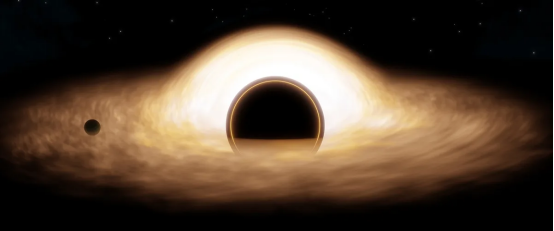
To truly understand how black holes interact with their environments, one must examine the anatomy of the accretion disk. A black hole itself emits no light, but the environment immediately surrounding its event horizon is often the most luminous region in the universe. When gas, dust, and shredded stars are captured by a black hole’s gravity, they do not fall straight in. Due to the conservation of angular momentum, the material spirals inward, flattening into a rapidly rotating disk.
Within this accretion disk, the inner layers orbit much faster than the outer layers. This differential rotation creates immense internal friction, heating the gas to millions of degrees. At these extreme temperatures, the atoms are stripped of their electrons, forming a turbulent, magnetized plasma. This superheated plasma radiates intensely across the electromagnetic spectrum, primarily in X-rays and ultraviolet light. When a supermassive black hole is actively feeding in this manner, it is known as a quasar or an Active Galactic Nucleus (AGN).
Relativistic Jets and Galactic Feedback
The energy generated by an accretion disk does not merely radiate away as light; it also profoundly influences the physical structure of the host galaxy through a process known as AGN feedback. The most dramatic manifestation of this feedback is the production of relativistic jets.
Through complex interactions between the black hole’s spin and the immense magnetic fields generated by the plasma disk, a portion of the infalling matter is redirected outward. This material is accelerated to near the speed of light and violently ejected from the black hole’s poles in the form of narrow, highly collimated jets. These jets can punch through the surrounding galaxy, extending for hundreds of thousands of light-years into intergalactic space. As they travel, they heat and disperse the cold molecular gas required for star formation, effectively regulating or completely halting the birth of new stars in the host galaxy. This feedback loop is the primary mechanism by which a central black hole controls the ultimate fate of its galaxy.

Advanced Observational Technologies and Techniques
The explosion of black hole discoveries in the 21st century is directly correlated with the deployment of next-generation observational technologies. The days of relying on a single optical telescope are over; modern astrophysics requires a synchronized, multi-wavelength, and multi-messenger approach to pierce the cosmic veil.
The James Webb Space Telescope (JWST), operating primarily in the infrared spectrum, has revolutionized our ability to peer through dense clouds of cosmic dust and observe the very first black holes forming in the nascent universe. Its unparalleled sensitivity allows it to capture the faint, redshifted light of highly distant quasars. Meanwhile, radio astronomy achieved the impossible with the Event Horizon Telescope (EHT) collaboration, utilizing Very Long Baseline Interferometry (VLBI) to link radio dishes across the globe. This Earth-sized virtual telescope provided humanity with the first direct images of the supermassive black holes in M87 and our own Sagittarius A*.
Comparative Analysis of Detection Methodologies
To understand how these diverse instruments work together, it is essential to categorize the primary methods used to detect and analyze black holes.
| Detection Methodology | Primary Instrument/Observatory | Target Black Hole Type | Core Scientific Mechanism |
|---|---|---|---|
| Astrometry | Gaia Space Observatory | Dormant Stellar-Mass | Measuring the microscopic positional wobble of a companion star caused by the unseen black hole’s gravity. |
| Gravitational Waves | LIGO, Virgo, KAGRA | Merging Stellar/Intermediate | Detecting the literal stretching and squeezing of spacetime ripples generated by black hole collisions. |
| Infrared Spectroscopy | James Webb Space Telescope | High-Redshift Supermassive | Analyzing the chemical composition and extreme velocity of gas orbiting early-universe black holes. |
| Very Long Baseline Interferometry | Event Horizon Telescope (EHT) | Local Supermassive (Sgr A*, M87) | Combining global radio telescope signals to resolve the precise shadow of the event horizon against the accretion disk. |