The question “Are we alone in the universe?” has captivated humanity for millennia. Once the domain of philosophy and fiction, the search for extraterrestrial life has now firmly entered the realm of rigorous science. With advancements in telescope technology and analytical methods, we are on the cusp of being able to scrutinize the atmospheres of distant exoplanets for telltale signs of life. This guide provides a comprehensive exploration of the modern scientific quest for life beyond Earth, covering the foundational search for biological markers, the emerging paradigm of seeking technological evidence, and the novel methods pushing the boundaries of astrobiology.
Our approach has evolved from simply listening for signals to actively probing the chemical makeup of alien worlds. This involves a multi-pronged strategy that combines the search for primitive, microbial life through biosignatures with the hunt for intelligent, tool-building civilizations via technosignatures. Each approach presents unique challenges and opportunities, requiring sophisticated tools and innovative thinking to interpret the faint signals carried across light-years of space.
The Foundation: Analyzing Planetary Atmospheres for Biosignatures
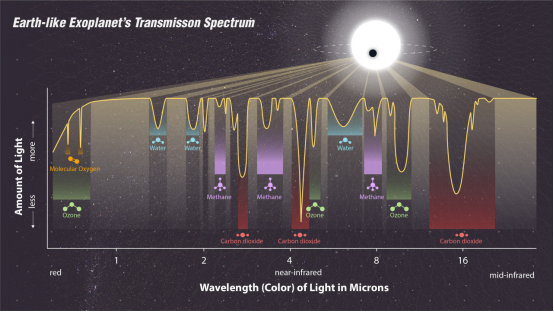
The primary method for detecting life on distant exoplanets involves spectral analysis of their atmospheres. As a planet passes in front of its host star, starlight filters through its atmosphere. Different molecules absorb specific wavelengths of light, leaving a unique chemical fingerprint that telescopes like the James Webb Space Telescope (JWST) can read. Scientists search these spectra for biosignatures—gases or molecules that indicate the presence of biological processes.
What Constitutes a Strong Biosignature?
A biosignature is any substance, object, or pattern whose origin specifically requires a biological agent. In the context of atmospheric analysis, this usually refers to gases that are produced in large quantities by life and would not naturally accumulate otherwise. The ideal biosignature is a gas that is abundant in the presence of life but scarce or non-existent from geological or photochemical processes alone.
- Oxygen (O2): On Earth, the vast majority of our atmospheric oxygen is produced by photosynthesis. While it can be produced abiotically, its presence in large quantities alongside reducing gases like methane creates a chemical disequilibrium that is a strong indicator of life.
- Methane (CH4): Many microbes on Earth produce methane as a metabolic byproduct. While volcanoes and other geological sources can also release methane, its coexistence with oxygen is a powerful biosignature, as these two gases would normally destroy each other without a constant biological source replenishing them.
- Nitrous Oxide (N2O): Often called “laughing gas,” nitrous oxide is another potent greenhouse gas produced almost exclusively by living organisms, specifically bacteria, as part of the nitrogen cycle. Its presence in an exoplanet’s atmosphere would be a very compelling sign of life.
The Critical Challenge of False Positives
The greatest challenge in the search for biosignatures is the potential for false positives. Nature is complex, and many non-biological processes can mimic the signs of life. For example, intense ultraviolet radiation from a star could split water molecules, producing an oxygen-rich atmosphere on a lifeless planet. Similarly, geological activity, such as serpentinization (a reaction between water and rock), can produce significant amounts of methane. Distinguishing a true biosignature from an abiotic mimic is the central problem that astrobiologists must solve.

A New Frontier: The Algorithm for Signal Disambiguation
To address the challenge of false positives, scientists are developing sophisticated computational tools. One of the most promising advancements is a new algorithm designed to differentiate between signals of life and non-life with greater accuracy. This approach moves beyond simply identifying a specific gas and instead analyzes the full context of a planet’s atmospheric and stellar environment.
Leveraging Bayesian Inference for Probabilistic Analysis
This new generation of algorithms is built on a Bayesian statistical framework. Unlike a simple “yes” or “no” model, a Bayesian approach calculates the probability that a given atmospheric composition is due to life, considering all known biological and non-biological pathways for producing the observed gases. It allows scientists to input data from spectral analysis and receive a probability score, quantifying the likelihood of a biological origin.
The key advantage is its ability to learn and adapt. As we discover more about exoplanet geology and atmospheric chemistry, this new information can be fed into the model to refine its predictions. It can simultaneously evaluate multiple hypotheses, weighing the evidence for each, making it an incredibly powerful tool for interpreting the complex data from missions like JWST.
How the Algorithm Improves Detection
The algorithm works by creating comprehensive models of planetary environments. It considers factors such as the type of star, the planet’s distance from the star, and potential geological activity to determine the most likely source of atmospheric gases. For example, it can assess whether the amount of methane detected is consistent with volcanic outgassing on a planet of a certain size and age, or if it requires a massive biological source to explain its abundance. This contextual analysis is crucial for building a confident case for the discovery of life.

Beyond Biology: The Search for Technosignatures
While the search for biosignatures focuses on life in any form, the search for extraterrestrial intelligence (SETI) has traditionally focused on listening for radio signals. A new, broader paradigm is emerging: the search for technosignatures. A technosignature is any measurable evidence of technology that could be detected from a distance. This approach expands the search beyond intentional communication to include the unintentional byproducts of an advanced civilization.
Defining the Scope of Technosignatures
Technosignatures could manifest in various ways, offering a wider range of detection possibilities than biosignatures. They are often considered less ambiguous because it is difficult to imagine a natural process that could create them.
- Atmospheric Pollutants: Industrial civilizations might pollute their atmospheres with artificial compounds that have no known natural source. Chlorofluorocarbons (CFCs), for example, are powerful greenhouse gases that on Earth are produced solely by industrial processes. Detecting CFCs in an exoplanet’s atmosphere would be an extremely strong sign of technology.
- Artificial Structures: A highly advanced civilization might build megastructures that alter the light from their star. A “Dyson Sphere,” a hypothetical structure that encloses a star to capture its energy, would block visible light but radiate strongly in the infrared, creating a detectable signature.
- Waste Heat: Any large-scale industrial activity or computation generates waste heat. This thermal energy could potentially make a planet appear warmer in infrared wavelengths than it should be based on the light it receives from its star.
- Artificial Light: The detection of city lights on the night side of an exoplanet would be definitive proof of technology, though this remains an incredibly difficult observation with current instruments.
The Paradigm Shift from Biology to Technology
Searching for technosignatures represents a significant shift in strategy. While life might be common, intelligent, technology-building life could be far rarer. However, technosignatures may be more robust and easier to distinguish from natural phenomena than biosignatures. The discovery of a technosignature would not only confirm that we are not alone but also that we share the universe with other intelligent beings, a finding with profound implications for humanity.

Unconventional Clues: Isotopic and Cosmological Indicators
The search for extraterrestrial life is also pushing into more unconventional territory, using clues from isotopic ratios and even the fundamental properties of the universe itself to guide the hunt for habitable worlds.
Deuterium as a Tracer of Planetary Water History
Water is considered a key prerequisite for life as we know it. One innovative method for identifying planets that may have once been water-rich is to measure their atmospheric deuterium-to-hydrogen (D/H) ratio. Deuterium is a heavy isotope of hydrogen. On a planet with liquid water, lighter hydrogen atoms escape into space more easily than heavier deuterium atoms. Over billions of years, a planet that is losing its water will develop a higher concentration of deuterium in its remaining atmosphere. Therefore, a high D/H ratio can act as a fossil record, indicating that a planet like Mars or Venus may have harbored vast oceans in its distant past, making it a prime target for further investigation.
Dark Energy and the Conditions for Life
On the grandest scale, some scientists propose that even the fundamental forces of cosmology may play a role in life’s existence. Research suggests a link between dark energy—the mysterious force causing the universe’s accelerated expansion—and the habitability of the cosmos. The theory posits that the strength of dark energy is finely tuned for life. If it were much stronger, its repulsive force would have torn matter apart before stars and galaxies could form. If it were absent, gravity might have caused matter to clump together too densely, leading to a universe dominated by black holes. The observed value of dark energy appears to create a “just right” cosmic environment where galaxies, stars, and planets can form and persist long enough for life to potentially emerge.

The Future of Astrobiology and the Integrated Search
The search for extraterrestrial life is entering a golden age. We are moving from an era of speculation to one of data collection and evidence-based science. The future of this field lies in an integrated approach that leverages all the tools at our disposal, from atmospheric spectroscopy to cosmological theory.
Combining Biosignature and Technosignature Searches
The most robust strategy for finding life is to search for biosignatures and technosignatures in tandem. A planet showing ambiguous signs of methane could be prioritized for a deeper search for industrial pollutants. Conversely, the detection of a potential technosignature would trigger an intense campaign to also look for biosignatures. This complementary approach maximizes our chances of a discovery, whether we find simple microbes or a sprawling galactic empire.
The Power of Next-Generation Observatories
Our ability to execute this search depends entirely on the capabilities of our telescopes. The James Webb Space Telescope is already revolutionizing our understanding of exoplanet atmospheres. Future observatories, such as the Nancy Grace Roman Space Telescope and ground-based Extremely Large Telescopes, will provide even greater sensitivity and resolution. These instruments will be able to survey a larger number of planets and analyze their atmospheres in unprecedented detail, moving us closer than ever to answering the ultimate question.
Frequently Asked Questions (FAQ)
- Q1: What is the main difference between a biosignature and a technosignature?
- A biosignature is any evidence of life, typically chemical in nature, such as oxygen or methane in an atmosphere produced by biological processes. A technosignature is evidence of technology, such as industrial pollutants, artificial radio signals, or large-scale structures, which would indicate the presence of an intelligent, tool-building civilization.
- Q2: Why is it so hard to confirm if a gas like methane is a sign of life?
- The primary difficulty is the existence of false positives. Geological processes, such as volcanism or chemical reactions between rock and water, can also produce methane. To confirm a biological origin, scientists must rule out all plausible non-biological sources by analyzing the planet’s full environmental context, including its geology, atmospheric composition, and the type of star it orbits.
- Q3: How does a new algorithm help in the search for alien life?
- New algorithms using Bayesian statistics help by moving beyond simple detection to probabilistic analysis. Instead of just identifying a gas, they calculate the probability that the observed atmospheric composition is caused by life versus non-life processes. They do this by considering a wide range of factors and can be updated with new knowledge, making them powerful tools for reducing uncertainty and avoiding false positives.
- Q4: Can cosmological forces like dark energy really affect the search for life?
- Yes, but on a macro level. The theory suggests that the value of dark energy was crucial for creating a universe where life could exist at all. It prevented matter from either dispersing too quickly or collapsing too densely, allowing for the formation of stable galaxies, stars, and planets over billions of years. While it doesn’t help us find a specific planet, it explains why we have a stable cosmic environment to search in the first place.
- Q5: What is the significance of the deuterium-to-hydrogen ratio on exoplanets?
- The deuterium-to-hydrogen (D/H) ratio serves as a historical marker for water. Lighter hydrogen escapes a planet’s atmosphere more easily than its heavier isotope, deuterium. A high D/H ratio in a planet’s atmosphere suggests it once had a significant amount of water that has since been lost to space. This can help scientists identify planets that may have been habitable in the past, making them interesting targets in the search for past or present life.