The cosmos is a tapestry woven with billions of stars, yet many of these stars are not solitary wanderers. Instead, they gather in magnificent stellar families known as star clusters. These celestial groupings, bound together by gravity, offer astronomers unparalleled laboratories for studying stellar evolution, galactic structure, and the very processes of star birth and death. From the dazzling youth of open clusters to the ancient, tightly packed spheres of globular clusters, each type tells a unique story about the universe’s history and its ongoing dynamic processes.
Understanding star clusters is fundamental to comprehending the larger galactic ecosystem. They provide crucial data points for determining the age and distance of galaxies, tracing the chemical enrichment of the cosmos, and even probing the mysterious influence of dark matter. This comprehensive guide will navigate the intricate world of star clusters, detailing their diverse characteristics, formation mechanisms, evolutionary paths, and their profound significance in the grand cosmic narrative.
The Diverse Tapestry of Star Clusters
Star clusters are broadly categorized based on their appearance, age, stellar population, and gravitational binding. Each category represents a distinct phase or type of stellar aggregation, providing astronomers with diverse insights into different cosmic phenomena. The primary types are open clusters, globular clusters, and the more recently identified tidal-tail star clusters, each with unique properties and formation stories.
Open Clusters: Young, Vibrant, and Loosely Bound
Open clusters are perhaps the most familiar type of star cluster, often appearing as sparkling jewels scattered across the galactic disk. These clusters are relatively young, typically containing a few dozen to a few thousand stars that formed from the same giant molecular cloud. Their stars are loosely bound by gravity, and over time, they tend to disperse due to gravitational interactions with other stars and molecular clouds within the galaxy.
- Characteristics: Open clusters are characterized by their irregular shapes, a relatively low stellar density compared to globular clusters, and a rich population of young, hot, blue stars (Type O and B). They also often contain remnants of the gas and dust from which they formed.
- Formation: They form in the spiral arms of galaxies where gas and dust are abundant. Gravitational collapse within giant molecular clouds leads to the simultaneous birth of hundreds or thousands of stars, creating a new open cluster.
- Lifespan: Due Due to their loose gravitational binding, open clusters typically have shorter lifespans, dispersing within a few hundred million years. They are excellent laboratories for studying early stellar evolution and the initial mass function of stars.
Notable Examples: Praesepe (M44) and the Perseus Double Cluster
Among the countless open clusters, some stand out for their beauty and scientific significance. The study of these specific clusters has contributed immensely to our understanding of stellar dynamics and galactic structure.
- The Praesepe Cluster (M44): Also known as the Beehive Cluster, M44 is one of the closest and brightest open clusters to Earth, visible to the naked eye. Located in the constellation Cancer, it contains several hundred stars and is estimated to be around 600 million years old. Its proximity makes it an ideal target for studying stellar rotation, magnetic activity, and exoplanet transits.
- The Perseus Double Cluster (NGC 869 and NGC 884): This spectacular pair of open clusters is a true cosmic marvel. Located in the constellation Perseus, these two clusters are physically close in space and are both relatively young, around 12.8 million years old. They are rich in bright, blue-white stars, making them a breathtaking sight through binoculars or a small telescope. Their similar age and distance make them invaluable for comparative studies of stellar evolution.

Globular Clusters: Ancient, Dense, and Gravitationally Tight
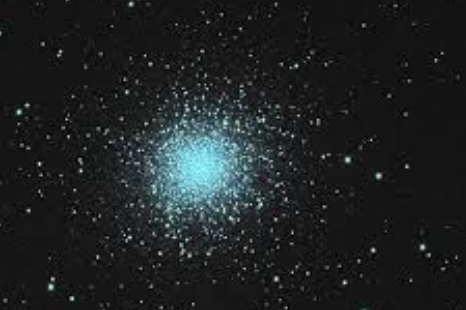
In stark contrast to open clusters, globular clusters are ancient, densely packed spherical collections of hundreds of thousands to millions of stars. These majestic structures are among the oldest components of galaxies, often found in the galactic halo, far above and below the galactic disk. Their very existence provides a window into the early universe.
Defining Features and Age
Globular clusters are characterized by their extreme age, typically ranging from 10 to 13 billion years old, making them nearly as old as the universe itself. They are composed primarily of older, reddish stars, often referred to as Population II stars, which are metal-poor compared to the younger Population I stars found in open clusters and galactic disks. This low metallicity indicates their formation in the early universe, before heavier elements were widely dispersed.
- Stellar Density: The stellar density in the core of a globular cluster can be incredibly high, sometimes hundreds or thousands of times greater than in our sun’s neighborhood. This extreme crowding leads to frequent stellar interactions, including collisions and the formation of exotic objects like blue stragglers and millisecond pulsars.
- Gravitational Binding: Unlike open clusters, globular clusters are very tightly gravitationally bound, allowing them to survive for billions of years without dispersing. Their immense gravity also allows them to retain stars that might otherwise escape.
Formation Theories and Galactic Distribution
The exact formation mechanism of globular clusters is still a subject of active research, but several theories exist. It is widely believed that they formed during the early stages of galaxy formation, when massive clouds of gas collapsed and formed stars in a highly efficient burst. They are distributed in a spherical halo around the galactic center, with some concentrated in the bulge. Our Milky Way galaxy hosts over 150 known globular clusters.
Case Study: The Great Globular Cluster in Hercules (M13)
While the “Hercules Cluster” can refer to a galaxy supercluster (Abell 2151), within the context of star clusters, it often refers to Messier 13 (M13), also known as the Great Globular Cluster in Hercules. This magnificent cluster is one of the brightest and most spectacular globular clusters visible from Earth. Located approximately 22,200 light-years away, it contains several hundred thousand stars, with a core density that is truly astounding. M13 serves as a prime example for studying the evolution of ancient stellar populations and the dynamics of dense stellar systems.

Tidal-Tail Star Clusters: Products of Galactic Collisions
A more recently recognized and fascinating class of star clusters are those formed within tidal tails – long, sweeping streams of gas, dust, and stars pulled out of galaxies during gravitational encounters or mergers. These “cosmic pearl necklaces” represent a unique mode of star formation, distinct from the in-situ collapse of molecular clouds.
Formation Mechanisms During Mergers
When two galaxies collide or undergo a close encounter, their immense gravitational forces can distort each other, drawing out vast amounts of interstellar medium into elongated structures called tidal tails. Within these tails, the disturbed gas and dust can become sufficiently dense to trigger intense bursts of star formation. These newly formed stars often coalesce into young, massive star clusters, which are then found strung along the tidal tails like beads on a necklace.
- Environmental Triggers: The shockwaves and compression within the tidal tails provide the necessary conditions for gravitational collapse, overcoming the usual stability of molecular clouds.
- Ephemeral Nature: These clusters are often short-lived, either dispersing into the intergalactic medium or eventually settling into the merging galaxies as they evolve.
Unique Characteristics and Significance
Tidal-tail star clusters are typically young and massive, often resembling super star clusters observed in distant, active galaxies. They are important because they demonstrate how star formation can be triggered by galaxy interactions, a process thought to have been more common in the early universe. Studying these clusters helps astronomers understand the interplay between galactic dynamics and stellar birth, and how galaxies grow and evolve through mergers.

Beyond Stellar Groupings: The Realm of Galaxy Clusters
While this guide primarily focuses on star clusters, it’s crucial to distinguish them from a vastly different scale of cosmic aggregation: galaxy clusters. The term “cluster” can be applied at multiple hierarchical levels in the universe, and understanding these distinctions is key to comprehending cosmic structure.
Distinguishing Star Clusters from Galaxy Clusters
The fundamental difference lies in their constituents and scale:
- Star Clusters: Composed of individual stars, bound together by their mutual gravity. Their typical sizes range from a few light-years (open clusters) to a few hundred light-years (globular clusters). They are found *within* galaxies.
- Galaxy Clusters: Composed of hundreds to thousands of galaxies, bound together by gravity. Their sizes can span millions of light-years. They are the largest gravitationally bound structures in the universe.
The “Hercules Cluster” mentioned in one of the source URLs, if referring to Abell 2151, is indeed a galaxy cluster, not a star cluster. It’s a rich cluster of several hundred galaxies, offering a prime example of cosmic structure on a much larger scale than star clusters.
Prominent Examples: The Bullet Cluster and X-Ray Clusters
Galaxy clusters are fascinating in their own right, revealing insights into dark matter, dark energy, and the evolution of the universe’s largest structures.
- The Bullet Cluster (1E 0657-56): This iconic system is the result of a high-speed collision between two galaxy clusters. It provides some of the strongest direct evidence for the existence of dark matter. Observations show that the visible matter (gas, emitting X-rays) was slowed down by the collision, while the invisible dark matter passed through largely unimpeded, separating from the ordinary matter. This spatial separation is a powerful indicator of dark matter’s non-interacting nature.
- X-Ray Clusters: Galaxy clusters are often powerful emitters of X-rays. This emission comes from the extremely hot, diffuse gas (plasma) that permeates the space between galaxies within the cluster, known as the intra-cluster medium (ICM). This gas can reach temperatures of tens of millions of degrees Celsius due to the gravitational compression and shockwaves from cluster formation and mergers. Studying X-ray emissions allows astronomers to map the distribution of visible matter, estimate the cluster’s total mass, and understand the energetic processes occurring within these colossal structures. These “energy bombs in the sky” are crucial for cosmological studies.

The Dynamic Lives of Star Clusters: From Birth to Dispersal
Star clusters are not static entities; they undergo dynamic lifecycles that begin with their formation in stellar nurseries and often conclude with their gradual dispersal into the galactic field. This journey provides a continuous narrative of stellar and galactic evolution.
Stellar Nurseries: The Genesis of Clusters
The birth of star clusters is intimately linked to the vast, cold, and dense regions of gas and dust known as giant molecular clouds. Within these cosmic nurseries, gravity begins to pull material together, forming denser clumps that eventually collapse to ignite new stars. Because these clouds are massive, they often fragment into many smaller cores, leading to the simultaneous formation of hundreds or thousands of stars.
- Trigger Mechanisms: Star formation can be triggered by various events, including supernova shockwaves, collisions between molecular clouds, or gravitational instabilities within spiral arms.
- Protoplanetary Disks: Many stars born in clusters are surrounded by protoplanetary disks, indicating that planet formation is also a common process within these active stellar environments.
Evolutionary Pathways and Stellar Populations
Once formed, the stars within a cluster evolve together, sharing a common age and initial composition. This makes clusters invaluable for studying stellar evolution. As stars exhaust their nuclear fuel, they evolve off the main sequence, becoming red giants, white dwarfs, neutron stars, or black holes. The distribution of these different stellar types within a cluster provides a snapshot of its age and history.
Open clusters, being younger, will still host many massive, short-lived blue stars, alongside a growing population of red giants. Globular clusters, conversely, are dominated by older, lower-mass stars that have long since evolved past their main sequence prime, featuring a distinct red giant branch and a horizontal branch.
The Gradual Dispersal of Open Clusters
While globular clusters are gravitationally robust, open clusters are more transient. Their stars are less tightly bound, and over time, they succumb to various disruptive forces:
- Tidal Forces: The gravitational pull of the galactic disk and bulge can gradually strip away stars from the cluster’s outer regions.
- Encounters with Molecular Clouds: Passing through dense molecular clouds can gravitationally perturb the cluster, ejecting stars and causing it to expand.
- Internal Stellar Interactions: Close encounters between individual stars within the cluster can also lead to ejections.
Eventually, most open clusters disperse completely, their stars scattering into the general galactic field, contributing to the overall stellar population of the galaxy. This dispersal process is a key aspect of galactic evolution, enriching the galaxy with stars that formed in a common environment.

Observing the Cosmos: Peering into Star Clusters
Astronomers employ a wide array of observational techniques and instruments to study star clusters, each providing unique insights into their properties and evolution. From ground-based telescopes to orbiting observatories, these tools allow us to piece together the cosmic mysteries held within these stellar groupings.
Telescopic Insights and Astrophotography
Many star clusters are visible through amateur telescopes and even binoculars, offering breathtaking views to sky-gazers. Professional observatories, equipped with much larger mirrors and advanced detectors, can resolve individual stars even in the densest cluster cores, measure their luminosities, temperatures, and spectral types. Astrophotography has transformed our ability to capture the intricate beauty and details of these distant stellar families, revealing their colors, structures, and surrounding nebulae.
- Photometry: Measuring the brightness of stars in different wavelength filters allows astronomers to construct color-magnitude diagrams, which are essential for determining a cluster’s age and distance.
- Spectroscopy: Analyzing the light spectrum of cluster stars reveals their chemical composition, radial velocity, and rotational speeds, providing clues about their formation environment and dynamics.
The Small Magellanic Cloud: A Cosmic Laboratory for Clusters
The Small Magellanic Cloud (SMC), one of the Milky Way’s satellite galaxies, is a prime example of a cosmic laboratory for studying star clusters. Its relatively close proximity and irregular structure make it an excellent target for investigating star formation in a low-metallicity environment, analogous to conditions in the early universe. The SMC hosts numerous young and intermediate-age star clusters, offering a diverse population for comparative studies.
- Star Formation History: By analyzing the star clusters within the SMC, astronomers can reconstruct its star formation history and understand how it has interacted with the Milky Way.
- Metallicity Effects: The lower metallicity of the SMC provides a unique opportunity to study how the abundance of heavy elements influences stellar evolution and the formation of star clusters.
Scientific Contributions of Cluster Studies
The study of star clusters has been instrumental in many areas of astrophysics:
- Distance Scale: Variable stars like Cepheids and RR Lyrae, often found in clusters, are crucial “standard candles” for measuring cosmic distances.
- Stellar Evolution: Clusters provide populations of stars with the same age and initial composition, allowing astronomers to test and refine models of stellar evolution.
- Galactic Structure: The distribution of clusters helps map the structure of our galaxy and others, revealing spiral arms, halos, and galactic interactions.
- Age of the Universe: The oldest globular clusters provide a lower limit for the age of the universe, consistent with cosmological models.

Conclusion: Star Clusters as Cosmic Time Capsules
Star clusters are far more than just beautiful celestial ornaments; they are dynamic cosmic laboratories and invaluable time capsules. From the youthful, energetic dance of open clusters to the ancient, tightly bound serenity of globular clusters, and the explosive genesis of tidal-tail clusters, each grouping offers a unique perspective on the universe’s grand narrative. They are crucial for understanding the birth, life, and death of stars, the intricate processes of galaxy formation and evolution, and even the fundamental properties of dark matter.
The ongoing study of these stellar families continues to push the boundaries of our knowledge, revealing the dynamic interplay of gravity, gas, and stellar processes that shape the cosmos. As telescopes become more powerful and observational techniques more refined, star clusters will undoubtedly continue to unveil new secrets, deepening our appreciation for the complexity and majesty of the universe.
Frequently Asked Questions (FAQ)
- Q1: What is the main difference between an open cluster and a globular cluster?
- The main differences lie in their age, stellar population, and structure. Open clusters are younger (millions to a few hundred million years), loosely bound, contain hundreds to a few thousand mostly young, blue stars, and are found in the galactic disk. Globular clusters are ancient (billions of years), tightly bound, contain hundreds of thousands to millions of old, red stars, and are found in the galactic halo and bulge.
- Q2: How do star clusters form?
- Star clusters form from the gravitational collapse of dense regions within giant molecular clouds. These clouds fragment, leading to the simultaneous birth of many stars from the same material. Open clusters form within the active star-forming regions of galactic disks, while globular clusters are thought to have formed during the early, rapid star formation phases of galaxy assembly.
- Q3: Can star clusters eventually disappear?
- Yes, open clusters are typically not gravitationally stable enough to last indefinitely. They gradually disperse over hundreds of millions of years due to tidal forces from the galaxy and gravitational encounters with other stars and molecular clouds. Globular clusters, however, are much more gravitationally robust and can survive for billions of years, enduring for nearly the entire age of the universe.
- Q4: Why are star clusters important for studying stellar evolution?
- Star clusters are crucial because all the stars within a given cluster formed at roughly the same time and from the same initial material. This provides astronomers with a “snapshot” of stars at various stages of evolution but with identical age and composition. By observing stars of different masses within the same cluster, scientists can effectively trace the entire evolutionary path of stars and test theoretical models.
- Q5: What is a “tidal-tail star cluster” and how is it formed?
- A tidal-tail star cluster is a group of young, massive stars that forms within the long, extended “tidal tails” of gas and dust pulled out from galaxies during gravitational interactions or collisions. The compression and shockwaves within these tails trigger intense bursts of star formation, leading to the creation of these unique, often linear, clusters.