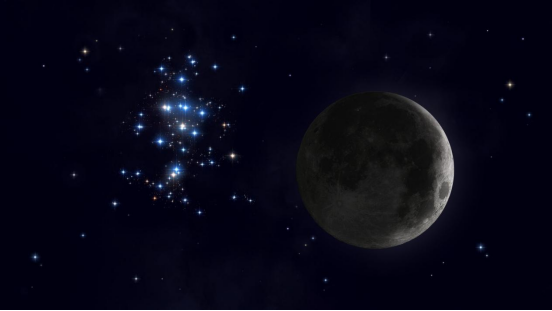
The night sky is adorned with various celestial wonders, but few are as captivating or as easily recognized as open star clusters. Among these, the Pleiades and the Hyades stand out as the most significant neighbors in our galactic backyard. Located within the constellation Taurus, these clusters serve as laboratories for astronomers to study stellar birth, life, and eventual dispersal. While they appear close in the sky, they represent two very different stages of cosmic evolution, separated by hundreds of millions of years in age and hundreds of light-years in distance.
Introduction to the Jewels of Taurus: An Overview
The constellation Taurus the Bull is home to two of the closest and most brilliant open clusters visible from Earth. These groupings of stars are not merely random alignments; they are physically related systems of stars born from the same giant molecular cloud. Understanding these clusters requires a look at their fundamental properties and their position within the Milky Way galaxy.
Defining Open Star Clusters
Open star clusters, unlike globular clusters, are loosely bound by gravity. They typically contain several hundred to a few thousand stars. Because they are relatively young, they are found primarily in the spiral arms of galaxies where star formation is active. Over time, the gravitational influence of other giant molecular clouds and the tidal forces of the galaxy itself will cause these clusters to drift apart, eventually becoming individual stars scattered across the sky.
- Stellar Birth: All stars in a cluster are approximately the same age and have the same chemical composition.
- Gravitational Binding: Open clusters are “loosely” bound, meaning they have a limited lifespan before dispersal.
- Distance Indicators: These clusters are vital for calibrating the cosmic distance ladder through a process called main-sequence fitting.

The Formation and Dynamics of Open Star Clusters
The lifecycle of a star cluster begins in a dense region of interstellar gas and dust. As gravity causes these clouds to collapse, fragments form individual stars. In the case of the Pleiades and Hyades, this process resulted in two distinct populations that allow us to view “snapshots” of stellar evolution at different points in time.
The Role of Interstellar Gas
In the early stages of a cluster’s life, residual gas often surrounds the newborn stars. In the Pleiades, we see this as a striking blue reflection nebula. It was once thought that this gas was the leftover material from the stars’ formation, but modern research suggests the cluster is simply passing through a particularly dusty region of the interstellar medium. The Hyades, being much older, has long since cleared its vicinity of such gas, revealing “naked” stars that have matured further along the main sequence.

The Pleiades (M45): The Most Famous Star Cluster
Known colloquially as the “Seven Sisters,” the Pleiades (Messier 45) is perhaps the most iconic deep-sky object. Located at a distance of approximately 444 light-years, it is a young cluster, estimated to be only about 100 million years old. This youth is evident in the presence of hot, luminous blue stars that dominate its appearance.
Identifying the Main Members
While the naked eye usually perceives six or seven stars, the cluster actually contains over 1,000 confirmed members. The most prominent stars are named after the Seven Sisters of Greek mythology: Alcyone, Electra, Maia, Merope, Taygeta, Celaeno, and Sterope, along with their parents, Atlas and Pleione. These stars are B-type giants and subgiants, which are significantly more massive and hotter than our Sun.
- Alcyone: The brightest star in the cluster, a blue-white giant.
- Atlas: A triple star system representing the father of the sisters.
- Pleione: A variable star known for its rapid rotation, which occasionally ejects shells of gas.

Physical Characteristics and Blue Reflection Nebulae
The most striking feature of the Pleiades in long-exposure photographs is the ethereal blue haze surrounding the stars. This is a reflection nebula, caused by the scattering of starlight by tiny grains of carbon (diamond dust) and other elements in the surrounding dust cloud.
The Physics of Scattering
The blue color is the result of Rayleigh scattering—the same physical phenomenon that makes Earth’s sky blue. The shorter wavelengths of blue light are scattered more efficiently by the dust particles than the longer red wavelengths. This indicates that the dust is not emitting its own light but is reflecting the intense radiation from the nearby B-type stars. This interaction provides a unique opportunity for astronomers to study the properties of interstellar dust grains.

Cultural and Mythological History of the Seven Sisters
The Pleiades have been observed by nearly every human culture throughout history. From the Aboriginal Australians to the Maya of Central America, this cluster has served as a calendar, a navigational aid, and a source of profound mythology.
Global Perspectives
In Japanese culture, the cluster is known as Subaru, meaning “coming together” or “cluster,” a name famously adopted by the automobile manufacturer whose logo features the stars. In ancient Greece, the stars represented the daughters of Atlas, who were turned into stars by Zeus to protect them from the hunter Orion. Even in the Bible, the Pleiades are mentioned in the Book of Job, highlighting their ancient recognition as a distinct celestial group.

The Hyades: Earth’s Closest Open Cluster
While the Pleiades are more visually compact, the Hyades (Caldwell 41) is significantly closer to Earth, located just 153 light-years away. This proximity makes the cluster appear much larger in the sky, forming the distinct “V” shape that represents the head of Taurus the Bull.
Age and Composition
The Hyades is roughly 625 million years old, making it much older than the Pleiades. Because of its age, the most massive stars have already evolved off the main sequence. The cluster is rich in “Red Clump” stars—giants that have begun burning helium in their cores. This evolutionary state allows scientists to use the Hyades as a benchmark for understanding how stars like our Sun will change as they age.

The Geometry of the Hyades and the Bull’s Head
The “V” shape of the Hyades is one of the easiest patterns to find in the winter sky. This geometric arrangement is not just a visual curiosity; it defines the central structure of the Taurus constellation. The stars within this “V” are moving through space together in a direction toward a point near Orion, a phenomenon known as the “Hyades Moving Group.”
Spatial Distribution
Because the cluster is so close, it covers a wide area of the sky—about 8 degrees in diameter. This is roughly 16 times the width of the full moon. Consequently, the Hyades is best viewed through binoculars rather than a telescope, as a telescope’s field of view is often too narrow to capture the entire cluster at once.

The Role of Aldebaran: A Visual Illusion
The brightest star in the vicinity of the Hyades is Aldebaran, the “Eye of the Bull.” While it appears to be the most prominent member of the cluster, it is actually a cosmic interloper. Aldebaran is located only 65 light-years away, meaning it is less than half the distance to the Hyades.
A Line-of-Sight Coincidence
Aldebaran is a red giant star that just happens to lie along our line of sight to the Hyades. It does not share the same motion through space as the cluster members, nor does it share their age or chemical origin. This serves as a classic example of how 2D perspectives in astronomy can be misleading regarding the 3D structure of the universe.

Comparing the Ages and Evolution of M45 and Hyades
By comparing these two clusters, astronomers can build a timeline of stellar life. The differences between them are stark and provide essential data for the field of stellar astrophysics.
Data Comparison Table
| Property | Pleiades (M45) | Hyades (Caldwell 41) |
|---|---|---|
| Distance | 444 Light Years | 153 Light Years |
| Estimated Age | ~100 Million Years | ~625 Million Years |
| Dominant Star Type | Blue B-type Stars | Yellow/Orange K and G-type |
| Nebulosity | Prominent Reflection Nebula | None (Gas Dispersed) |
| Number of Stars | ~1,000+ | ~300-400 Core Members |

Astrophotography Tips for Deep-Sky Clusters
Capturing the beauty of these clusters requires different strategies. While the Hyades is a wide-field target, the Pleiades is a favorite for those wishing to capture the delicate wisps of nebulosity.
Equipment and Settings
For the Pleiades, a focal length of 200mm to 500mm is ideal to frame the cluster and its surrounding dust. Long exposures (30 seconds to 2 minutes) are necessary to bring out the faint blue reflection nebula. For the Hyades, a wide-angle lens (35mm to 50mm) is better suited to capture the entire “V” shape along with Aldebaran and the surrounding constellation context.
- ISO Settings: Use a moderate ISO (800-1600) to balance signal and noise.
- Stacking: Take multiple exposures and use software like DeepSkyStacker to improve the signal-to-noise ratio.
- Calibration: Use dark, flat, and bias frames to remove sensor noise and vignetting.

Navigating the Winter Sky to Locate Taurus
Taurus is a prominent winter constellation in the Northern Hemisphere (and a summer constellation in the Southern Hemisphere). Finding the Pleiades and Hyades is straightforward if you use the “Belt of Orion” as your guide.
The Orion Shortcut
Locate the three stars that form Orion’s Belt. Draw an imaginary line through these stars and follow it upward (to the right in the Northern Hemisphere). The first bright, reddish star you encounter is Aldebaran, sitting within the Hyades “V.” Continue that line further, and you will arrive at the small, tight “mini-dipper” shape of the Pleiades.

The Future of These Cosmic Neighbors
Neither cluster is permanent. Gravity is a fickle master in the galaxy, and the forces that brought these stars together will eventually pull them apart.
The Dissolution Process
In approximately 250 million years, the Pleiades will have drifted so far apart that they will no longer be recognizable as a cluster. They will become “field stars” like our Sun. The Hyades is already showing signs of this dispersal, with many of its members forming “tidal tails”—streams of stars being pulled away from the cluster’s core by the Milky Way’s gravity. Studying these tails helps astronomers map the gravitational potential of our galaxy.

Conclusion: The Ever-Changing Night Sky
The Pleiades and Hyades are more than just pretty points of light; they are dynamic systems that offer a window into the past and future of our galaxy. Whether you are a casual stargazer using your naked eye or an astrophysicist analyzing spectral data, these clusters provide endless fascination. They remind us that the universe is in a constant state of flux, where stars are born in brilliant clusters only to eventually find their own paths through the vastness of space.
Frequently Asked Questions (FAQ)
- Q1: Why can I only see six stars in the Pleiades if it’s called the Seven Sisters?
- The visibility of the stars depends on sky quality and individual eyesight. In ancient times, skies were darker, making the seventh star easier to spot. Additionally, one of the stars, Pleione, is a variable star that may have been brighter in the past. Many cultures have myths about a “lost sister” to explain why only six are commonly visible today.
- Q2: Is the Pleiades cluster located in the constellation Cancer?
- No, the Pleiades and Hyades are both located in the constellation Taurus. While some older or localized astrological interpretations might associate them differently, astronomically, they are firmly within the boundaries of Taurus the Bull.
- Q3: Can I see the reflection nebula in the Pleiades with my naked eye?
- No, the reflection nebula is too faint for the human eye to perceive directly. Even through a telescope, it often appears as a subtle, ghostly glow. The vibrant blue clouds seen in photographs are the result of long-exposure imaging which accumulates light over time.
- Q4: How far away are the Hyades compared to the Pleiades?
- The Hyades are much closer to us, at approximately 153 light-years away. The Pleiades are nearly three times further, at about 444 light-years. This is why the Hyades appear much more spread out across the sky than the compact Pleiades.
- Q5: Are the stars in these clusters similar to our Sun?
- Most stars in these clusters are different from the Sun. The Pleiades is dominated by hot, blue B-type stars which are much larger and shorter-lived than the Sun. The Hyades contains many stars similar to the Sun, but also several red giants that have already reached the end stages of their lives, unlike our middle-aged Sun.