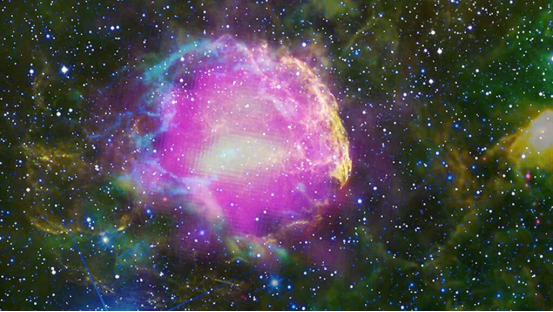
Detecting Antimatter and Strange Particles in Cosmic Rays
Cosmic rays are high-energy protons and atomic nuclei that traverse the vast reaches of space, carrying vital information about the most violent events in our universe. Among these, the presence of antimatter and strange particles serves as a primary indicator of exotic physical processes occurring near black holes, neutron stars, and supernova remnants.
The Nature of Cosmic Antimatter
Antimatter in cosmic rays, such as positrons and antiprotons, is relatively rare compared to standard matter. Scientists utilize space-based magnetic spectrometers to differentiate between these particles by observing their curvature in a magnetic field. Positrons, for instance, are often analyzed to determine if they originate from dark matter annihilation or conventional astrophysical sources like pulsars.
- Magnetic Spectrometers: These instruments bend the path of charged particles, allowing researchers to distinguish between matter and antimatter based on the direction of deflection.
- Strange Particles: Particles containing strange quarks, such as kaons or hyperons, provide insight into high-density environments where standard particle interactions are significantly altered.

Mechanisms of Neutrino Telescope Operation
Neutrinos are notoriously difficult to detect because they interact only via the weak subatomic force and gravity. To capture these “ghost particles,” scientists build massive detectors located deep underground or in polar ice, turning vast volumes of transparent media into target zones for rare neutrino interactions.
The Cherenkov Radiation Principle
When a neutrino interacts with an atom in the detection medium—such as Antarctic ice or deep ocean water—it produces a charged lepton (an electron, muon, or tau). If this particle travels faster than the speed of light in that medium, it emits Cherenkov radiation, a faint blue light that sensitive digital optical modules (DOMs) can detect.
| Detection Medium | Primary Advantage | Scale |
|---|---|---|
| Deep Antarctic Ice | Extreme clarity and stability | Cubic kilometer |
| Deep Ocean/Lake Water | Self-healing medium | Variable |

Challenges in High-Energy Particle Astrophysics
The primary hurdle in high-energy physics is the signal-to-noise ratio. Cosmic rays are constantly bombarded by atmospheric interactions, creating a “background” of secondary particles that can obscure the signals of interest. Advanced filtering algorithms and timing coincidence detectors are required to isolate true astronomical neutrinos or antimatter signatures from local noise.
Data Reconstruction and Analysis
Once a signal is captured, researchers must reconstruct the particle’s trajectory. By analyzing the precise arrival time of light pulses across an array of thousands of sensors, scientists can triangulate the source of the neutrino, effectively creating a neutrino sky map that complements traditional electromagnetic telescopes.

Future Perspectives in Particle Detection
The next generation of detectors aims to increase volume by an order of magnitude. By deploying larger arrays and utilizing radio detection techniques, physicists hope to capture ultra-high-energy neutrinos that have traveled across cosmological distances, potentially revealing the origins of the most energetic cosmic rays ever recorded.
Frequently Asked Questions (FAQ)
- Q1: Why do we need to place neutrino telescopes deep underground or in ice?
- The detection medium (ice or water) acts as a shield against cosmic ray muons—background particles that would otherwise overwhelm the faint signal of a neutrino interaction. The depth ensures that only neutrinos, which can pass through the entire Earth, reach the detector.
- Q2: How does antimatter tell us about dark matter?
- If dark matter particles collide and annihilate, they should produce a specific spectrum of antimatter (like positrons). By measuring the energy distribution of cosmic-ray positrons, scientists look for “excesses” that cannot be explained by standard astrophysical processes.
- Q3: What are strange particles?
- Strange particles are subatomic particles that contain one or more strange quarks. Their study is crucial for understanding the state of matter at extremely high temperatures and densities, such as the interiors of neutron stars.
- Q4: How do we know where a neutrino comes from?
- By measuring the arrival times of Cherenkov light across a 3D array of sensors, we can reconstruct the direction of the secondary muon produced by the neutrino. This vector points back to the celestial origin of the original neutrino.