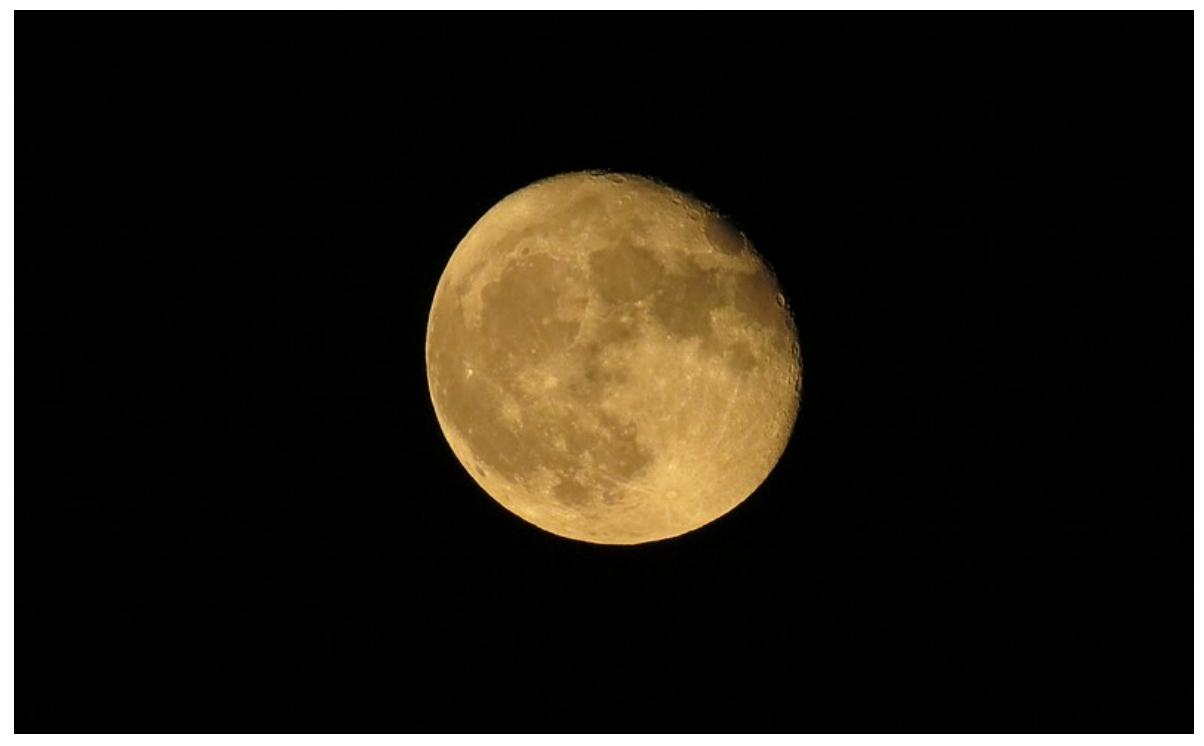
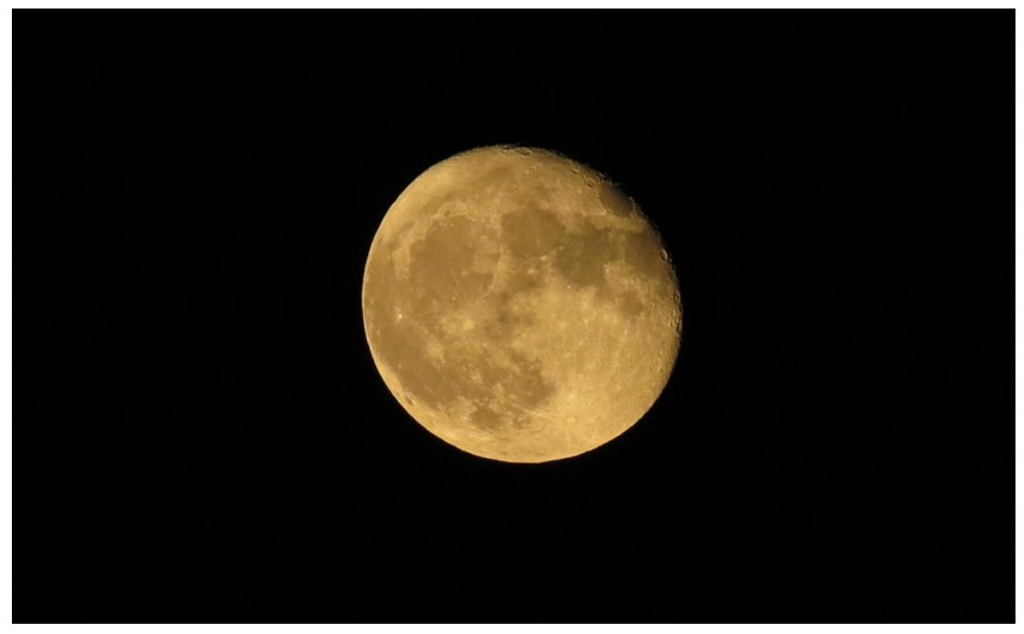
Visibility of the Moon During a Total Lunar Eclipse
If the Earth had no atmosphere, the moon would completely disappear during a total lunar eclipse. In reality, this is not the case, and the moon still exists. During an eclipse, we can observe that part of the sunlight is scattered into the Earth’s shadow area.
During the observation of a total lunar eclipse, even during the period of the moon’s shadow, I can faintly make out the outline of the moon’s surface. This seems somewhat incredible,after all, at that time, there is no obvious reflected light source on the moon. This is indeed a fascinating phenomenon.
The Diversity of the Moon’s Colors During a Total Lunar Eclipse
One of the most striking features of a total lunar eclipse is its unique color changes, which are closely related to the Earth’s weather conditions. As the moon slowly passes through the Earth’s shadow, the sunlight shining on the moon’s surface gradually decreases, causing the moon’s surface to become increasingly dim. During a total lunar eclipse, the moon does not completely disappear; on the contrary, it presents a variety of colors, from deep red to orange, and even copper, which add endless charm to the total lunar eclipse.
The reason why the moon appears red during a total lunar eclipse is mainly attributed to the Earth’s atmosphere. If the Earth had no air, the moon would completely disappear from our sight during a total lunar eclipse. Fortunately, our planet is surrounded by a thick atmosphere. It is because of the existence of this atmosphere that during a total lunar eclipse, sunlight scatters when passing through the atmosphere, and part of the light enters the Earth’s shadow area.
When these rays shoot from the atmosphere to the moon, an interesting phenomenon occurs. Since molecules and tiny particles in the atmosphere scatter light, especially shorter-wavelength blue light, which is more easily scattered, the remaining light is mainly longer-wavelength red light. These red rays, after passing through the atmosphere, eventually shine on the moon, making the moon appear reddish during a total lunar eclipse, which is very similar to the sunset we see on Earth.
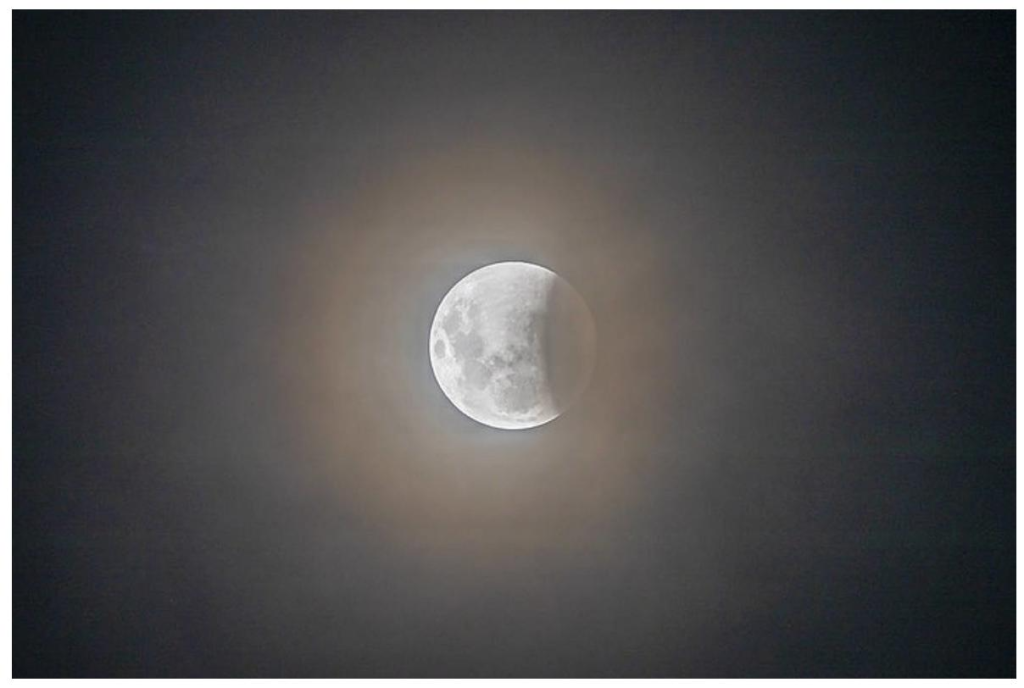
This phenomenon, although quite common in eclipses, does not occur every time. Sometimes, the Earth’s atmosphere is relatively “clean” with fewer smoke or dust particles floating in it, which can cause the moon during a total lunar eclipse to appear a lighter red, or even close to gray. At other times, the atmosphere may become “dirty”, filled with a large amount of smoke or dust particles. For example, in 1991, the eruption of Mount Pinatubo in the Philippines released a large amount of volcanic ash and smoke into the atmosphere. This event caused serious pollution of the Earth’s atmosphere, making the moon during the subsequent total lunar eclipse almost completely disappear into darkness, almost vanishing from our sight. Although this situation is rare, it reminds us of the huge impact of the Earth’s atmosphere on eclipse phenomena.
During a total lunar eclipse, the moon may present a variety of colors, including orange, brown, gold, yellow, and any combination of these colors, and may even show all possible shades of red. This phenomenon is mainly caused by the refraction and scattering of sunlight by the Earth’s atmosphere. When sunlight passes through the Earth’s atmosphere, light of different wavelengths is refracted to different degrees, and shorter-wavelength blue and purple light is scattered by gas molecules in the atmosphere, while the remaining longer-wavelength red and orange light is projected onto the moon’s surface, making the moon appear these warm tones during the total eclipse.
Changes in the Brightness of the Moon’s Surface During a Total Lunar Eclipse
Generally, during a total lunar eclipse, the brightness of the moon’s surface also changes, mainly due to the different positions of the moon as it passes through the Earth’s shadow. During a total lunar eclipse, the moon rarely passes directly through the center of the Earth’s shadow, but may be biased towards the northern or southern edge of the shadow. No matter which side the moon is biased towards, it will cause one edge of the moon to appear brighter in the middle stage of the eclipse, because this side is farther from the center of the shadow and receives more sunlight.
The formation of large clouds on Earth can also explain the differences in the brightness of the moon’s surface during a total lunar eclipse. When the clouds are thick, they block part of the sunlight, reducing the light projected onto the moon’s surface, thus forming dark spots on the moon’s surface. These cloud effects cause an uneven brightness distribution on the moon’s surface during the eclipse, making some parts of the moon look darker than others. This phenomenon is particularly obvious when observing a total lunar eclipse, because the blocking effect of clouds forms obvious light and dark contrasts on the moon’s surface, increasing the mystery and visual effect of total lunar eclipse observation.