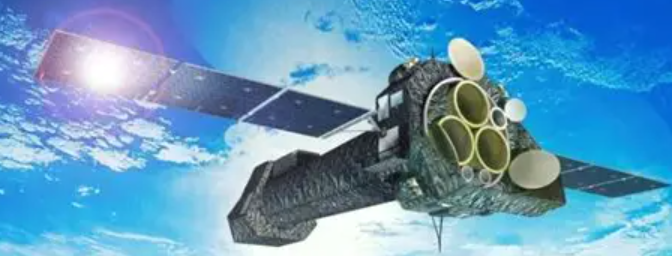
For centuries, humanity has gazed at the stars, pondering the universe’s vastness and its myriad secrets. While ground-based telescopes offered initial glimpses, Earth’s atmosphere acts as a formidable barrier, obscuring most wavelengths of light crucial for understanding the cosmos. The advent of
The universe is a violent and energetic place, often invisible to our eyes. Phenomena like black holes, neutron stars, and supernovae remnants emit vast amounts of energy in the X-ray spectrum. To observe these extreme environments, scientists developed X-ray telescopes that operate above Earth’s atmosphere. These observatories utilize grazing incidence mirrors, where X-ray photons skim off highly polished surfaces at shallow angles, much like skipping stones across water, to focus the elusive high-energy light.
XMM-Newton: Unveiling Black Hole Growth and Supernova Echoes
The
- Black Hole Accretion: XMM-Newton has provided critical data on how supermassive black holes at the centers of galaxies grow by accreting matter, often revealing complex patterns of X-ray emission that fluctuate rapidly, offering insights into their immediate surroundings.
- Supernova Remnants: The satellite meticulously maps the expanding shells of gas and dust left behind by supernovae, studying the shockwaves and the synthesis of heavy elements that are crucial for planetary formation. For instance, observations of the
remnant have helped detail the distribution of elements like silicon, sulfur, and iron. - Galaxy Clusters: By observing the hot, X-ray emitting gas within galaxy clusters, XMM-Newton helps astronomers understand the distribution of dark matter and the dynamics of these massive cosmic structures.
Gamma-Ray Bursts: Cosmic Flashlights and Extreme Events
Gamma-Ray Bursts (GRBs) are the most powerful explosions in the universe, releasing more energy in seconds than the Sun will produce in its entire 10-billion-year lifetime. Detecting these fleeting phenomena requires specialized instruments capable of rapidly slewing to target the burst’s location and observing across a broad range of wavelengths, from gamma-rays to X-rays, and sometimes even visible light and radio waves.
Swift Satellite: Rapid Response to Transient Cosmic Phenomena
NASA’s
- GRB Localization: Swift’s
can detect GRBs and autonomously slew the spacecraft within minutes, providing precise coordinates to ground-based telescopes for follow-up observations. This swift action is crucial because GRB afterglows fade quickly. - Probing Early Universe: Many GRBs originate from incredibly distant galaxies, making them powerful probes of the early universe. Swift has helped to determine the distances to some of the most remote objects known, offering insights into star formation rates and galactic evolution billions of years ago.
- Types of GRBs: Swift has been instrumental in classifying GRBs into two main categories:
(lasting over 2 seconds, associated with massive star collapse and supernovae) and (lasting less than 2 seconds, linked to the merger of neutron stars or a neutron star and a black hole).
BeppoSAX: The Pioneer of GRB Afterglows
Before Swift, the Italian-Dutch satellite
- First Afterglow Detection: In February 1997, BeppoSAX detected an X-ray afterglow from GRB 970228, followed by an optical afterglow, a first in astronomy. This confirmed that GRBs were not isolated events but had a fading signature across the electromagnetic spectrum.
- Distance Measurement: By identifying the host galaxies of GRBs through their afterglows, BeppoSAX enabled the first accurate distance measurements to these events, confirming their cosmological distances and immense energy outputs.

Hubble’s Enduring Legacy: Optical Visions of the Cosmos
The
Key Discoveries and Contributions
Hubble’s impact spans decades, from refining the age and expansion rate of the universe to revealing the birth and death of stars, and the intricate dynamics of galaxies. Its long operational life, extended by multiple servicing missions, has allowed for long-term observations and the study of transient events.
- Age of the Universe: Hubble’s observations of Cepheid variable stars in distant galaxies helped to precisely measure the
, refining the age of the universe to approximately 13.8 billion years. - Exoplanet Atmospheres: While not designed for exoplanet detection, Hubble has made significant contributions to characterizing the atmospheres of exoplanets through transit spectroscopy, detecting elements like sodium and water vapor.
- Galactic Evolution: By observing galaxies at various stages of their development, Hubble has provided a visual history of how galaxies form, merge, and evolve over cosmic time, including stunning images of galactic collisions and starburst regions.
- Stellar Life Cycles: From the chaotic birthplaces of stars in nebulae like the
to the dramatic explosions of supernovae and the serene glow of planetary nebulae, Hubble has captured the full spectrum of stellar life.
Technological Marvel and Public Engagement
Beyond its scientific achievements, Hubble has become a cultural icon, inspiring generations with its stunning photographs of nebulae, galaxies, and star clusters. Its success underscored the value of investing in complex space infrastructure for scientific discovery and public outreach.

James Webb Space Telescope: Unveiling the Infrared Universe
The
Scientific Frontiers Explored by JWST
JWST’s primary scientific goals are ambitious, aiming to answer fundamental questions about our origins and the universe’s evolution. Its infrared capabilities allow it to see what Hubble could not, pushing the boundaries of astronomical discovery.
- First Galaxies: By observing in infrared, JWST can detect the redshifted light from the very first galaxies that formed only a few hundred million years after the Big Bang, providing crucial data on their structure, composition, and evolution.
- Exoplanet Characterization: JWST’s highly sensitive instruments are ideal for studying the atmospheres of exoplanets in unprecedented detail. It can detect biosignatures, such as water, methane, and carbon dioxide, offering clues about the potential habitability of distant worlds. For example, early observations of
revealed clear evidence of water vapor. - Star and Planet Formation: Infrared light can penetrate the dense clouds of gas and dust where stars and planetary systems are born. JWST provides unparalleled views of these nurseries, revealing the processes of accretion disks and the early stages of planet formation.
- Solar System Studies: Even within our own solar system, JWST offers new perspectives on planets, moons, asteroids, and comets, revealing details hidden by cooler temperatures or obscured by atmospheric conditions.
Technological Innovations
The deployment of JWST’s massive 6.5-meter primary mirror, composed of 18 hexagonal segments, was a feat of engineering. Operating at the

TESS Satellite: Pioneering Exoplanet Discovery
The
How TESS Finds New Worlds
TESS surveys the entire sky in 26 sectors, spending approximately 27 days observing each sector. This allows it to detect both short-period and longer-period planets, providing a comprehensive census of exoplanets around a diverse range of stellar types.
- Transit Method: TESS measures the slight decrease in a star’s brightness as an exoplanet passes between the star and the telescope. The duration and depth of this dip provide information about the planet’s size and orbital period.
- Focus on Nearby Stars: By focusing on bright, nearby stars, TESS identifies exoplanets that are more amenable to follow-up observations, enabling detailed characterization of their masses, densities, and atmospheric compositions.
- Habitable Zone Candidates: TESS has discovered numerous exoplanets within their stars’
, regions where conditions might be right for liquid water to exist on a planet’s surface. These discoveries fuel the search for life beyond Earth.
Significant Discoveries
In its relatively short operational period, TESS has already identified thousands of exoplanet candidates and confirmed hundreds of new planets, including several Earth-sized and super-Earth planets.
For instance, TESS discovered

The Role of Space Technology: Beyond Pure Astronomy
While the allure of cosmic discovery drives much of space exploration, the technologies developed for space missions often have profound impacts on Earth-bound applications, enhancing daily life and national infrastructure. Beyond observing distant galaxies, satellites play a critical role in communication, weather forecasting, environmental monitoring, and navigation. The development of robust, miniaturized, and power-efficient systems for space has led to countless innovations on the ground.
GPS Satellite: A Cornerstone of Modern Infrastructure
The
- Navigation: GPS receivers on Earth use signals from multiple satellites to calculate their precise location, velocity, and time. This technology underpins everything from car navigation systems and smartphone maps to aircraft guidance and maritime shipping.
- Timing and Synchronization: The extremely accurate atomic clocks aboard GPS satellites provide a universal time standard that is critical for synchronizing global communication networks, financial transactions, and power grids. Many critical infrastructure systems rely on GPS for precise timing.
- Geodesy and Earth Science: Scientists use GPS data to measure tectonic plate movements, monitor changes in sea level, and track atmospheric water vapor, contributing to our understanding of Earth’s dynamic processes and climate change.
- Emergency Services: GPS is vital for emergency responders, allowing them to quickly locate individuals in distress and coordinate rescue efforts, significantly improving response times and outcomes.
Broader Impact of Satellite Technology
The advancements in satellite technology, driven by astronomical missions and defense initiatives, have cultivated an ecosystem of innovation that extends far beyond the initial scope.
- Communication: Geostationary and low-Earth orbit satellites facilitate global communication, providing internet access, television broadcasting, and mobile phone services to remote areas.
- Weather and Climate Monitoring: Meteorological satellites continuously observe Earth’s atmosphere, providing data for weather forecasts, tracking hurricanes, and monitoring long-term climate patterns.
- Disaster Management: Earth observation satellites provide critical data for assessing damage from natural disasters, aiding relief efforts, and monitoring environmental changes such as deforestation and glacier melt.

Synergy in Space: How Satellites Collaborate for Deeper Insights
The most profound discoveries in modern astronomy often arise not from single observatories, but from the coordinated efforts of multiple space telescopes and ground-based instruments working in concert. This multi-wavelength and multi-messenger approach allows scientists to piece together a more complete picture of cosmic phenomena, as different wavelengths of light reveal distinct physical processes. The collaboration between diverse observatories maximizes scientific return and pushes the boundaries of what can be understood.
Multi-Wavelength Astronomy: A Holistic View
Each type of light—from radio waves to gamma rays—carries unique information about the universe. By combining observations from telescopes sensitive to different parts of the electromagnetic spectrum, astronomers can gain a comprehensive understanding of celestial objects.
- Gamma-ray and X-ray synergy: For transient events like Gamma-Ray Bursts, instruments like Swift’s BAT detect the initial gamma-ray flash, while its XRT (X-ray Telescope) and UVOT (Ultraviolet/Optical Telescope) quickly follow up on the afterglow. This provides a rapid, multi-wavelength profile of the event, crucial for understanding the physics of the explosion and its progenitor.
- Optical and Infrared Collaboration: Hubble’s optical and UV images often reveal the structure of galaxies and nebulae, while JWST’s infrared observations can penetrate dust clouds to show hidden star formation regions or the earliest, most distant galaxies. For exoplanet studies, TESS identifies transiting planets, and JWST then characterizes their atmospheres with infrared spectroscopy.
- Radio and X-ray/Gamma-ray: In objects like active galactic nuclei (AGN) or supernova remnants, radio telescopes map large-scale structures and magnetic fields, while X-ray and gamma-ray observatories reveal the energetic processes occurring at their cores, such as particle acceleration and black hole jets.
Complementary Missions and Follow-up Observations
The success of many space missions hinges on the ability of other observatories to provide crucial follow-up or contextual data. This sequential or simultaneous observation strategy significantly enhances scientific yield.
- TESS and JWST: TESS discovers thousands of exoplanets, identifying promising candidates for atmospheric characterization. JWST then uses its superior infrared capabilities to analyze these planets’ atmospheres for signs of water, methane, and other potential biosignatures. This two-step process is far more efficient than if JWST had to search for planets itself.
- GRB alerts: Satellites like Swift and Fermi are equipped with wide-field detectors to catch GRBs. Once a burst is localized, alerts are sent out globally, prompting ground-based optical and radio telescopes to quickly point at the source, capturing rapidly fading afterglows that provide vital clues about the burst’s environment and distance.

The Future Frontier: Next-Generation Space Observatories
The success of current and past space telescopes has paved the way for even more ambitious missions. Scientists and engineers are continually pushing the boundaries of technology to design observatories that can answer the next generation of cosmic questions, from directly imaging Earth-like exoplanets to detecting gravitational waves from merging black holes. These future missions promise to further revolutionize our understanding of the universe, offering unprecedented views and capabilities.
Concepts for Advanced Space Telescopes
The next decade will likely see the development and launch of observatories with capabilities far exceeding those currently in operation, focusing on even higher resolution, broader spectral coverage, and new observational techniques.
- Habitable Worlds Observatory (HWO): A proposed large space telescope concept by NASA, HWO would be designed to directly image and characterize Earth-like exoplanets in the habitable zones of nearby stars. It would employ a sophisticated coronagraph to block out starlight, allowing the faint light from orbiting planets to be detected and their atmospheres analyzed for signs of life.
- Lunar Gravitational-Wave Antenna (LGWA): While still conceptual, missions to establish gravitational-wave detectors on the Moon or in space (like ESA’s
) aim to detect low-frequency gravitational waves from supermassive black hole mergers, early universe phenomena, and other cosmic cataclysms. - Advanced X-ray Imaging Satellite (AXIS): A potential successor to Chandra and XMM-Newton, AXIS would offer significantly improved sensitivity and angular resolution in X-ray wavelengths, allowing for more detailed studies of black holes, galaxy clusters, and the hot intergalactic medium.
Technological Challenges and Innovations
Developing these next-generation observatories involves overcoming immense engineering challenges, including building larger, lighter mirrors, developing more sensitive detectors, and perfecting complex deployment and operational procedures in space.
- Segmented Optics and Metrology: Future telescopes will require even larger mirrors than JWST, necessitating advanced segmented designs and ultra-precise metrology systems to align them in space to nanometer precision.
- Cryogenic Cooling Systems: For infrared and sub-millimeter observations, instruments must be cooled to extremely low temperatures, often just a few degrees above absolute zero. Developing long-duration, highly efficient cryogenic systems is crucial.
- Formation Flying and Interferometry: Some concepts involve multiple spacecraft flying in precise formation, acting as a single, giant interferometer to achieve extremely high angular resolution, effectively creating a telescope with a baseline thousands of kilometers wide.
Frequently Asked Questions (FAQ)
- Q1: What is a “Pillar Page” in SEO, and why is content depth so important for it?
- A Pillar Page is a comprehensive, authoritative resource that covers a broad topic in immense detail, acting as the central hub for a cluster of related, more specific articles (cluster content). Content depth is crucial because it signals to search engines that the page is a definitive source of information, improving its chances of ranking for a wide range of relevant keywords and establishing topical authority. It also provides significant value to users, encouraging longer dwell times and engagement.
- Q2: How do space telescopes like XMM-Newton “see” black holes if they don’t emit light?
- Black holes themselves do not emit light, but the matter swirling around them in an accretion disk before falling in becomes superheated to millions of degrees Celsius. This intensely hot gas emits powerful X-rays and other high-energy radiation. XMM-Newton detects these X-rays, allowing scientists to study the properties of the black hole’s environment, its growth, and its gravitational effects on surrounding matter, effectively “seeing” the black hole’s influence rather than the black hole itself.
- Q3: What is the primary difference between the Hubble Space Telescope and the James Webb Space Telescope?
- The primary difference lies in their observational wavelengths and scientific goals. Hubble primarily observes in visible and ultraviolet light, with some near-infrared capabilities, providing sharp images of nearby galaxies, stars, and nebulae. JWST, on the other hand, is optimized for infrared light, allowing it to peer through cosmic dust, observe the extremely redshifted light from the very first galaxies in the universe, and perform detailed atmospheric analysis of exoplanets. JWST also has a significantly larger mirror (6.5 meters vs. 2.4 meters) and operates much farther from Earth (Sun-Earth L2 vs. Low Earth Orbit).
- Q4: How does the TESS satellite find exoplanets, and why does it focus on nearby stars?
- TESS primarily uses the “transit method” to find exoplanets. It observes changes in the brightness of stars. If a planet passes in front of its host star from TESS’s perspective (a transit), the star’s light will dip slightly. By detecting these periodic dips, TESS can infer the presence and size of exoplanets. TESS focuses on bright, nearby stars because these systems are much easier to follow up with other telescopes (like JWST or ground-based observatories) for more detailed characterization, such as measuring the planet’s mass, density, and atmospheric composition.
- Q5: What is the significance of Gamma-Ray Bursts (GRBs) for understanding the early universe?
- Science note: This article is educational astronomy communication for general readers. Dates, mission data, instrument results, and scientific interpretations can change as new observations are published. For research, safety, engineering, or mission decisions, consult primary papers, space-agency releases, and qualified professionals.