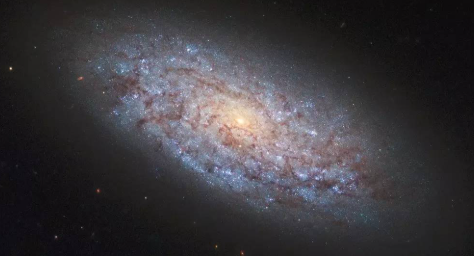
The Resilience and Evolution of Dwarf Galaxies
Dwarf galaxies serve as the fundamental building blocks of the cosmic landscape. Despite their modest size—often containing only a few billion stars compared to the hundreds of billions in a galaxy like the Milky Way—they hold the key to understanding early galactic formation and dark matter distribution.
Characteristics of Galactic Dwarfs
- Low Luminosity: Their dim nature makes them difficult to detect, yet they are the most common type of galaxy in the observable universe.
- Dark Matter Dominance: Dwarf galaxies often exhibit significantly higher mass-to-light ratios, suggesting they are heavily influenced by dark matter halos.
- Star Formation Rates: Many dwarf galaxies, particularly dwarf irregulars, are sites of intense, episodic star formation, often triggered by gravitational interactions with larger neighbors.

The Transitional Nature of Lenticular Galaxies
Lenticular galaxies (S0 type) occupy a unique space in the Hubble sequence, acting as a bridge between spiral and elliptical galaxies. They possess a prominent central bulge and a disk, yet they lack the iconic spiral arms that define their more active counterparts.
Morphological Mechanics
The absence of spiral arms in lenticular galaxies is generally attributed to the depletion of interstellar gas. Without the cold gas reservoirs necessary for star formation, these galaxies cease the creation of new blue stars, causing them to evolve into a redder, more quiescent state over billions of years.
| Feature | Spiral Galaxy | Lenticular Galaxy |
|---|---|---|
| Spiral Arms | Present | Absent |
| Gas Content | High | Low |
| Stellar Population | Young/Blue | Old/Red |

Seyfert Galaxies and Active Galactic Nuclei
Seyfert galaxies represent a class of spiral galaxies characterized by exceptionally bright, compact nuclei. These objects are a subset of Active Galactic Nuclei (AGN), powered by supermassive black holes that actively accrete matter from their surroundings.
The Energy Engine
The luminosity observed in Seyfert galaxies is not derived from stellar fusion alone, but from the gravitational potential energy released as matter falls into the central black hole. This process creates an accretion disk that emits radiation across a broad spectrum, from infrared to X-rays.
- Type I Seyferts: Display both broad and narrow emission lines in their spectra, indicating high-velocity gas movement near the nucleus.
- Type II Seyferts: Primarily exhibit narrow emission lines, often because the broad-line region is obscured by a torus of dust and gas.

Radio Galaxies: The Cosmic Roars
Radio galaxies are among the most energetic phenomena in the universe. They are typically giant elliptical galaxies that emit massive amounts of energy in the form of radio waves, often extending far beyond the visible boundaries of the galaxy itself.
Jet Dynamics and Lobes
The radio emission is generated by relativistic jets—beams of plasma traveling at nearly the speed of light—that are ejected from the galactic center. When these jets collide with the intergalactic medium, they form massive radio lobes that can span millions of light-years.
Frequently Asked Questions (FAQ)
- Q1: What is the primary difference between a dwarf galaxy and a spiral galaxy?
- The primary difference lies in scale and structure. Spiral galaxies are large, organized systems with distinct arms and high star-formation rates, whereas dwarf galaxies are smaller, often irregular in shape, and possess lower mass, though they are often more densely populated with dark matter.
- Q2: Why do lenticular galaxies lack spiral arms?
- Lenticular galaxies have essentially “exhausted” their supply of cold gas. Because they lack the gas required to sustain the density waves that create spiral arms, the arms fade, leaving behind a smooth, disk-like structure.
- Q3: How do Seyfert galaxies differ from other active galaxies?
- Seyfert galaxies are specifically spiral galaxies with active nuclei. They are distinct from Quasars, which are far more luminous and typically found at much greater cosmological distances, and from Radio galaxies, which exhibit dominant radio-frequency emissions.
- Q4: Are radio galaxies dangerous to nearby solar systems?
- While the energy output of radio galaxies is immense, they are typically located at vast distances from our own galaxy. The radiation is spread over such a large volume that it poses no direct threat to individual stars or planetary systems within those galaxies.