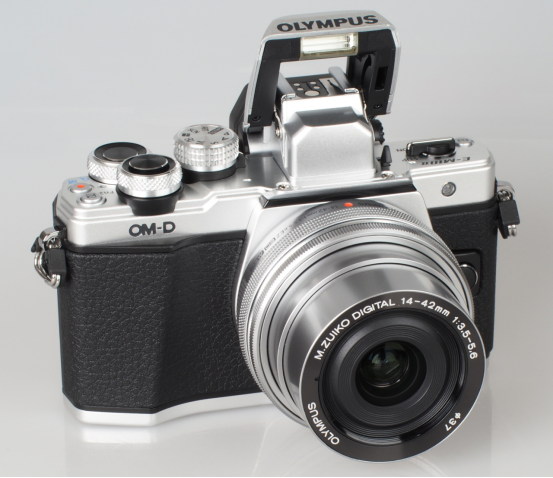
The Olympus OM-D E-M10 series has long stood as the gold standard for entry-level mirrorless cameras that refuse to compromise on build quality or creative control. By distilling the professional DNA of the flagship E-M1 and the enthusiast-focused E-M5 into a more compact, accessible form factor, Olympus created a lineage of cameras that appeal to both beginners and seasoned photographers seeking a lightweight secondary body. This guide provides an exhaustive analysis of the four generations of the E-M10, detailing their technical milestones and practical applications.
The Evolution of the Olympus OM-D E-M10 Series
The journey began with the original Olympus OM-D E-M10, a camera that proved “entry-level” didn’t have to mean “plastic and limited.” It combined a high-quality 16.1-megapixel Live MOS sensor with a premium metal chassis, effectively bridging the gap between the PEN series and the professional OM-D line. As the series progressed, each iteration introduced meaningful upgrades designed to keep pace with the rapidly advancing mirrorless market.
From 3-Axis to 5-Axis Stabilization
One of the most significant leaps in the series’ history occurred between the original E-M10 and the Mark II. While the first model utilized a capable 3-axis In-Body Image Stabilization (IBIS) system, the Mark II introduced the legendary 5-axis IBIS. This system compensates for yaw, pitch, roll, and vertical/horizontal shift, allowing photographers to capture sharp handheld images at significantly slower shutter speeds. This technology is particularly vital for the Micro Four Thirds system, as it offsets the smaller sensor’s low-light limitations by enabling longer exposures without a tripod.
The Shift Toward 4K and User Accessibility
With the release of the Mark III, Olympus shifted its focus toward the growing demand for high-quality video and simplified user interfaces. The inclusion of the TruePic VIII image processor enabled 4K video recording, a first for the series. Simultaneously, the introduction of the Advanced Photo (AP) mode simplified complex techniques like Live Composite and Multiple Exposure, making them accessible to users who might be intimidated by traditional manual settings.

Design Philosophy and Ergonomic Enhancements
The E-M10 series is renowned for its retro aesthetic, drawing inspiration from the classic OM film cameras of the 1970s. However, the design is not merely for show; it is a functional choice that emphasizes tactile control and portability. Each generation has seen subtle refinements to the grip, dial placement, and button layout to improve the shooting experience.
Mechanical Dials and Tactile Feedback
Unlike many competitors that rely heavily on touchscreen menus, the E-M10 series maintains dual control dials. This allows for independent adjustment of aperture and shutter speed, fostering a more intuitive connection between the photographer and the machine. The Mark II specifically improved the feel of these dials, making them more substantial and easier to operate while wearing gloves or looking through the Electronic Viewfinder (EVF).
Viewfinder and Display Improvements
The transition from the original model to the Mark II also saw a massive upgrade in the EVF, moving from a 1.44 million-dot LCD to a vibrant 2.36 million-dot OLED display. This provided better contrast and more accurate color representation. By the time the Mark IV arrived, the series addressed the needs of modern content creators by introducing a 180-degree flip-down touchscreen, specifically designed for vlogging and high-quality selfies, a departure from the tilt-only screens of previous models.

Sensor Performance and Image Quality Breakthroughs
For the first three generations, the E-M10 series remained steadfast with a 16-megapixel sensor. While critics often pointed to the lack of resolution increases, Olympus focused on refining the processing algorithms and color science. The TruePic processors (moving from version VII to VIII) improved noise reduction and high-ISO performance, ensuring that the 16MP files remained competitive for web use and medium-sized prints.
The 20-Megapixel Milestone
The Olympus OM-D E-M10 Mark IV finally broke the resolution ceiling by incorporating a 20.3-megapixel Live MOS sensor. This upgrade provides several key advantages:
- Greater Cropping Flexibility: Higher resolution allows photographers to crop into their images while maintaining enough detail for large prints.
- Improved Dynamic Range: The newer sensor architecture handles highlights and shadows more gracefully, providing more latitude in post-processing.
- Enhanced Fine Detail: The removal of the low-pass filter in later models ensures maximum sharpness from the high-quality M.Zuiko lenses.

Advanced Stabilization and Autofocus Systems
The E-M10 series punches well above its weight class regarding its internal mechanics. The IBIS system is not just for stills; it transforms the camera into a powerful tool for handheld videography, effectively acting as a built-in gimbal.
Precision Autofocus Evolution
The autofocus system has seen a steady climb in capability. The original E-M10 featured an 81-point contrast-detection system. The Mark III and Mark IV expanded this to 121 points, covering a significantly larger portion of the frame. More importantly, the Mark IV introduced improved Face and Eye Priority AF, which uses algorithms derived from the professional E-M1 Mark III to track subjects more reliably, even when they turn away from the camera or are partially obscured.
Silent Shooting and Shutter Versatility
Starting with the Mark II, Olympus introduced an Electronic Shutter mode, enabling silent shooting and shutter speeds up to 1/16,000 second. This is a game-changer for street photographers who need to remain inconspicuous or for those shooting in quiet environments like museums or wedding ceremonies.

Video Features and Modern Content Creation Tools
While the E-M10 was originally conceived as a stills-centric camera, the latter half of the series has embraced video production. The Mark III was the first to offer 4K at 24p, 25p, and 30p. This high-resolution video, combined with the 5-axis IBIS, allows users to produce cinematic footage without the need for heavy stabilization rigs.
Creative Video Modes
Beyond standard recording, the series includes several specialized video tools:
- High-Speed Movie: Capture 120fps slow-motion footage in 720p (Mark III and IV).
- Clips Mode: Allows users to stitch together short video segments (1, 2, 4, or 8 seconds) into a single movie directly in-camera.
- 4K Time-lapse: The camera can automatically process a series of interval shots into a high-resolution time-lapse video.

Comparison Table: Technical Specifications at a Glance
To better understand the progression of the series, the following table compares the critical hardware and software features of each generation.
| Feature | E-M10 Mark I | E-M10 Mark II | E-M10 Mark III | E-M10 Mark IV |
|---|---|---|---|---|
| Sensor | 16.1MP Live MOS | 16.1MP Live MOS | 16.1MP Live MOS | 20.3MP Live MOS |
| Processor | TruePic VII | TruePic VII | TruePic VIII | TruePic VIII |
| Stabilization | 3-Axis IBIS | 5-Axis IBIS | 5-Axis IBIS | 5-Axis IBIS |
| Max Video | 1080p Full HD | 1080p Full HD | 4K UHD | 4K UHD |
| AF Points | 81-Point Contrast | 81-Point Contrast | 121-Point Contrast | 121-Point Contrast |
| LCD Screen | Tilt Touchscreen | Tilt Touchscreen | Tilt Touchscreen | Flip-down Selfie |

Strategic Buying Guide: Which Model Fits Your Needs?
Choosing between the E-M10 models depends heavily on your specific photographic goals and budget. While the Mark IV is objectively the most capable, earlier models offer incredible value on the used market.
The Budget Champion: E-M10 Mark II
For many enthusiasts, the Mark II remains the “sweet spot” of the series. It features the premium metal build and dual dials that some feel were slightly “plastified” in the Mark III. It includes the essential 5-axis IBIS and the high-resolution OLED EVF, making it a perfect tool for learning manual photography or for street photographers who don’t require 4K video.
The Modern Hybrid: E-M10 Mark IV
If you are a content creator, the Mark IV is the only logical choice. The combination of the 20MP sensor, flip-down screen, and USB charging makes it a much more versatile tool for travel. Furthermore, its improved C-AF (Continuous Autofocus) and face tracking make it significantly more reliable for photographing moving subjects like children or pets.
The Beginner’s Ease: E-M10 Mark III
The Mark III is ideal for those moving up from a smartphone who want professional results without a steep learning curve. The redesigned menu system and the dedicated Shortcut button provide quick access to the camera’s most powerful creative features, ensuring you spend more time shooting and less time menu-diving.
Frequently Asked Questions (FAQ)
- Q1: Can I use professional Olympus Pro lenses on the E-M10 series?
- Yes, all E-M10 cameras use the Micro Four Thirds (MFT) mount. You can use any M.Zuiko Pro lens, though the camera body may feel “front-heavy” with larger lenses. An external grip is often recommended for better balance when using Pro glass.
- Q2: Is the E-M10 Mark IV weather-sealed?
- No, the E-M10 series is not weather-sealed. If you require dust and splash protection, you should look toward the E-M5 or E-M1 series. You should exercise caution when shooting in heavy rain or dusty environments.
- Q3: Does the Mark III or Mark IV support external microphones?
- Unfortunately, the E-M10 series lacks a dedicated 3.5mm microphone input. For high-quality audio, videographers typically use an external recorder and sync the audio in post-production, or rely on the decent internal stereo microphones for casual use.
- Q4: How does the 5-axis IBIS compare to lens-based stabilization?
- In-Body Image Stabilization (IBIS) is generally more versatile because it stabilizes every lens you attach, including vintage manual lenses. Olympus’s 5-axis system is widely considered one of the best in the industry, often outperforming the OIS found in competitors’ lenses.
- Q5: Can I charge the battery inside the camera?
- Internal USB charging was introduced with the Mark IV. Previous models (Mark I, II, and III) require an external battery charger, which is usually included in the box. This makes the Mark IV much more convenient for travelers who want to charge via power banks.