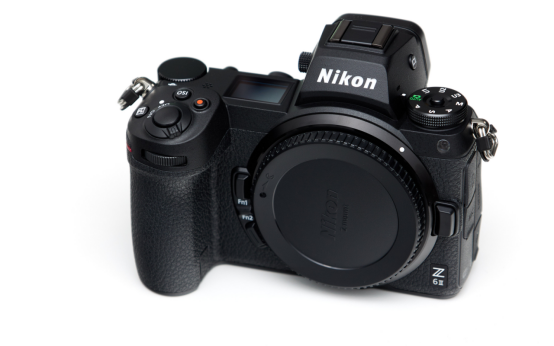
The Nikon Z6 series has long represented the “sweet spot” in Nikon’s mirrorless lineup, offering a versatile balance of resolution, speed, and video capability. While the Nikon Z6 II was celebrated as a refined all-rounder that addressed the shortcomings of the original Z6, the Nikon Z6 III marks a significant technological leap. By introducing the world’s first partially-stacked CMOS sensor, Nikon has shifted the Z6 III from a mid-range enthusiast tool to a high-performance hybrid capable of challenging flagship models. This guide provides an in-depth dissection of both cameras to help you determine which serves your creative workflow best.
The Evolution of the Nikon Z6 Series: From Z6 II to Z6 III
The transition from the Z6 II to the Z6 III is not merely an incremental update; it is a fundamental re-imagining of what a “6-series” camera can achieve. The Z6 II was built on a traditional BSI (Back-Side Illuminated) sensor architecture, utilizing dual EXPEED 6 processors to manage data. While reliable, it faced stiff competition in terms of autofocus tracking and video frame rates. The Z6 III addresses these bottlenecks by adopting the EXPEED 7 processor, the same engine found in the flagship Z9 and Z8 models.
Bridging the Gap in Mirrorless Technology
For years, photographers had to choose between the affordable but slower BSI sensors and the expensive, ultra-fast fully-stacked sensors found in professional sports cameras. Nikon’s “partially-stacked” design in the Z6 III bridges this gap. It incorporates high-speed processing circuits above and below the pixel area, significantly increasing the readout speed without the astronomical cost of a fully-stacked chip. This allows the Z6 III to perform tasks that were previously impossible for a camera in its class, such as internal 6K RAW recording and ultra-high-speed bursts.
Comparing the Core Architecture
The internal architecture of the Z6 II was designed for stability. With its dual card slots (one CFexpress Type B and one UHS-II SD), it offered the redundancy professionals required. The Z6 III maintains this dual-slot configuration but upgrades the surrounding hardware. The build quality of the Z6 III has also been ruggedized, inheriting the professional-grade weather sealing of the Z8, making it a more viable option for extreme outdoor environments compared to the already capable Z6 II.

Performance and Speed: The Partially-Stacked Sensor Advantage
Speed is the primary differentiator when comparing these two generations. The Nikon Z6 II offers a respectable 14 frames per second (fps) in continuous high-speed mode. While sufficient for many scenarios, it can struggle with the rolling shutter effect when using the electronic shutter for fast-moving subjects. In contrast, the Z6 III leverages its partially-stacked sensor to achieve readout speeds approximately 3.5 times faster than its predecessor.
Processing Power: EXPEED 6 vs. EXPEED 7
The jump to the EXPEED 7 processor is transformative. This processor handles data 10 times faster than the dual EXPEED 6 setup. This power manifests in various ways:
- Blackout-Free Shooting: The Z6 III provides a much smoother viewfinder experience during high-speed bursts, similar to the Z8.
- Reduced Rolling Shutter: The faster readout means that the electronic shutter is now viable for sports and action, minimizing the “jello effect” on moving objects.
- Pre-Release Capture: The Z6 III introduces pre-release capture at up to 120 fps (JPEG), allowing photographers to save frames from up to a second before the shutter button is fully pressed.
Burst Shooting and Buffer Capabilities
When it comes to raw numbers, the Z6 III dominates. While the Z6 II caps out at 14 fps, the Z6 III can reach 20 fps in RAW with the electronic shutter and a staggering 60 fps in full-frame JPEG. If you are willing to crop to DX mode, it can even hit 120 fps. The buffer management has also been optimized, ensuring that the camera doesn’t lock up during critical moments of action, a common frustration for Z6 II users in high-intensity sports environments.

Advanced Autofocus and Subject Tracking Systems
Autofocus (AF) is perhaps the most discussed upgrade in the Z6 III. The Z6 II featured a competent AF system with eye-detection for humans and animals, but it often required manual intervention to stay locked on fast-moving or erratic subjects. The Z6 III inherits the Deep Learning AI technology from the Z9, making the AF system almost entirely autonomous.
Deep Learning and AI Subject Recognition
The Z6 III can automatically detect and track a wide array of subjects, including:
- People: Advanced torso, head, and eye detection.
- Animals: Cats, dogs, birds, and even smaller wildlife.
- Vehicles: Cars, motorcycles, bicycles, trains, and airplanes.
This system operates at -10 EV, which is significantly better than the Z6 II’s low-light AF capabilities. Photographers working in dimly lit reception halls or at twilight will find the Z6 III locks onto targets with much greater confidence and speed.
Low-Light Performance and Sensitivity
Both cameras share a 24.5MP resolution, but the Z6 III’s sensor is optimized for better signal-to-noise ratios in specific conditions. The native ISO range remains similar, but the real-world performance is enhanced by the EXPEED 7’s noise reduction algorithms. Furthermore, the Z6 III features Focus Point VR, which prioritizes stabilization at the active focus point rather than just the center of the frame, resulting in sharper images when shooting off-center subjects at slow shutter speeds.

Professional Video Capabilities and Cinema Features
For videographers, the Z6 III represents a massive upgrade over the Z6 II. While the Z6 II was a capable 4K machine, it required external recorders for the highest quality RAW output and was limited to 4K 60p with a crop. The Z6 III is a true cinema-grade hybrid, offering internal 6K RAW recording.
Internal 6K RAW and High Frame Rates
The ability to record 6K/60p N-RAW and 6K/30p ProRes RAW HQ internally is a game-changer for independent filmmakers. This provides maximum flexibility in post-production for color grading and cropping. Additionally, the Z6 III supports:
- 4K/120p: Perfect for high-quality slow-motion without the heavy crop seen in previous generations.
- Full HD/240p: For extreme slow-motion effects.
- 10-bit N-Log and HLG: Available internally across all major resolutions.
Stabilization and External Recording Options
The In-Body Image Stabilization (IBIS) has been improved from 5.0 stops in the Z6 II to 8.0 stops in the Z6 III. This makes handheld video shooting significantly smoother. For those who still prefer external monitors, the Z6 III features a full-sized HDMI port, a major ergonomic improvement over the Mini-HDMI port found on the Z6 II, which was often criticized for its fragility in professional rigs.

Ergonomics, Build Quality, and User Experience
The physical design of the Z6 III has been refined based on feedback from Z6 II users. While the two cameras look similar at a glance, the Z6 III is slightly larger and heavier, primarily to accommodate the heat dissipation required for high-end video recording. It also introduces a fully articulating rear LCD screen, a departure from the tilting screen of the Z6 II. This change is highly beneficial for vertical shooting and vlogging.
EVF Enhancements and Screen Articulation
One of the most impressive hardware upgrades is the Electronic Viewfinder (EVF). The Z6 III boasts a 5.76-million dot EVF with a brightness of 4000 nits and a wide color gamut (DCI-P3). This is significantly sharper and brighter than the 3.69-million dot EVF on the Z6 II. It provides a much more lifelike representation of the scene, making it easier to judge exposure and focus in bright daylight.
Comparison of Key Specifications
| Feature | Nikon Z6 II | Nikon Z6 III |
|---|---|---|
| Sensor Type | 24.5MP BSI CMOS | 24.5MP Partially-Stacked CMOS |
| Processor | Dual EXPEED 6 | EXPEED 7 |
| Max Burst Rate | 14 fps | 20 fps (RAW) / 120 fps (JPEG) |
| Video Resolution | 4K 60p (Cropped) | 6K 60p RAW (Internal) |
| AF Points | 273 Points | 299 Points (with AI Detection) |
| IBIS | 5.0 Stops | 8.0 Stops |
| EVF Brightness | Standard | 4000 Nits (DCI-P3) |
Frequently Asked Questions (FAQ)
- Q1: Is the Nikon Z6 III worth the upgrade if I already own a Z6 II?
- The upgrade is highly recommended if you shoot fast action, sports, or professional video. The improvements in autofocus tracking, 6K internal RAW, and the blackout-free EVF provide a significantly different shooting experience. However, for static landscape or portrait photography, the Z6 II remains a highly capable and cost-effective tool.
- Q2: Does the Z6 III use the same batteries as the Z6 II?
- Yes, the Z6 III uses the EN-EL15c battery, which is the same as the Z6 II. It is also backward compatible with older EN-EL15b and EN-EL15a batteries, though you will see reduced performance and may lose the ability to charge via USB-C with the oldest versions.
- Q3: How does the “partially-stacked” sensor affect image quality?
- In terms of pure dynamic range and resolution, the difference is minimal as both are 24.5MP sensors. The primary benefit of the partially-stacked design is speed—faster readout reduces rolling shutter and enables higher frame rates for both stills and video without sacrificing the image quality Nikon is known for.
- Q4: Can the Nikon Z6 III record video without overheating?
- The Z6 III is designed with better thermal management than the Z6 II. It can record 4K 60p for extended periods (often over 2 hours) and 6K RAW for significant durations, though environmental temperature will always play a role in total recording time.
- Q5: Which camera is better for low-light photography?
- While both have excellent high ISO performance, the Z6 III has the edge in low-light usability. Its autofocus system is rated down to -10 EV, allowing it to find focus in conditions where the Z6 II would struggle to lock on.