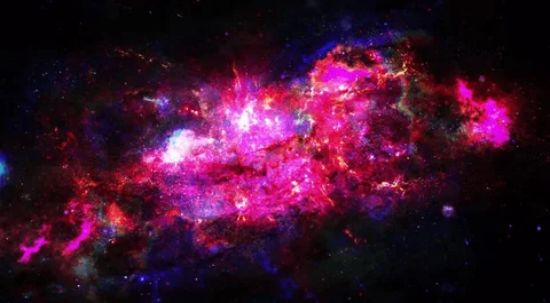
The Mechanics of Starburst Galaxy Cluster Formation
In the infant universe, starburst galaxies acted as cosmic crucibles, forging stars at rates vastly exceeding those observed in modern spiral galaxies. This process of “batch production” is driven by massive gravitational instabilities and high-density molecular gas reservoirs.
Understanding Starburst Triggers
Starburst events are typically ignited by galactic mergers or dense tidal interactions. These events compress giant molecular clouds, forcing them to collapse into dense, gravitationally bound star clusters.
- Gas Compression: High-pressure environments force hydrogen gas to overcome thermal support, accelerating star formation.
- Feedback Loops: The radiation pressure from newly formed massive stars can either quench further formation or trigger adjacent regions of collapse.

From the Pleiades to Westerlund 1: A Textbook on Stellar Evolution of Open Clusters
Stellar evolution is fundamentally linked to the environment of the parent cluster. While open clusters like the Pleiades represent the standard, low-density model of stellar evolution, superclusters like Westerlund 1 challenge our understanding of stellar density and life cycles.
Comparative Dynamics of Star Clusters
The following table illustrates the stark differences between standard open clusters and massive superclusters:
| Feature | Open Cluster (e.g., Pleiades) | Supercluster (e.g., Westerlund 1) |
|---|---|---|
| Stellar Density | Low | Extremely High |
| Mass | Moderate | Massive (10^4 to 10^5 solar masses) |
| Evolutionary Speed | Standard | Accelerated |

Hubble Discovers a Young Giant: Why Does the Star Cluster Westerlund 1 Have Such a High Eccentricity?
Westerlund 1 stands as a unique laboratory for astrophysics. Its high eccentricity and dense core suggest a formation history influenced by intense gravitational dynamics that are rare in the Milky Way.
The Anomaly of High Eccentricity
The orbital characteristics of stars within Westerlund 1 suggest the cluster may be undergoing a process of rapid dynamic relaxation. This is likely due to the massive concentration of stars within a relatively small spatial volume, leading to frequent stellar interactions.
Stellar Interactions in Dense Environments
- Binary Systems: High density increases the probability of binary star encounters.
- Mass Segregation: Heavier stars migrate toward the center of the cluster, further increasing the core density and gravitational potential.

The Extreme Cosmic Wonder of Westerlund 1: The Milky Way’s Supercluster
Westerlund 1 is often classified as a “super star cluster.” Its existence provides a local window into the conditions that prevailed during the peak star-forming eras of the early universe.
Key Characteristics of Westerlund 1
This cluster contains hundreds of massive stars, including rare types such as Wolf-Rayet stars and Yellow Hypergiants. These stars act as the primary engines for chemical enrichment in the local galactic neighborhood.
Frequently Asked Questions (FAQ)
- Q1: What defines a starburst galaxy?
- A starburst galaxy is a galaxy experiencing an exceptionally high rate of star formation compared to its gas supply, often triggered by gravitational interactions or mergers.
- Q2: Why is Westerlund 1 considered a supercluster?
- It is considered a supercluster because of its immense total mass (estimated at 60,000 solar masses or more) and its high concentration of massive, short-lived stars.
- Q3: How does stellar density affect the life cycle of a cluster?
- Higher densities increase the frequency of stellar encounters, which can lead to early stellar evaporation or the formation of exotic binary systems, ultimately determining the cluster’s long-term stability.
- Q4: Why is the early universe relevant to current cluster studies?
- Studying massive clusters like Westerlund 1 allows astronomers to model the extreme conditions found in the early universe, providing a proxy for how galaxies grew and matured billions of years ago.