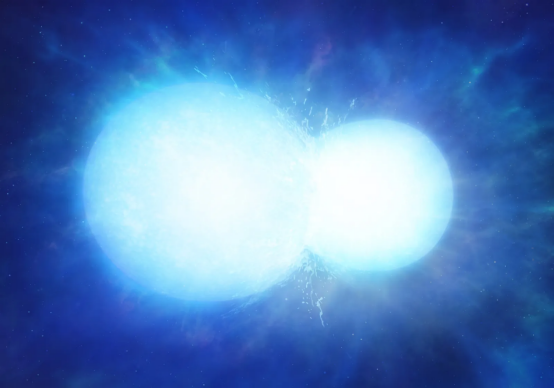
The universe is a vast laboratory of stellar transformation, where stars are born, live for billions of years, and eventually undergo spectacular deaths. This lifecycle is not merely a biological metaphor but a complex series of nuclear and physical transitions governed by the laws of thermodynamics and gravity. Understanding the transition from a main-sequence star to a Red Giant, and eventually to remnants like White Dwarfs or Neutron Stars, provides a window into the past and future of our own solar system. This guide reconstructs the latest scientific understanding of these cosmic phenomena, detailing the mechanisms that drive stellar evolution and the exotic states of matter that emerge in the aftermath of a star’s demise.
The Red Giant Phase: A Star’s Spectacular Expansion
When a star like our Sun exhausts the hydrogen fuel in its core, it exits the stable main-sequence phase and begins a dramatic transformation into a Red Giant. This phase is characterized by a massive increase in volume and a decrease in surface temperature, giving the star its characteristic reddish hue. The shift is driven by a delicate imbalance between the inward pull of gravity and the outward pressure of nuclear fusion.
The Mechanics of Shell Burning
As the core runs out of hydrogen, fusion stops, and gravity causes the core to contract. This contraction generates immense heat, which ignites a layer of hydrogen surrounding the core—a process known as hydrogen shell burning. The intense energy produced in this shell pushes the outer layers of the star outward, causing it to swell to hundreds of times its original size. During this period, the star’s luminosity increases significantly, even as its surface cools.
The Fate of the Solar System and Earth
In approximately five billion years, our Sun will enter this phase. Scientific models suggest that the Sun will expand to engulf Mercury and Venus. The fate of Earth remains a subject of intense debate among astrophysicists. While the Sun’s mass loss might cause Earth’s orbit to migrate outward, the intense heat and the drag from the solar atmosphere will likely render the planet uninhabitable long before the Sun reaches its maximum radius. The oceans will evaporate, and the atmosphere will be stripped away, leaving a scorched, lifeless rock.
- Core Contraction: The helium core becomes dense and hot, eventually reaching temperatures required for helium fusion.
- Helium Flash: For stars of a certain mass, the ignition of helium in the core occurs explosively in a matter of minutes.
- Planetary Nebula: Eventually, the outer layers are shed into space, creating a beautiful shell of ionized gas.

White Dwarfs: The Diamond Remnants of Dead Stars
After a Red Giant sheds its outer layers, the remaining core is left behind as a White Dwarf. This object is incredibly dense, packing the mass of the Sun into a volume comparable to that of Earth. White Dwarfs represent the retirement phase for about 97% of the stars in our galaxy, including our Sun.
Electron Degeneracy Pressure and Stability
White Dwarfs do not collapse further under gravity because of a quantum mechanical effect known as electron degeneracy pressure. According to the Pauli Exclusion Principle, no two electrons can occupy the same quantum state. In the extreme density of a White Dwarf, electrons are packed so tightly that they generate an outward pressure that counteracts gravity. However, there is a limit to this stability—the Chandrasekhar Limit (approximately 1.4 solar masses). If a White Dwarf exceeds this mass, it will collapse further into a neutron star or explode as a Type Ia supernova.
The Cooling Process and Ultimate Crystallization
Because White Dwarfs no longer undergo nuclear fusion, they simply radiate away their stored thermal energy over trillions of years. As they cool, the carbon and oxygen ions within the core begin to arrange themselves into a lattice structure. This process is essentially the formation of a giant cosmic diamond. These remnants hold the “ultimate code” to the universe’s entropy increase, as they represent the final state of matter for most stars, slowly fading into invisible Black Dwarfs—though the universe is not yet old enough for any Black Dwarfs to exist.

Neutron Stars: Cosmic Lighthouses and Extreme Densities
For stars significantly more massive than the Sun, the end of the life cycle is far more violent. When a massive star’s core collapses, it doesn’t stop at the White Dwarf stage. The gravitational force is so strong that it overcomes electron degeneracy pressure, forcing electrons and protons to merge into neutrons. The result is a Neutron Star.
The Physics of Neutron Degeneracy
Neutron stars are the densest observable objects in the universe. A single teaspoon of neutron star material would weigh billions of tons. They are supported by neutron degeneracy pressure. These objects typically have a radius of only about 10 kilometers but contain more mass than the Sun. Their magnetic fields are trillions of times stronger than Earth’s, and they rotate at incredible speeds due to the conservation of angular momentum during the core collapse.
Pulsars and Spacetime Ripples
When a neutron star emits beams of electromagnetic radiation from its magnetic poles, it is known as a Pulsar. As the star rotates, these beams sweep across Earth like a lighthouse, appearing as regular pulses of radio waves. Furthermore, the movement of these massive, dense objects can create spacetime ripples known as gravitational waves, particularly when two neutron stars orbit each other or merge. These signals provide critical data for testing the limits of General Relativity.

Comparative Analysis of Stellar End-States
The final fate of a star is determined almost entirely by its initial mass. While White Dwarfs and Neutron Stars are both stellar remnants, their physical properties and the processes that create them are vastly different. The following table highlights the key distinctions between these two exotic states of matter.
| Property | White Dwarf | Neutron Star |
|---|---|---|
| Initial Progenitor Mass | Up to ~8 Solar Masses | ~8 to ~20 Solar Masses |
| Final Remnant Mass | < 1.4 Solar Masses | ~1.4 to ~2.1 Solar Masses |
| Radius | ~7,000 km (Earth size) | ~10-15 km (City size) |
| Support Mechanism | Electron Degeneracy Pressure | Neutron Degeneracy Pressure |
| Density | ~10^9 kg/m³ | ~10^17 kg/m³ |

The Cosmic Significance of Stellar Death
Stellar death is not merely an end but a vital part of the cosmic cycle. Without the death of stars, the universe would lack the heavy elements necessary for life. The processes occurring in Red Giants and during the supernova explosions that lead to Neutron Stars are responsible for nucleosynthesis—the creation of elements like carbon, oxygen, iron, and gold.
Nucleosynthesis and the Building Blocks of Life
During the Red Giant phase, stars fuse helium into carbon and oxygen. In more massive stars, fusion continues until iron is reached. Elements heavier than iron are produced during the extreme conditions of a supernova or the merger of two neutron stars (kilonova). These elements are then scattered into the interstellar medium, where they eventually coalesce into new stars, planets, and, ultimately, biological organisms. We are, quite literally, made of “star stuff.”

Entropy and the Long-Term Evolution of the Universe
The transition of stars into remnants like White Dwarfs is a profound illustration of the Second Law of Thermodynamics. As stars burn through their nuclear fuel, they increase the total entropy of the universe. The eventual crystallization of White Dwarfs represents a state of maximum order in a localized system, yet the heat they radiate away contributes to the eventual “heat death” of the universe.
White Dwarfs are essentially the “ultimate code” to understanding this entropy increase. By studying their cooling rates, astronomers can determine the age of the Milky Way’s disk and the history of star formation in our galaxy. They serve as cosmic clocks, ticking away as they transition from brilliant white spheres to cold, dark, crystalline embers.
Frequently Asked Questions (FAQ)
- Q1: Will the Sun become a Neutron Star or a Black Hole?
- No. The Sun does not have enough mass to overcome electron degeneracy pressure. It will end its life as a Red Giant and then transition into a White Dwarf. Only stars with at least 8 to 10 times the mass of the Sun can become Neutron Stars, and only those even more massive can become Black Holes.
- Q2: How long does it take for a White Dwarf to become a “Diamond Star”?
- The process of crystallization begins as the White Dwarf cools to a certain temperature. For a star like the Sun, this process takes billions of years. Some White Dwarfs in our galaxy have already begun this process, with cores that are largely composed of crystallized carbon and oxygen.
- Q3: What happens if you get too close to a Neutron Star?
- The gravitational pull and magnetic fields would be lethal long before you reached the surface. The tidal forces would be so strong that they would undergo a process called “spaghettification,” stretching any object into a thin ribbon of atoms. Additionally, the intense radiation from a pulsar’s beams would be instantly fatal.
- Q4: Why are Red Giants red?
- As a star expands into a Red Giant, its outer envelope spreads over a much larger area. This causes the surface temperature to drop (to around 3,000–4,000 Kelvin). According to Wien’s Law, cooler objects emit light at longer wavelengths, which corresponds to the red part of the visible spectrum.
- Q5: Can life survive on planets orbiting a White Dwarf?
- While it is theoretically possible for a planet to orbit in the habitable zone of a White Dwarf, the planet would have had to survive the star’s Red Giant phase. Furthermore, White Dwarfs are very small, so the habitable zone is very close to the star, exposing the planet to potential tidal locking and intense UV radiation.