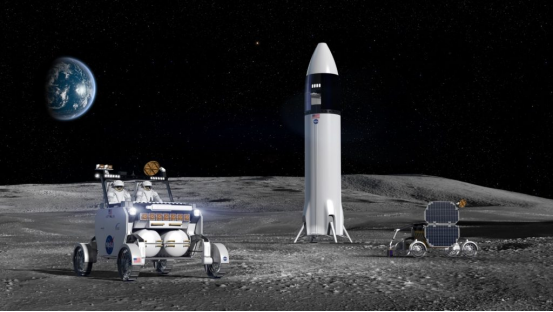
Understanding the Artemis Program’s Lunar Base Vision
The Artemis Program, spearheaded by NASA, represents a monumental leap forward in humanity’s ambition to return to the Moon and establish a sustainable presence. A cornerstone of this ambitious endeavor is the development of robust and reliable lunar base habitats. These are not merely shelters but sophisticated environments designed to support long-duration human missions, facilitate scientific research, and serve as a stepping stone for future interplanetary exploration. The design of these habitats is a complex interplay of engineering, environmental science, and human factors, all aimed at overcoming the unique challenges posed by the lunar surface.
The Strategic Importance of Lunar Habitats
Lunar habitats are critical for several key reasons. Firstly, they provide essential protection against the harsh lunar environment, which includes extreme temperature fluctuations, a vacuum, and high levels of radiation. Secondly, they are designed to be self-sufficient or semi-self-sufficient, reducing reliance on Earth-based resupply missions, which are costly and logistically challenging. Thirdly, these habitats will serve as operational hubs for astronauts, enabling them to conduct scientific experiments, explore the lunar surface, and manage complex machinery. The long-term vision for Artemis includes not just short visits but sustained human presence, making the habitat design a foundational element for success.

Key Design Principles for Lunar Habitats
The design of lunar habitats is guided by a set of stringent principles that address the unique challenges of the lunar environment and the needs of human occupants. These principles ensure safety, functionality, and sustainability. Unlike terrestrial architecture, lunar habitats must contend with microgravity (or partial gravity), the abrasive and pervasive lunar dust (regolith), and the absence of an atmosphere. Therefore, materials, structural integrity, and internal systems are all meticulously planned.
Structural Integrity and Materials
Lunar habitats must be robust enough to withstand the forces of launch, landing, and the constant environmental stresses of the Moon. This includes resistance to micrometeoroid impacts and seismic activity, however minor it may be on the Moon. The selection of materials is paramount. Lightweight yet strong composites, advanced alloys, and potentially in-situ resource utilization (ISRU) materials, such as lunar regolith, are being explored. ISRU offers the tantalizing prospect of reducing the mass that needs to be launched from Earth, significantly lowering mission costs and increasing self-sufficiency. For instance, regolith can be used for radiation shielding or as a component in 3D-printed structures.
Radiation Shielding
The Moon lacks a substantial atmosphere and a global magnetic field, leaving its surface exposed to harmful cosmic rays and solar particle events. Effective radiation shielding is therefore a non-negotiable requirement for any lunar habitat. This can be achieved through various means, including the use of thick layers of water, polyethylene, or regolith. The placement of the habitat, potentially underground or covered with a substantial layer of lunar soil, can significantly enhance protection. The depth and composition of this shielding are critical calculations to ensure astronaut safety during extended stays.
Thermal Control Systems
The lunar surface experiences extreme temperature variations, ranging from over 120°C (250°F) during the lunar day to below -170°C (-270°F) during the lunar night. Lunar habitats must incorporate sophisticated thermal control systems to maintain a stable and comfortable internal temperature for astronauts. This involves managing heat generated by internal equipment and occupants, as well as insulating against the external temperature extremes. Advanced insulation materials, radiators, and potentially active cooling and heating systems are essential components.
The Crucial Role of Life Support Systems (LSS)
Beyond structural integrity and environmental protection, the most critical aspect of a lunar habitat is its Life Support System (LSS). The LSS is the heart of the habitat, responsible for providing and maintaining a habitable environment for the crew. This encompasses a complex array of interconnected systems that manage air, water, waste, and food.
Atmosphere Management
Maintaining a breathable atmosphere is paramount. This involves regulating the composition of the air, specifically the levels of oxygen, nitrogen, and carbon dioxide. The LSS must continuously monitor and adjust these levels, removing excess carbon dioxide through scrubbers and replenishing oxygen, often through electrolysis of water. It also needs to filter out trace contaminants and control humidity. For long-duration missions, closed-loop systems that recycle air are highly desirable to minimize resupply needs.
Water Management
Water is essential for drinking, hygiene, and various scientific and operational processes. Lunar habitats will likely employ advanced water recycling systems. These systems capture and purify wastewater from showers, sinks, and even urine, transforming it back into potable water. The efficient recovery and reuse of water are critical for sustainability and reducing the mass of water that must be transported from Earth.
Waste Management
Managing waste, both human and operational, is a significant challenge. Advanced waste management systems are required to process solid waste, potentially converting it into useful byproducts or safely storing it. The goal is to minimize the volume and hazard of waste and, where possible, to recover valuable resources. This can include composting organic waste for potential use in future lunar agriculture.
Food Production and Storage
For extended missions, the ability to produce some food locally could significantly enhance crew well-being and reduce reliance on pre-packaged meals. While full-scale lunar agriculture is a long-term goal, initial missions may focus on supplemental food growth. Efficient storage of perishable and non-perishable food items, along with systems to monitor their quality and safety, are also vital components of the LSS.
Expert Advice for Lunar Habitat Design and Operation
Designing and operating a lunar habitat requires a multidisciplinary approach, integrating expertise from aerospace engineering, environmental science, biology, psychology, and human factors. Here are some key pieces of advice for those involved in such endeavors:
- Prioritize Redundancy and Modularity: Critical systems should have multiple layers of redundancy. Habitats should also be modular, allowing for expansion, repair, and reconfiguration as mission needs evolve.
- Embrace In-Situ Resource Utilization (ISRU): Actively research and develop technologies that leverage lunar resources like regolith and water ice. This is key to long-term sustainability and cost-effectiveness.
- Consider Human Factors and Psychology: Long-duration stays in confined environments can be psychologically taxing. Habitat design must incorporate elements that promote crew well-being, such as private spaces, natural light simulations, and opportunities for recreation and communication.
- Develop Robust Dust Mitigation Strategies: Lunar dust is a pervasive and abrasive problem. Effective dust seals, cleaning protocols, and material choices are essential to prevent damage to equipment and health issues for the crew.
- Simulate and Test Extensively: Thorough ground-based simulations and testing of all systems and protocols are crucial before deployment to the Moon. This includes testing under conditions that mimic the lunar environment as closely as possible.
Lunar Habitat vs. Mars Habitat: A Comparative Analysis
While both lunar and Martian habitats share common challenges of extreme environments and the need for life support, there are distinct differences driven by the specific characteristics of each celestial body.
| Feature | Lunar Habitat | Mars Habitat |
|---|---|---|
| Gravity | 1/6th Earth’s gravity (lower) | Approximately 3/8th Earth’s gravity (higher than Moon) |
| Atmosphere | Near vacuum; no significant atmosphere | Thin atmosphere (mostly CO2), provides minimal protection |
| Radiation | High exposure; no magnetic field or thick atmosphere | High exposure; some minor atmospheric and magnetic field protection, but still significant |
| Distance from Earth | Closer; easier and faster resupply | Further; longer transit times and more complex resupply logistics |
| Surface Conditions | Dry, dusty, extreme temperature swings | Dry, dusty, extreme temperature swings, potential for dust storms |
| Resource Availability | Water ice in polar craters, potential for oxygen extraction from regolith | Water ice (subsurface and polar), CO2 in atmosphere for oxygen production |
Frequently Asked Questions (FAQ)
- What are the primary challenges in designing a lunar base habitat?
- The primary challenges include protecting astronauts from extreme temperatures, radiation, and micrometeoroid impacts. Additionally, managing lunar dust, ensuring a reliable life support system, and addressing the psychological impact of long-duration isolation in a confined space are critical hurdles.
- How does the Artemis Program plan to address radiation on the Moon?
- The Artemis Program plans to address radiation through a combination of strategies. This includes using thick shielding materials like regolith (lunar soil) to cover habitats, potentially burying habitats underground, and developing advanced radiation monitoring and warning systems. The choice of habitat location, such as lava tubes, can also offer natural protection.
- What is the role of In-Situ Resource Utilization (ISRU) in lunar habitat development?
- ISRU is crucial for the long-term sustainability of lunar bases. It involves using resources found on the Moon, such as water ice for life support and propellant, and regolith for construction materials and radiation shielding. By utilizing local resources, the need to transport heavy materials from Earth is significantly reduced, lowering mission costs and increasing self-sufficiency.
- How are lunar habitats designed to maintain a breathable atmosphere?
- Lunar habitats employ sophisticated Life Support Systems (LSS) that manage the atmosphere. These systems continuously monitor and regulate oxygen and nitrogen levels, remove carbon dioxide through scrubbers, and filter out contaminants and humidity. For extended missions, closed-loop systems that recycle air are essential to minimize resupply requirements.
- What are the key differences between designing a lunar habitat and a Mars habitat?
- Key differences include the Moon’s lower gravity, near-vacuum atmosphere, and closer proximity to Earth, which allows for easier resupply. Mars has slightly higher gravity, a thin CO2 atmosphere, and is much farther away, making resupply more challenging and requiring different strategies for atmospheric processing and radiation protection. Both face dust and extreme temperatures.