The Science of Gravitational Wave Background Noise
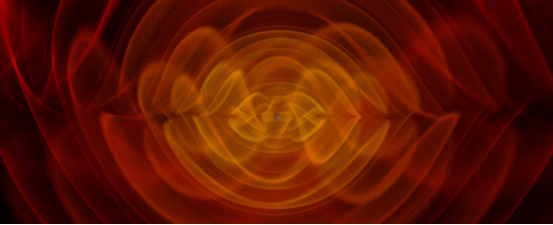
For decades, astronomers have gazed at the stars using light, but the universe also communicates through the subtle, invisible ripples of spacetime known as gravitational waves. First predicted by Albert Einstein in his General Theory of Relativity in 1916, these waves are generated by some of the most violent and energetic processes in the cosmos. However, beyond the distinct, singular “chirps” of individual merging black holes lies a deeper, more profound cosmic phenomenon: the gravitational wave background noise.
This stochastic background is essentially the combined, overlapping murmurs of countless supermassive black hole mergers echoing throughout the history of the universe. Imagine standing in a crowded room where you cannot distinguish individual conversations, but you hear a continuous, low-frequency hum. That is exactly what astrophysicists are detecting on a cosmic scale. Understanding this background noise is critical because it holds the key to mapping the evolution of galaxies and the behavior of gravity in the extreme environments of the early universe.
The Origins of the Cosmic Symphony
The gravitational wave background is primarily composed of signals from supermassive black hole binaries (SMBHBs). These colossal entities, often billions of times the mass of our sun, reside at the centers of merging galaxies. As the galaxies collide, their central black holes enter a deadly orbital dance. Over millions of years, they spiral inward, radiating immense amounts of energy in the form of ultra-low-frequency gravitational waves. Because these events happen constantly across the vastness of the universe, their waves wash over Earth continuously, creating a persistent background static.
Why the “Noise” Matters
Unlike light, which can be blocked by dust or absorbed by gas, gravitational waves pass unhindered through all matter. This makes the gravitational wave background an uncorrupted historical record of the cosmos. By analyzing the frequency and amplitude of this noise, scientists can determine the rate at which galaxies merged in the early universe, the mass distribution of ancient black holes, and even test alternative theories of gravity that challenge Einstein’s original equations.

Decoding Early Universe Black Hole Mergers
The early universe was a chaotic, dense environment where galaxies collided with astonishing frequency. These ancient collisions are the primary source of the background noise we detect today. By isolating specific frequencies within the gravitational wave background, researchers can essentially look back in time, observing the mechanics of the universe shortly after the Big Bang.
The Final Parsec Problem
One of the greatest mysteries in astrophysics is the “Final Parsec Problem.” When two galaxies merge, their central black holes sink to the new galactic center. However, theoretical models suggest that once they get within about one parsec (roughly 3.26 light-years) of each other, they run out of surrounding stars and gas to interact with, which should theoretically stall their merger indefinitely. The detection of the gravitational wave background proves that these supermassive black holes do, in fact, overcome this hurdle and merge. The specific characteristics of the background noise are now helping scientists understand the hidden mechanisms—such as dark matter interactions or undiscovered gas dynamics—that push these behemoths over the final parsec.
Primordial Black Holes vs. Stellar Evolution
Another profound clue hidden in the noise is the origin of the black holes themselves. While most black holes form from the collapse of massive stars, the early universe may have spawned “primordial black holes” directly from the dense, hot plasma present moments after the Big Bang. If primordial black holes exist, their merger rates and mass profiles would leave a distinct, measurable signature in the gravitational wave background, fundamentally altering our understanding of early cosmic inflation.
Advanced Detection Methods and Technologies
Detecting the gravitational wave background requires instruments of unimaginable precision. Because these waves have wavelengths stretching light-years across, traditional Earth-based detectors like LIGO and Virgo are too small to hear them. Instead, astronomers must turn the galaxy itself into a giant observatory.
Pulsar Timing Arrays (PTAs)
The primary method for detecting the low-frequency background noise is through Pulsar Timing Arrays. Pulsars are rapidly rotating neutron stars that emit beams of radiation, appearing to pulse with atomic-clock precision. Organizations like NANOGrav (North American Nanohertz Observatory for Gravitational Waves) monitor dozens of these pulsars across the Milky Way. When a gravitational wave passes through our galaxy, it slightly stretches and squeezes the spacetime between Earth and the pulsars, causing microscopic deviations in the arrival times of their pulses. By correlating these timing deviations across multiple pulsars, scientists can confirm the presence of the gravitational wave background.
Future Space-Based Interferometers
Looking ahead, missions like the Laser Interferometer Space Antenna (LISA), spearheaded by the European Space Agency, will revolutionize our detection capabilities. LISA will consist of three spacecraft flying in a triangular formation millions of kilometers apart, connected by laser beams. Free from Earth’s seismic noise, LISA will be sensitive to a different frequency range of the background noise, bridging the gap between PTA observations and ground-based detectors.
| Detection Method | Target Frequency | Primary Source Targets | Technological Approach |
|---|---|---|---|
| LIGO / Virgo | High (10 Hz – 10 kHz) | Stellar-mass black holes, Neutron stars | Ground-based laser interferometry |
| LISA (Upcoming) | Medium (0.1 mHz – 1 Hz) | White dwarf binaries, Intermediate black holes | Space-based laser interferometry |
| Pulsar Timing Arrays | Ultra-Low (Nanohertz) | Supermassive black hole binaries, Background noise | Radio telescope monitoring of cosmic pulsars |
Expert Advice and Pro Tips for Astrophysics Data Analysis
For researchers, students, and enthusiasts looking to dive into gravitational wave data, understanding the nuances of the background noise is crucial. The data is notoriously noisy, and separating the cosmic signal from local interference requires rigorous methodology.
- Master Statistical Cross-Correlation: The definitive proof of the background noise lies in the Hellings-Downs curve, which maps the spatial correlation of timing residuals between pairs of pulsars. Focus your studies on Bayesian inference and Markov Chain Monte Carlo (MCMC) methods to isolate these correlations.
- Account for Solar System Ephemeris: A common pitfall in PTA data analysis is failing to accurately account for the Earth’s movement around the solar system barycenter. Even a slight miscalculation in Jupiter’s orbit can create false signals that mimic gravitational waves.
- Leverage Open Source Data: Organizations like NANOGrav and the International Pulsar Timing Array (IPTA) regularly release their datasets to the public. Utilize Python libraries such as ENTERPRISE (Enhanced Numerical Toolbox Evaluating a Robust Pulsar Inference SuitE) to practice analyzing real-world timing residuals.
- Understand Dispersion Measures: Radio waves from pulsars are delayed by interstellar plasma. You must meticulously correct for these dispersion measure variations to ensure that timing delays are actually caused by spacetime ripples, not cosmic dust.
Frequently Asked Questions (FAQ)
- What exactly is gravitational wave background noise?
- It is the continuous, ultra-low-frequency hum of spacetime ripples permeating the universe. It is created by the overlapping, unresolved signals of millions of supermassive black hole mergers that have occurred throughout cosmic history.
- How does the background noise differ from LIGO discoveries?
- LIGO detects high-frequency gravitational waves from individual, relatively small (stellar-mass) black hole or neutron star collisions. The background noise is ultra-low frequency and comes from giant, supermassive black holes located at the centers of merging galaxies.
- Why is the “Final Parsec Problem” important?
- Theoretical physics struggles to explain how two supermassive black holes cross the final 3 light-years of distance to actually merge. The detection of the gravitational wave background proves they do merge, forcing scientists to rethink galactic dynamics and dark matter interactions.
- Can we hear the Big Bang in this background noise?
- While the current background noise detected by PTAs is primarily from supermassive black holes, scientists hope that future, more sensitive instruments will detect a primordial gravitational wave background—ripples generated by the rapid expansion of the universe mere fractions of a second after the Big Bang.
- What role do pulsars play in this research?
- Pulsars act as highly precise cosmic clocks. By monitoring the exact arrival times of their radio pulses, scientists can detect the microscopic stretching and squeezing of spacetime caused by passing gravitational waves, which alter the distance between Earth and the pulsars.