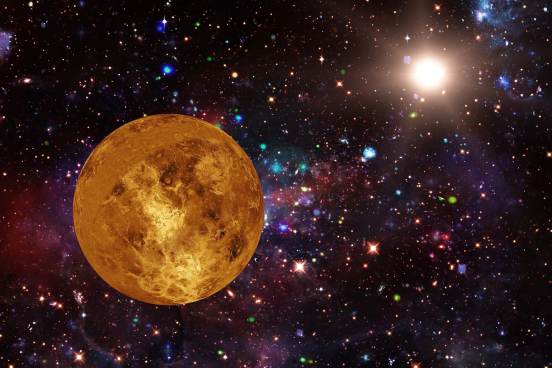
Unveiling the Mystery of Venus: DAVCI and VERITAS Missions
Venus, often referred to as Earth’s “evil twin” due to its similar size and mass, harbors a vastly different and inhospitable environment. Understanding the planet’s atmospheric evolution and geological history is crucial for comprehending planetary habitability and the diverse outcomes of planetary formation. NASA’s upcoming DAVCI (Deep Atmosphere Venus Investigation of Noble gases, Chemistry, and Imaging) and VERITAS (Venus Emissivity, Radio Science, InSAR, Topography, and Spectroscopy) missions are poised to provide unprecedented insights into the enigmatic nature of our neighboring planet. These two complementary missions are designed to work in tandem, addressing fundamental questions about Venus’s past, present, and potential future.
The DAVCI Mission: Probing Venus’s Deep Atmosphere
DAVCI is specifically engineered to descend into Venus’s dense atmosphere, carrying a suite of instruments to analyze its composition and dynamics. The mission aims to unravel the mysteries of Venus’s thick cloud layers, its extreme surface temperatures, and the processes that led to its current state. By directly sampling the atmosphere at various altitudes, DAVCI will provide crucial data on the distribution of noble gases, the complex chemistry at play, and the atmospheric circulation patterns. This detailed atmospheric profiling is essential for understanding the runaway greenhouse effect that has rendered Venus so different from Earth.
The VERITAS Mission: Mapping Venus’s Surface and Geology
Complementing DAVCI’s atmospheric focus, VERITAS is designed to meticulously map the surface of Venus and study its geological features. Using advanced radar interferometry, VERITAS will create high-resolution topographic maps, revealing the planet’s geological structures such as volcanoes, mountains, and plains. By analyzing the emissivity of the surface, the mission will also infer surface composition and temperature, providing clues about past volcanic activity and the planet’s thermal state. The synergy between DAVCI’s atmospheric data and VERITAS’s surface mapping will allow scientists to correlate atmospheric phenomena with geological processes, offering a holistic view of Venus’s evolution.
Synergistic Objectives: A Combined Approach to Venus Science
The combined objectives of DAVCI and VERITAS are ambitious and far-reaching. Together, they aim to answer critical questions such as: What is the history of water on Venus? How did Venus evolve to become so different from Earth? Is Venus geologically active today? Understanding these aspects of Venus is not only vital for planetary science but also has implications for exoplanet research, helping us to identify potentially habitable worlds beyond our solar system. The missions’ joint approach ensures that data gathered from the atmosphere and the surface can be integrated, providing a more complete picture than either mission could achieve alone.

OSIRIS-APEX: A Close Encounter with the Sun
NASA’s OSIRIS-APEX mission, formerly OSIRIS-REx, is embarking on an extraordinary journey to get closer to the Sun than almost any spacecraft before it. This ambitious endeavor is designed to study the Sun’s outer atmosphere, the corona, and the solar wind in unprecedented detail. By flying through regions previously inaccessible, OSIRIS-APEX aims to unlock secrets about the Sun’s magnetic field, the acceleration of solar particles, and the fundamental processes that drive space weather, which can have significant impacts on Earth’s technology and infrastructure.
Objectives of the OSIRIS-APEX Solar Mission
The primary goal of OSIRIS-APEX is to investigate the Sun’s heliosphere, the vast bubble of plasma and magnetic fields that extends far beyond the planets. Specifically, the mission will focus on:
- Studying the Solar Wind: Analyzing the composition, speed, and density of the solar wind to understand how it is accelerated and how it carries energy and particles away from the Sun.
- Investigating Solar Flares and Coronal Mass Ejections (CMEs): Observing the dynamic events on the Sun’s surface to better understand their triggers, propagation, and effects on the surrounding space environment.
- Measuring the Sun’s Magnetic Field: Gathering crucial data on the structure and strength of the Sun’s magnetic field, which governs much of its activity.
By making close passes through the Sun’s environment, OSIRIS-APEX will collect data that complements observations from other solar missions, providing a more comprehensive understanding of our star’s complex behavior.
Technological Innovations for Solar Proximity
Operating in the extreme environment close to the Sun presents significant technological challenges. OSIRIS-APEX is equipped with advanced thermal protection systems to withstand the intense heat and radiation. Its instruments are designed to operate reliably under these harsh conditions, allowing for precise measurements of solar plasma, magnetic fields, and energetic particles. The mission’s trajectory is carefully calculated to ensure safe passage through the Sun’s outer atmosphere while maximizing scientific data acquisition.

Tianwen-2: China’s Ambitious Asteroid and Comet Sample Return Mission
China’s space program continues its ambitious trajectory with the Tianwen-2 mission, which is set to explore a near-Earth asteroid and a comet. This groundbreaking mission represents a significant step forward in China’s planetary science endeavors, aiming to collect samples from both celestial bodies and return them to Earth for detailed analysis. Such a complex undertaking requires sophisticated engineering and scientific planning, promising to yield invaluable data about the formation and evolution of the solar system.
Target Selection and Mission Profile
Tianwen-2 will initially target the asteroid 2020 KZ, a near-Earth object that has been identified as a prime candidate for sample return due to its accessibility and scientific interest. Following its encounter with the asteroid, the spacecraft is programmed to rendezvous with a comet, further expanding the mission’s scope. The mission profile includes:
- Asteroid Exploration and Sampling: The spacecraft will land on the asteroid, deploy scientific instruments, and collect samples from its surface.
- Cometary Rendezvous and Observation: After departing the asteroid, Tianwen-2 will travel to a designated comet for observation and potentially further sample collection.
- Sample Return: The collected samples from both bodies will be encapsulated and returned to Earth for laboratory analysis.
This dual-target approach allows for comparative studies of different primitive bodies in the solar system, offering insights into the diverse materials that contributed to the formation of planets.
Scientific Significance of Tianwen-2
The scientific objectives of Tianwen-2 are profound. By analyzing samples from an asteroid and a comet, scientists hope to:
- Understand Solar System Formation: Asteroids and comets are remnants from the early solar system, preserving pristine materials that can reveal details about its initial composition and processes.
- Investigate Water and Organic Molecules: These bodies are thought to have delivered water and organic compounds to early Earth, playing a crucial role in the origin of life.
- Characterize Primitive Bodies: The mission will provide detailed characterization of the asteroid and comet’s physical and chemical properties.
The success of Tianwen-2 will not only advance China’s capabilities in deep space exploration but also contribute significantly to humanity’s understanding of our cosmic origins.

Revolutionizing Exploration: A Drone for Saturn’s Moon Titan
In a pioneering move, NASA has approved the development of a groundbreaking drone designed to explore Saturn’s largest moon, Titan. This innovative mission, tentatively named Dragonfly, represents a significant leap in planetary exploration, utilizing aerial mobility to investigate a world with a dense atmosphere and liquid methane lakes. Titan is considered one of the most intriguing celestial bodies in our solar system due to its Earth-like geological processes, making it a prime target for in-situ exploration.
Dragonfly’s Mission Objectives on Titan
The Dragonfly drone will be equipped with a suite of scientific instruments to study Titan’s complex environment. Its primary objectives include:
- Investigating Habitability: Dragonfly will search for prebiotic chemistry and assess Titan’s potential for harboring life, past or present, by analyzing its organic-rich atmosphere and surface.
- Studying Atmospheric and Surface Processes: The drone will fly to multiple locations on Titan to study its meteorology, atmospheric composition, and the unique processes shaping its surface, such as methane rain and river systems.
- Exploring Diverse Environments: By visiting different terrains, including dunes, lakebeds, and impact craters, Dragonfly will provide a comprehensive understanding of Titan’s geological history and evolution.
The ability to fly across Titan’s surface allows for exploration of areas inaccessible to landers, offering a dynamic perspective on this enigmatic moon.
Technological Marvel: The Dragonfly Drone
The Dragonfly drone is a technological marvel designed to operate in Titan’s unique conditions. It will be powered by a radioisotope thermoelectric generator (RTG), providing consistent power in the dim sunlight and cold temperatures of the outer solar system. Its rotorcraft design allows for vertical take-off and landing (VTOL) capabilities, enabling it to navigate Titan’s thick atmosphere, which is about 1.5 times denser than Earth’s and composed primarily of nitrogen. The drone will be able to fly for extended periods, covering significant distances between exploration sites, making it a versatile platform for scientific discovery.

SPHEREx: Conducting a Cosmic Census of the Universe
The SPHEREx (Spectro-Photometer for the History of the Universe, Epoch of Reionization, and Ices Explorer) mission is NASA’s innovative infrared observatory designed to conduct a comprehensive spectroscopic survey of the entire sky. Its primary goal is to map the universe in unprecedented detail, providing crucial data to understand the early universe, the formation of galaxies, and the distribution of water and other ices in our cosmic neighborhood. SPHEREx represents a new era in observational cosmology, promising to unlock some of the universe’s most profound mysteries.
SPHEREx’s Scientific Goals and Spectroscopic Approach
SPHEREx’s unique approach involves mapping the sky in multiple infrared wavelengths, creating a vast spectroscopic dataset. This allows scientists to:
- Study the Epoch of Reionization: Investigate the period when the first stars and galaxies emerged, ionizing the neutral hydrogen gas that filled the early universe.
- Trace the Expansion of the Universe: Measure the distances to millions of galaxies to better understand the expansion rate of the universe and the nature of dark energy.
- Map the Distribution of Water and Ices: Detect and map the abundance of water and other ices in various celestial objects, including star-forming regions, exoplanetary systems, and the Kuiper Belt. This is crucial for understanding the role of water in the formation of planets and the potential for life elsewhere.
By capturing the spectral fingerprint of light from every corner of the sky, SPHEREx will create a detailed map of the universe’s composition and evolution.
The SPHEREx Observatory and its Significance
The SPHEREx observatory is designed to be a highly sensitive infrared telescope capable of surveying the entire sky multiple times. Its instruments will collect light across a broad spectrum, allowing for the identification of various chemical signatures and physical processes. The data gathered by SPHEREx will be publicly available, enabling a wide range of scientific research and fostering new discoveries. The mission’s comprehensive census of the universe is expected to revolutionize our understanding of cosmic history, from the Big Bang to the present day, and provide critical insights into the prevalence of potentially habitable environments beyond our solar system.
Frequently Asked Questions (FAQ)
- What is the primary objective of the DAVCI and VERITAS missions?
- The primary objective of the DAVCI and VERITAS missions is to collaboratively study Venus, with DAVCI focusing on its deep atmosphere and VERITAS on mapping its surface and geological features. Together, they aim to understand Venus’s atmospheric evolution, geological history, and potential for past habitability.
- How does the OSIRIS-APEX probe get close to the Sun?
- The OSIRIS-APEX probe utilizes advanced thermal protection systems and a carefully calculated trajectory to safely approach and study the Sun’s outer atmosphere, the corona. It is designed to withstand the intense heat and radiation while collecting data on the solar wind and magnetic fields.
- What makes the Tianwen-2 mission unique?
- Tianwen-2 is unique because it is an ambitious mission aiming to collect samples from both an asteroid and a comet and return them to Earth for analysis. This dual-target approach provides a comparative study of primitive solar system bodies.
- Why is a drone being sent to Saturn’s moon Titan?
- A drone is being sent to Titan because of its dense atmosphere and liquid methane lakes, making it a unique world with Earth-like geological processes. The drone, Dragonfly, will allow for aerial exploration of multiple locations, studying its habitability potential, atmospheric conditions, and surface features.
- What kind of data will the SPHEREx mission collect?
- SPHEREx will collect extensive spectroscopic data of the entire sky in infrared wavelengths. This data will be used to study the early universe, the epoch of reionization, the expansion of the universe, and to map the distribution of water and other ices throughout the cosmos.