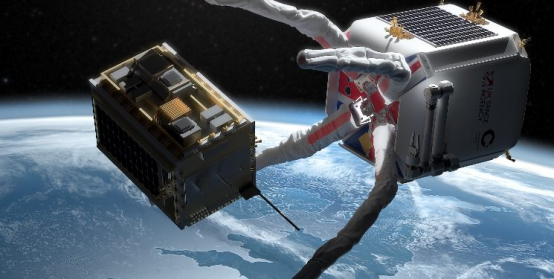
Technical Challenges in Active Orbital Debris Removal
The endeavor to actively remove orbital debris from Earth’s orbit represents one of the most complex and pressing challenges in modern space exploration. As the volume of space junk continues to escalate, the risk of catastrophic collisions increases, threatening operational satellites, future missions, and even the International Space Station. The very first missions designed to tackle this problem face a unique set of formidable technical hurdles that require groundbreaking engineering solutions and meticulous planning. These challenges span from the fundamental physics of capturing and de-orbiting fast-moving, unpredictable objects to the intricate details of mission design, propulsion, and rendezvous operations in the harsh vacuum of space.
The sheer velocity of orbital debris, often exceeding 17,000 miles per hour, makes any form of physical interaction incredibly risky. Capturing a piece of debris without imparting unwanted momentum or causing it to fragment further is a delicate balancing act. Furthermore, the vast distances involved, coupled with the need for precise orbital maneuvering, demand highly sophisticated guidance, navigation, and control (GNC) systems. The lack of atmospheric drag in orbit means that even small objects can persist for decades or centuries, necessitating a proactive and sustained approach to removal. Missions must be designed to be robust, reliable, and capable of operating autonomously or with minimal ground intervention due to communication delays.
Rendezvous and Proximity Operations
One of the most critical phases of any debris removal mission is the ability to safely approach and interact with the target object. This involves complex rendezvous maneuvers, often requiring the removal spacecraft to match the orbital parameters of the debris with extreme precision. Proximity operations, where the spacecraft operates in close quarters with the debris, demand advanced sensors, sophisticated algorithms for collision avoidance, and highly responsive thruster systems. The target debris itself may be tumbling, irregularly shaped, or have unpredictable spin dynamics, further complicating the capture process. Specialized capture mechanisms, such as robotic arms, nets, or harpoons, must be designed to reliably secure these varied targets without generating additional fragmentation.
De-orbiting Strategies and Propulsion
Once captured, the orbital debris must be safely removed from orbit. This typically involves a de-orbiting maneuver to steer the combined object into the Earth’s atmosphere, where it will burn up. The method chosen for de-orbiting depends heavily on the mass and characteristics of the debris, as well as the capabilities of the removal spacecraft. Some strategies might involve using the removal spacecraft’s own propulsion to lower the orbit of the captured debris. Other concepts explore attaching a de-orbiting module to the debris itself. The energy required for these maneuvers is substantial, and the propulsion systems must be highly efficient and reliable. Furthermore, the trajectory of the de-orbiting debris must be carefully controlled to ensure it burns up over unpopulated areas, such as the South Pacific Ocean Uninhabited Area (SPOUA).
Mission Design and Cost-Effectiveness
Developing a successful debris removal mission is not only a technical challenge but also an economic one. The cost of designing, building, launching, and operating such missions is significant. Therefore, the design must prioritize cost-effectiveness and scalability. Missions might aim to capture multiple pieces of debris in a single deployment or develop modular systems that can be reused. The long-term sustainability of debris removal efforts hinges on finding economically viable solutions that can be implemented on a recurring basis. This involves innovation in manufacturing, launch services, and operational efficiency to reduce the overall price per kilogram of removed debris.

Mapping the Solar Wind with CubeSat Constellations
The solar wind, a continuous stream of charged particles released from the upper atmosphere of the Sun, plays a crucial role in shaping the heliosphere and influencing space weather. Understanding its dynamics is paramount for protecting Earth’s technological infrastructure, such as satellites and power grids, from its disruptive effects. While ground-based observations and single spacecraft missions provide valuable insights, a more comprehensive, high-resolution map of the solar wind across vast distances has been a long-standing goal. The advent of CubeSats—small, standardized satellites—offers a revolutionary approach to achieving this through collaborative constellations, enabling unprecedented mapping capabilities of the entire solar wind.
A constellation of CubeSats, like the proposed SWIFT mission, leverages the power of distributed sensing. Instead of relying on a single, complex, and expensive platform, hundreds or even thousands of small, relatively inexpensive satellites can be deployed in a coordinated manner. This distributed architecture allows for simultaneous measurements at multiple points in space, providing a synoptic view of the solar wind’s evolution. The key advantage lies in the ability to capture the three-dimensional structure and temporal variations of the solar wind with a resolution previously unattainable. This enables scientists to track the propagation of solar events, such as coronal mass ejections (CMEs), from their origin near the Sun to their impact on Earth and beyond.
Collaborative Sensing and Data Fusion
The effectiveness of a CubeSat constellation for solar wind mapping hinges on sophisticated collaboration and data fusion techniques. Each CubeSat in the constellation is equipped with miniaturized instruments capable of measuring key parameters of the solar wind, such as plasma density, velocity, temperature, and magnetic field strength. The real power emerges when the data from these individual satellites are combined and processed. Advanced algorithms are employed to stitch together these disparate measurements, creating a coherent and continuous map of the solar wind. This process involves techniques like Kalman filtering, spline interpolation, and machine learning to infer conditions in regions not directly sampled by any single satellite.
The collaborative aspect also extends to the operational management of the constellation. The satellites must maintain precise formation flying, communicate effectively with each other and with ground stations, and adapt to changing mission objectives. This requires robust onboard autonomy and intelligent network protocols. The ability to dynamically reconfigure the constellation or prioritize observations based on incoming solar activity further enhances its scientific utility.
Advantages of CubeSat Constellations
CubeSats offer several compelling advantages for this ambitious mapping endeavor:
- Cost-Effectiveness: Their standardized design and mass production significantly reduce development and launch costs compared to traditional large spacecraft.
- Scalability: The constellation can be scaled up or down depending on budget and scientific requirements, allowing for incremental expansion of coverage.
- Redundancy: The large number of satellites provides inherent redundancy; the failure of a few satellites does not compromise the mission’s overall scientific output.
- Rapid Deployment: Multiple CubeSats can be launched together, enabling quicker deployment and the establishment of a comprehensive observing network in a shorter timeframe.
- Distributed Measurements: They enable simultaneous measurements across a wide spatial volume, crucial for understanding the dynamic and evolving nature of the solar wind.
Scientific Applications and Space Weather Prediction
A high-resolution map of the solar wind has profound implications for various scientific disciplines and practical applications:
- Understanding Heliospheric Physics: It allows for detailed studies of plasma turbulence, particle acceleration, and the large-scale structure of the heliosphere.
- Improved Space Weather Forecasting: By accurately tracking the propagation of solar energetic particles and CMEs, it can provide earlier and more precise warnings of potential impacts on Earth, such as geomagnetic storms.
- Protecting Space Assets: Enhanced understanding of the space environment helps in designing more resilient satellites and planning mission trajectories to avoid hazardous regions.
- Interplanetary Navigation: Accurate solar wind models can aid in the navigation of future deep-space missions.

The Indispensable Role of Magnetometers on Spacecraft
Spacecraft venturing beyond Earth’s protective magnetic field are constantly exposed to a complex and dynamic electromagnetic environment. Among the suite of instruments essential for understanding this environment, the magnetometer stands out as a critical sensor. Magnetometers are devices designed to measure the strength and direction of magnetic fields. Their presence on a vast array of spacecraft, from planetary probes to interplanetary explorers and Earth-orbiting satellites, underscores their fundamental importance in scientific discovery and mission success. The data they collect provides invaluable insights into the magnetic properties of celestial bodies, the behavior of plasma, and the interactions between solar wind and planetary magnetospheres.
The magnetic field is a fundamental force in the universe, influencing the motion of charged particles, the formation of planetary atmospheres, and the dynamics of stellar processes. For spacecraft, understanding these magnetic fields is crucial for several reasons. Firstly, it allows scientists to characterize the intrinsic magnetic properties of planets, moons, and other celestial objects, which can reveal information about their internal structure, composition, and geological history. Secondly, the interaction between the solar wind’s magnetic field and a planet’s own magnetic field creates a complex magnetospheric region, and magnetometers are key to studying this interaction and its effects on charged particle populations.
Characterizing Planetary Magnetic Fields
One of the primary reasons spacecraft carry magnetometers is to map and understand the magnetic fields generated by planets and their moons. For instance, Earth’s magnetic field, generated by the motion of molten iron in its core, extends far into space, creating a protective magnetosphere. Magnetometers on satellites orbiting Earth help us study the structure of this magnetosphere, its interaction with the solar wind, and its role in phenomena like auroras. Similarly, missions to other planets, such as Jupiter with its incredibly powerful magnetic field, or Mars, which has a weak, localized magnetic field, rely on magnetometers to reveal the nature of these fields and what they tell us about the internal dynamos and evolution of these worlds.
The strength, orientation, and spatial variations of a planetary magnetic field provide direct evidence of the processes occurring within the planet’s interior. A strong, global dipole field suggests an active dynamo, similar to Earth’s, while localized magnetic anomalies might indicate remnant magnetism in the crust. Magnetometers help to build detailed three-dimensional models of these fields, which are essential for understanding planetary geology and evolution.
Studying the Solar Wind and Interplanetary Magnetic Field
The solar wind is not just a stream of particles; it also carries with it the Sun’s magnetic field, known as the Interplanetary Magnetic Field (IMF). As the solar wind propagates outward, the IMF is stretched and twisted into a spiral shape due to the Sun’s rotation. Magnetometers on spacecraft traveling through interplanetary space are crucial for measuring the IMF’s strength, direction, and fluctuations. This data is vital for understanding space weather, as the IMF plays a key role in how the solar wind interacts with planetary magnetospheres.
When the IMF is oriented in a southward direction relative to Earth’s magnetic field, it can easily connect with Earth’s magnetosphere, allowing solar wind energy and particles to enter. This process, known as magnetic reconnection, is a primary driver of geomagnetic storms, which can disrupt communication systems, damage satellites, and affect power grids. By monitoring the IMF with magnetometers, scientists can forecast the likelihood and intensity of such space weather events.
Investigating Plasma Dynamics and Particle Acceleration
Magnetic fields are fundamental to the behavior of plasmas, which are ubiquitous in space. Plasmas are ionized gases composed of charged particles, and their motion is heavily influenced by magnetic forces. Magnetometers, often used in conjunction with plasma detectors, allow scientists to study how magnetic fields shape plasma structures, drive waves, and accelerate particles to very high energies. For example, in planetary magnetospheres and in the solar corona, magnetic reconnection events can release vast amounts of energy, accelerating particles to relativistic speeds. Magnetometers help to identify the locations and conditions under which these acceleration processes occur.
Understanding these plasma dynamics is essential for a wide range of astrophysical phenomena, from the generation of radio emissions to the propagation of cosmic rays. The detailed measurements provided by magnetometers enable researchers to test and refine theoretical models of plasma physics in extreme environments.
Applications in Navigation and Mission Operations
Beyond fundamental scientific research, magnetometers also serve practical purposes in spacecraft navigation and operations. For missions operating near planetary bodies with significant magnetic fields, the magnetic field can exert forces on the spacecraft. Accurate knowledge of the magnetic field allows for precise trajectory planning and attitude control. In some cases, magnetometers can even be used as a primary sensor for autonomous navigation, particularly in environments where GPS signals are unavailable.
Furthermore, understanding the local magnetic field is crucial for the proper functioning of other sensitive instruments on board. For instance, electron detectors might need to account for the magnetic field’s influence on the trajectories of the particles they are measuring. Thus, the magnetometer is not just a scientific instrument but also an enabler of mission success across multiple domains.
Frequently Asked Questions (FAQ)
- What is the biggest technical challenge in removing orbital debris?
- The biggest technical challenge in removing orbital debris is the precise and safe capture of fast-moving, often tumbling, and irregularly shaped objects in the vacuum of space without causing further fragmentation. This requires highly advanced rendezvous and proximity operations capabilities, robust capture mechanisms, and sophisticated control systems to manage the complex dynamics involved.
- How does a constellation of CubeSats map the solar wind more effectively than a single satellite?
- A constellation of CubeSats maps the solar wind more effectively by providing simultaneous, multi-point measurements across a vast spatial volume. This distributed sensing approach allows for the creation of high-resolution, three-dimensional maps of the solar wind’s structure and evolution, enabling better tracking of solar events and improved space weather forecasting, which a single satellite cannot achieve due to its limited observation point.
- Why are magnetometers essential for understanding planetary magnetic fields?
- Magnetometers are essential for understanding planetary magnetic fields because they directly measure the strength and direction of these fields. This data allows scientists to characterize the intrinsic magnetic properties of planets, infer information about their internal structure and dynamo processes, and study the interaction between the planetary magnetic field and the solar wind, which creates the protective magnetosphere.
- What is the Interplanetary Magnetic Field (IMF) and why is it important?
- The Interplanetary Magnetic Field (IMF) is the Sun’s magnetic field that is carried outward by the solar wind. It is crucial for understanding space weather because its orientation, particularly when it is southward relative to Earth’s magnetic field, facilitates magnetic reconnection. This process allows solar wind energy to enter Earth’s magnetosphere, potentially triggering geomagnetic storms that can disrupt technological systems.
- Can CubeSats be used for missions beyond mapping the solar wind?
- Yes, CubeSats are highly versatile and can be used for a wide range of space missions beyond mapping the solar wind. Their cost-effectiveness, scalability, and standardized design make them suitable for Earth observation, telecommunications, technology demonstrations, atmospheric research, studying planetary magnetospheres, and even as precursors for more complex deep-space missions.