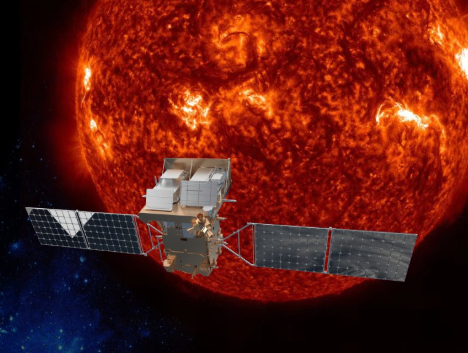
Our Sun, the star at the center of our solar system, is a colossal sphere of hot plasma, constantly churning with magnetic energy. While it provides the light and heat essential for life, it is also a dynamic and sometimes violent body. Understanding its behavior is not just a matter of scientific curiosity; it is a critical necessity for safeguarding our modern, technology-dependent civilization. To achieve this, scientists rely on a fleet of sophisticated solar observation satellites that provide an uninterrupted, panoramic view of our star’s activity. These orbital sentinels, like NASA’s groundbreaking Solar Dynamics Observatory (SDO), are our first line of defense, offering unprecedented insight into phenomena ranging from dark sunspots to brilliant solar flares.
This comprehensive guide delves into the world of solar observation. We will explore the key solar activities that satellites monitor, take a deep dive into the mission and instruments of the SDO, and understand how the data gathered from space helps us predict and mitigate the effects of space weather on Earth. By fusing the perspectives of what we observe with how we observe it, we can appreciate the intricate dance between solar physics and satellite technology.
Understanding the Sun’s Dynamic Surface: Key Phenomena
The Sun’s surface, or photosphere, and its atmosphere are far from uniform. They are a canvas of ever-changing features driven by the Sun’s powerful and complex magnetic field. Solar observation satellites are designed to capture these features in stunning detail across multiple wavelengths of light, revealing activity invisible to the naked eye. Understanding these core phenomena is the first step in appreciating the work of these satellites.
Sunspots: Islands of Intense Magnetism
Sunspots are perhaps the most well-known solar feature. They appear as dark, temporary blemishes on the photosphere. This darkness is not because they are truly black, but because they are significantly cooler than their surroundings. A typical sunspot has a temperature of about 3,000-4,500 K (2,727-4,227 °C), while the surrounding photosphere is about 5,778 K (5,505 °C). This temperature difference is caused by concentrations of intense magnetic flux that inhibit convection, effectively creating a magnetic plug that blocks the upward flow of heat from the Sun’s interior. Sunspots are the primary indicator of the Sun’s 11-year solar cycle, with their numbers increasing at solar maximum and decreasing at solar minimum.
Solar Prominences: Majestic Arcs of Plasma
A solar prominence (or filament, when viewed against the bright solar disk) is a large, bright, gaseous feature extending outward from the Sun’s surface, often in a stunning loop shape. These structures are anchored to the photosphere in regions of high magnetic activity and extend into the Sun’s hot outer atmosphere, the corona. Composed of plasma far cooler and denser than the surrounding corona, they are shaped and constrained by the Sun’s magnetic field lines. While some prominences can remain stable for days or weeks, others can erupt, flinging enormous amounts of solar material into space.
Solar Flares and Coronal Mass Ejections (CMEs)
The most energetic events on the Sun are solar flares and Coronal Mass Ejections (CMEs). A solar flare is an intense burst of radiation arising from the sudden release of magnetic energy stored in the Sun’s atmosphere. This release heats plasma to millions of degrees and produces a flash of radiation across the entire electromagnetic spectrum. A CME, on the other hand, is a massive eruption of solar plasma and magnetic fields from the corona into the heliosphere. While often associated, flares and CMEs are distinct events; a powerful flare can occur without a CME, and a CME can erupt without a significant flare. When directed at Earth, these events are the primary drivers of severe space weather.

Our Eyes in the Sky: The Mission of Solar Observatories
Observing the Sun from Earth’s surface presents significant challenges. Our planet’s atmosphere absorbs or distorts many of the wavelengths of light, particularly in the ultraviolet and X-ray spectrums, where the most dynamic solar activity is visible. Furthermore, the day-night cycle and weather conditions prevent the continuous monitoring necessary to track the rapid evolution of solar events. Space-based solar observatories overcome these limitations entirely.
Why Observe the Sun from Space?
Placing telescopes in orbit provides a crystal-clear, 24/7 view of the Sun. This constant vigilance is crucial because a solar flare can develop and peak in a matter of minutes, and a CME can travel from the Sun to Earth in as little as one to three days. An uninterrupted data stream allows scientists to:
- Track the full lifecycle of active regions, from the emergence of magnetic fields to the eruption of flares and CMEs.
- Observe in wavelengths like extreme ultraviolet (EUV) and X-ray, which are essential for seeing the super-heated plasma in the Sun’s corona.
- Measure the solar wind and energetic particles directly as they travel through space.
- Provide early warnings for potentially hazardous space weather events.
A Fleet of Sun-Watching Sentinels
While NASA’s Solar Dynamics Observatory is a flagship mission, it is part of a larger, international fleet of spacecraft dedicated to heliophysics. Satellites like the Solar and Heliospheric Observatory (SOHO), the Parker Solar Probe, and the Solar Orbiter each provide a unique piece of the puzzle. Some watch the Sun from afar, while others travel closer than any spacecraft before to “touch” the Sun’s atmosphere. Together, they create a comprehensive, multi-perspective view of our star’s behavior and its influence throughout the solar system.

In-Depth Look: NASA’s Solar Dynamics Observatory (SDO)
Launched in 2010, NASA’s Solar Dynamics Observatory (SDO) represents a leap forward in our ability to study the Sun. Its primary goal is to understand the solar variations that influence life on Earth and humanity’s technological systems. SDO achieves this by observing the Sun at an unprecedented level of detail in both time and space, providing data that has revolutionized solar science and space weather forecasting.
The SDO’s Core Mission and Objectives
The SDO was designed to investigate the Sun’s magnetic field and its role in driving solar activity. The mission’s specific objectives are to understand how the Sun’s magnetic field is generated and structured, how this stored magnetic energy is converted and released into the heliosphere, and what causes the variations in the Sun’s energy output. By answering these questions, SDO helps us build more accurate models of the Sun-Earth system.
The Trio of Instruments: SDO’s Scientific Powerhouse
SDO’s scientific prowess comes from its suite of three advanced instruments, each designed to look at a different aspect of the Sun simultaneously:
- Atmospheric Imaging Assembly (AIA): This instrument is a set of four telescopes that capture images of the full solar disk in 10 different wavelength bands every 12 seconds. This high-cadence imaging allows scientists to see the Sun’s atmosphere, or corona, in extreme detail, tracking the rapid evolution of solar flares and other dynamic events.
- Helioseismic and Magnetic Imager (HMI): The HMI is focused on the Sun’s surface and interior. It maps the full-disk magnetic fields (known as magnetograms) and uses the principles of helioseismology to peer beneath the visible surface, tracking the flows of plasma that generate the magnetic fields in the first place. It is our primary tool for watching the development of sunspot regions.
- Extreme Ultraviolet Variability Experiment (EVE): EVE’s job is to measure the Sun’s output in the extreme ultraviolet (EUV) range. The EUV radiation from the Sun is a primary driver of the structure and chemistry of Earth’s upper atmosphere (the thermosphere and ionosphere). EVE’s data is critical for understanding how solar flares impact satellite communications and GPS navigation.
Data Deluge: How SDO Revolutionized Solar Science
One of the most significant aspects of the SDO mission is the sheer volume of data it produces. The observatory sends back approximately 1.5 terabytes of data every single day. This constant, high-resolution stream of information has provided scientists with a “4K movie” of the Sun, allowing them to study solar phenomena in a way that was never before possible. This data has led to countless discoveries about the mechanisms behind solar flares, the structure of the corona, and the deep origins of the solar cycle.

How SDO Instruments Uncover Solar Secrets
The true power of SDO lies in the synergy between its instruments. By combining data from AIA, HMI, and EVE, scientists can build a complete picture of a solar event, from its origins deep inside the Sun to its effects on Earth’s atmosphere. This integrated approach is fundamental to advancing our predictive capabilities.
Mapping Magnetic Fields with the HMI
The HMI provides the foundational data for understanding almost all solar activity. Its magnetograms reveal the location and intensity of magnetic fields on the photosphere. Scientists can see where opposite magnetic polarities are closely packed—a tell-tale sign of a complex active region likely to produce a solar flare. By tracking these regions over time, forecasters can assess the probability of an eruption. HMI’s helioseismic data also allows us to map plasma flows beneath the surface, giving clues about how these magnetic regions form and evolve long before they become a threat.
Imaging the Corona with the AIA
While HMI watches the magnetic “cause,” AIA observes the “effect” in the Sun’s atmosphere. When magnetic field lines in an active region twist and snap, the AIA’s multi-wavelength images capture the resulting explosion in brilliant detail. Different wavelengths correspond to plasma at different temperatures, allowing scientists to see the initial heating of a solar flare, the formation of post-flare loops, and the launching of CMEs. The high-speed “movies” from AIA are invaluable for understanding the physics of these eruptions.
Measuring Energy Output with EVE
Simultaneously, EVE measures the energetic consequence of a flare. As AIA sees the structural changes, EVE records the spike in EUV radiation heading toward Earth. This information is fed directly into models of Earth’s upper atmosphere, allowing satellite operators and other agencies to anticipate increased atmospheric drag on low-Earth-orbit satellites and disruptions to high-frequency radio communications.

The Critical Impact of Solar Observation on Earth
The science of solar observation is not purely academic; it has profound and practical implications for our daily lives. The Sun’s outbursts can disrupt power grids, damage satellites, interfere with GPS signals, and pose a radiation hazard to astronauts. The data provided by SDO and other solar observatories is the bedrock of modern space weather forecasting, a field dedicated to mitigating these technological risks.
Powering Modern Space Weather Forecasting
Space weather forecasters at agencies like the NOAA Space Weather Prediction Center use SDO data as a primary input. HMI magnetograms help them identify and classify the threat level of sunspot regions. AIA imagery allows them to confirm when a flare or CME has occurred and, in the case of a CME, to model its trajectory and predict its arrival time at Earth. This advanced warning, typically 1-3 days for a CME, is crucial for taking preventative action.
Protecting Critical Infrastructure and Astronauts
With an accurate forecast, actions can be taken to protect vulnerable systems.
- Satellite Operators: Can put their spacecraft into a protective “safe mode” to shield sensitive electronics from damaging energetic particles.
- Power Grid Managers: Can take steps to prevent geomagnetically induced currents that could overload and damage transformers.
- Airlines: Can reroute polar flights to avoid communication blackouts and increased radiation exposure for crew and passengers.
- NASA: Can ensure astronauts on the International Space Station are adequately shielded during a solar radiation storm.
In conclusion, solar observation satellites are indispensable tools in the 21st century. They are our remote eyes on a powerful star, providing the knowledge we need to understand fundamental astrophysics and the practical data required to protect the technologies that underpin our society. Missions like the Solar Dynamics Observatory have transformed our view of the Sun, turning it from a static object in the sky into the dynamic, complex, and deeply interconnected system it truly is.
Frequently Asked Questions (FAQ)
- Q1: What is the main difference between a solar flare and a Coronal Mass Ejection (CME)?
- A solar flare is an intense burst of radiation (light and energy) from a specific location on the Sun, traveling at the speed of light and reaching Earth in about 8 minutes. A CME is a massive eruption of matter (plasma and magnetic fields) from the Sun’s corona, which travels much slower and can take 1 to 3 days to reach Earth. While they often occur together, they are distinct phenomena with different impacts.
- Q2: Why is NASA’s Solar Dynamics Observatory (SDO) so important for science?
- The SDO is critical because it provides an unprecedented, high-definition, and continuous view of the Sun. Its three instruments work together to show how the Sun’s magnetic field (HMI) creates activity in its atmosphere (AIA) and how that activity affects the energy output that impacts Earth (EVE). The massive volume of data it generates daily has fueled countless scientific discoveries and is a cornerstone of modern space weather prediction.
- Q3: How do sunspots directly affect the Earth?
- While sunspots themselves are just cooler regions, they are indicators of intense magnetic activity. These complex magnetic regions are the source of solar flares and CMEs. Therefore, a high number of sunspots (during a solar maximum) corresponds to a higher frequency of solar storms, which can impact Earth by causing geomagnetic storms, disrupting communications, and creating beautiful auroras.
- Q4: Why do we need to observe the sun in different wavelengths of light?
- Different wavelengths of light correspond to different temperatures of solar plasma. By observing in multiple wavelengths, as the SDO’s AIA instrument does, scientists can see different layers of the Sun’s atmosphere simultaneously. For example, one wavelength might show the cooler surface (the photosphere), while another reveals the multi-million-degree plasma in the corona during a solar flare. This multi-wavelength view provides a complete, 3D-like understanding of solar events.
- Q5: What is space weather and how does it affect me?
- Space weather refers to the changing conditions in space, primarily driven by activity from the Sun. For most people, its effects are indirect but significant. A severe space weather event could disrupt GPS signals your phone or car relies on, interfere with satellite TV, or in extreme cases, cause widespread power outages by damaging electrical grids. Therefore, predicting space weather is crucial for maintaining the stability of our technological infrastructure.