Introduction to Solar System Remnants
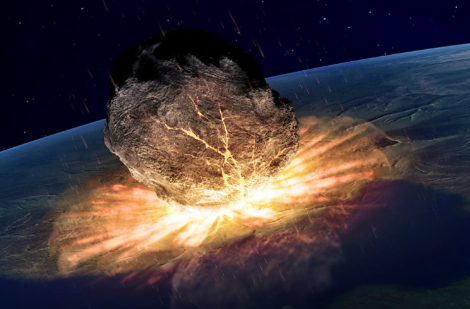
The solar system is a vast, dynamic environment born from a swirling cloud of gas and dust over 4.6 billion years ago. While the sun and the eight major planets dominate our understanding of this cosmic neighborhood, the true historical archives of our celestial origins lie in the smaller, seemingly insignificant cosmic debris. These primordial remnants—meteorites, asteroids, and comets—serve as untouched time capsules, preserving the exact chemical and physical conditions of the early solar nebula. By studying these ancient artifacts, scientists can reconstruct the violent and complex processes that led to planetary formation, the delivery of water to Earth, and the potential origins of life itself.
The Genesis of Cosmic Debris
In the earliest epochs of the solar system, microscopic dust grains collided and stuck together through electrostatic forces, gradually forming larger aggregates known as planetesimals. While many of these bodies accreted to form the terrestrial and gas giant planets, millions of others were scattered or remained trapped in stable orbital resonances. These leftover building blocks constitute the asteroid belt, the Kuiper Belt, and the Oort Cloud. The gravitational perturbations from massive gas giants like Jupiter prevented the formation of a planet between Mars and Jupiter, leaving behind a chaotic debris field that continually generates meteoroids through high-velocity collisions.
Understanding the intricate relationship between these different classes of objects requires a multi-dimensional approach to planetary science. To fully grasp their significance, we must categorize them based on their origins, compositions, and orbital behaviors:
- Asteroids: Rocky, airless remnants primarily located in the main asteroid belt between Mars and Jupiter. They range in size from small boulders to massive bodies like Ceres and Hygiea.
- Comets: Icy bodies originating from the colder outer reaches of the solar system. When they approach the sun, their volatile compounds sublimate, creating spectacular comas and tails.
- Meteorites: Fragments of asteroids, comets, or even other planets that survive the fiery passage through Earth’s atmosphere and impact the surface, providing direct physical samples for laboratory analysis.
These definitions provide a foundational framework, but the boundaries between these categories are increasingly blurring. Active asteroids exhibit comet-like outgassing, while extinct comets masquerade as rocky near-Earth objects. This dynamic interplay underscores the necessity of continuous, in-depth exploration.
Decoding Meteorites: The Universe’s Ancient Messengers
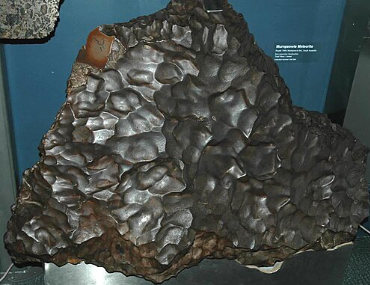
Meteorites are not merely rocks that fall from the sky; they are the universe’s ancient messengers, delivering tangible pieces of the cosmos directly to our laboratories. Unlike terrestrial rocks, which have been endlessly recycled through plate tectonics, volcanism, and erosion, the majority of meteorites have remained relatively unaltered since their formation at the dawn of the solar system. This pristine preservation makes them the ultimate forensic evidence for astrophysicists seeking to understand the isotopic anomalies, stellar nucleosynthesis, and chronological timeline of our planetary system’s evolution.
The Journey from Space to Earth
The life cycle of a meteorite begins millions of miles away, typically originating from a catastrophic collision within the main asteroid belt. When two parent bodies collide, they eject fragments known as meteoroids into chaotic, Earth-crossing orbits. These fragments can travel through the void of space for millions of years, subjected to cosmic ray bombardment and solar wind irradiation, which leave distinct isotopic signatures on their surfaces. When a meteoroid intersects Earth’s orbit, it hits the upper atmosphere at velocities ranging from 11 to 72 kilometers per second.
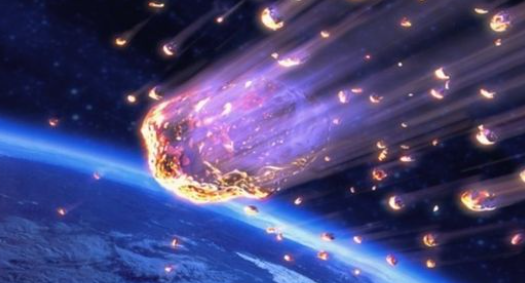
This hypervelocity entry generates immense aerodynamic pressure and friction, compressing the air in front of the object and heating it to thousands of degrees. This phenomenon creates a brilliant streak of light known as a meteor or “shooting star.” The intense heat melts the outer layers of the meteoroid, forming a thin, glassy fusion crust. If the object possesses sufficient mass and structural integrity, it will survive the atmospheric ablation process, enter the dark flight phase, and eventually strike the ground as a meteorite. The precise location of the fall is determined by a complex interplay of entry angle, velocity, atmospheric density, and the object’s aerodynamic profile.
The Chemical Composition and Classification of Meteorites
To extract the profound scientific value locked within meteorites, researchers employ rigorous classification systems based on mineralogy, petrology, and isotopic chemistry. Broadly, meteorites are divided into three primary categories: stony, iron, and stony-iron. However, within these broad strokes lies a labyrinth of sub-classifications that reveal the specific thermal histories and parent body environments of these extraterrestrial stones.
Chondrites: The Unaltered Building Blocks
Stony meteorites account for approximately 94% of all observed falls, and the vast majority of these are chondrites. Chondrites are defined by the presence of chondrules—millimeter-sized, spherical inclusions of silicate minerals that formed as molten droplets floating in the primordial solar nebula. Because chondrites have never been subjected to significant melting or planetary differentiation, their elemental composition closely mirrors that of the sun, minus the highly volatile gases like hydrogen and helium.
Within the chondrite family, carbonaceous chondrites hold a special place of reverence among astrobiologists. These rare meteorites contain high concentrations of water and complex organic molecules, including amino acids, purines, and pyrimidines. The discovery of these prebiotic compounds suggests that the fundamental building blocks of life were synthesized in deep space and subsequently delivered to the early Earth during the Late Heavy Bombardment, seeding our planet with the necessary ingredients for biological evolution.
Differentiated Meteorites: Achondrites, Irons, and Pallasites
In stark contrast to chondrites, differentiated meteorites originate from parent bodies that grew large enough to undergo internal melting and core segregation. This process mirrors the geological history of Earth, providing a window into the internal structures of destroyed protoplanets.
| Classification | Composition | Origin Profile | Scientific Significance |
|---|---|---|---|
| Achondrites | Silicate-rich igneous rocks without chondrules. | The crust or mantle of differentiated parent bodies (e.g., Vesta, Mars, the Moon). | Reveals volcanic and magmatic processes on early planetary bodies. |
| Iron Meteorites | Solid alloys of iron and nickel. | The metallic cores of shattered asteroids. | Provides direct access to planetary cores, which are inaccessible on Earth. |
| Stony-Iron (Pallasites) | Olivine crystals embedded in an iron-nickel matrix. | The core-mantle boundary of differentiated asteroids. | Offers insights into the transition zones and cooling rates of protoplanets. |
The rigorous analysis of these classifications requires advanced instrumentation, such as mass spectrometry and electron microprobes. By measuring the radioactive decay of specific isotopes, scientists can date the exact moment these rocks solidified, establishing the timeline of the solar system’s formation with astonishing precision.
Exploring Hygiea: The Asteroid Belt’s Hidden Miracle
While the asteroid belt is populated by millions of rocky fragments, a few massive bodies dominate the region’s gravitational dynamics. Ceres, Vesta, and Pallas are well-documented, but the fourth-largest object in the main belt, Hygiea, remained a mysterious and hidden miracle for decades. Discovered in 1849 by Annibale de Gasparis, Hygiea resides in the outer regions of the asteroid belt, making it notoriously difficult to study due to its dark surface and immense distance from Earth. However, recent advancements in adaptive optics have pulled Hygiea out of the shadows, revealing a world of unexpected complexity and structural elegance.
The Dark Surface and Carbonaceous Composition
Hygiea is the largest member of the C-type (carbonaceous) asteroids, a class of objects known for their incredibly low albedo. Reflecting only about 7% of the sunlight that hits it, Hygiea appears darker than a lump of coal. This dark exterior is indicative of a surface rich in carbon compounds and hydrated minerals. Spectral analysis suggests that Hygiea’s composition is remarkably similar to the carbonaceous chondrite meteorites found on Earth, implying that it is a pristine, volatile-rich relic from the outer solar nebula that migrated inward during the chaotic early days of planetary migration.
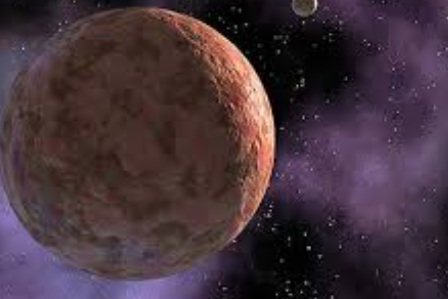
Despite its massive size—spanning approximately 434 kilometers in diameter—Hygiea lacks the prominent, deep impact craters that characterize the surfaces of its peers, Vesta and Pallas. The absence of a massive cratering record presents a profound astrophysical puzzle. Given its age and location in a collision-heavy environment, Hygiea should bear the scars of a violent past. This anomaly has led scientists to hypothesize that Hygiea suffered a catastrophic disruption event billions of years ago. The original body was completely shattered by a massive impact, but the resulting debris cloud remained gravitationally bound, eventually re-accreting to form the remarkably smooth, spherical body we observe today.
The Dwarf Planet Debate Surrounding Hygiea
The re-accretion hypothesis of Hygiea has profound implications for its taxonomic classification. In 2006, the International Astronomical Union (IAU) established strict criteria for an object to be classified as a dwarf planet: it must orbit the sun, it must not be a moon, it must not have cleared its orbital neighborhood, and crucially, it must have sufficient mass for its self-gravity to overcome rigid body forces, assuming a nearly round shape (hydrostatic equilibrium).
Achieving Hydrostatic Equilibrium
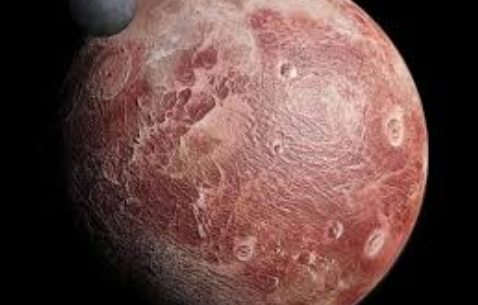
For many years, it was assumed that Hygiea was a lumpy, irregular asteroid. However, high-resolution observations conducted using the SPHERE instrument on the Very Large Telescope (VLT) fundamentally altered this perspective. The imagery revealed that Hygiea is astonishingly spherical, possessing a shape that strongly indicates it has achieved hydrostatic equilibrium. This revelation places Hygiea squarely in the middle of a heated astronomical debate.
If the IAU officially recognizes Hygiea’s spherical nature, it will strip Ceres of its title as the smallest dwarf planet in the solar system. The implications of this reclassification extend beyond mere nomenclature. It challenges our understanding of the mass thresholds required for celestial bodies to achieve plasticity and roundness. Unlike rocky bodies, which require immense mass to become spherical, Hygiea’s high porosity and ice-rich interior may have allowed it to achieve hydrostatic equilibrium at a much smaller size. This forces planetary geologists to reconsider the internal thermal dynamics and material strengths of carbonaceous protoplanets.
- Geological Plasticity: The presence of internal water ice significantly lowers the threshold for a body to become spherical under its own gravity.
- Thermal History: The heat generated from the re-accretion process may have temporarily melted internal ice, facilitating the spherical reshaping of the asteroid.
- Taxonomic Precedent: Promoting Hygiea to dwarf planet status could open the door for dozens of other mid-sized Kuiper Belt objects to receive similar classifications.
The Magnificent Epic of Comets
If meteorites are the stony messengers of the inner solar system, comets are the magnificent, icy nomads of the deep cosmos. For millennia, these spectacular celestial apparitions were viewed with superstition and fear, often interpreted as omens of doom or harbingers of profound societal change. Today, science recognizes comets as the most volatile and dynamic entities in our planetary system—frozen conglomerates of water, carbon dioxide, ammonia, and organic dust that have spent billions of years in the deep freeze of interstellar space.
Anatomy of a Cometary Phenomenon
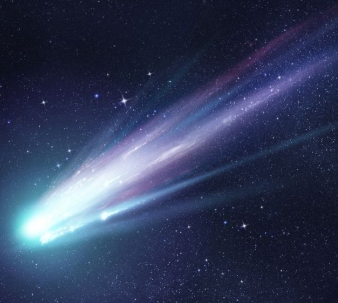
The true epic of a comet begins when its highly elliptical orbit brings it plunging toward the inner solar system. As the comet crosses the “frost line”—the boundary where solar radiation becomes intense enough to vaporize ices—a dramatic physical transformation occurs. The solid, dirty-ice core, known as the nucleus, begins to sublimate. This process releases massive quantities of gas and trapped dust, enveloping the nucleus in a massive, glowing cloud called the coma, which can expand to be larger than the planet Jupiter.
As the comet hurtles closer to the sun, the solar wind and radiation pressure interact with the coma, carving out the comet’s most iconic features: its tails. The physics governing these tails are complex and result in two distinct structures that stretch for millions of kilometers across the cosmic void.
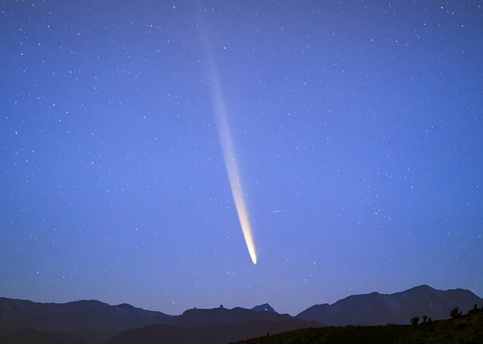
The dust tail is composed of microscopic silicate particles pushed away from the coma by the physical momentum of solar photons. Because these dust particles are relatively massive, they follow a curved trajectory, trailing behind the comet in its orbital path and reflecting sunlight with a brilliant yellowish-white glow. Conversely, the ion tail consists of ionized gases that interact directly with the magnetic field of the solar wind. This tail is always pushed directly away from the sun, forming a straight, narrow, and striking blue streak due to the fluorescence of carbon monoxide ions.
Cometary Reservoirs: The Kuiper Belt and Oort Cloud
To understand the orbital mechanics and origins of comets, we must look to the extreme outer boundaries of the solar system. Comets are generally divided into two distinct populations based on their orbital periods, each originating from a different primordial reservoir. These distant regions remain largely unexplored, representing the final frontiers of our planetary neighborhood.
Short-Period Comets and the Kuiper Belt
Short-period comets, such as the famous Halley’s Comet, complete their orbits in less than 200 years. These objects originate from the Kuiper Belt, a massive, donut-shaped ring of icy bodies extending from the orbit of Neptune out to approximately 50 astronomical units (AU). The Kuiper Belt is a dynamic environment where gravitational interactions with Neptune occasionally perturb icy bodies, sending them spiraling inward toward the sun. Because they originate relatively close to the ecliptic plane, short-period comets tend to orbit the sun in the same direction as the planets.
Long-Period Comets and the Oort Cloud
Long-period comets, like Comet Hale-Bopp, follow highly eccentric orbits that can take thousands, or even millions, of years to complete. These magnificent wanderers hail from the Oort Cloud, a theoretical, spherical shell of icy debris that surrounds the solar system at distances up to 100,000 AU—nearly halfway to the nearest star. The Oort Cloud is so distant that its inhabitants are barely held by the sun’s gravity. Passing stars, galactic tides, or massive molecular clouds can easily disrupt these delicate orbits, dislodging icy bodies and sending them on a one-way trip into the inner solar system. Because the Oort Cloud is spherical, long-period comets can approach the sun from any angle, plunging through the orbital plane from high above or far below.

Future Missions and Planetary Defense
The intensive study of cosmic debris is not merely an academic exercise in historical astronomy; it is a critical endeavor for the future survival and expansion of human civilization. As our technological capabilities advance, our relationship with asteroids, comets, and meteorites is shifting from passive observation to active interaction, encompassing sample return missions, resource utilization, and planetary defense.
The Golden Age of Sample Return
We have entered a golden age of direct cosmic exploration. Missions like Japan’s Hayabusa2 and NASA’s OSIRIS-REx have successfully rendezvoused with near-Earth asteroids (Ryugu and Bennu, respectively), mapped their surfaces in unprecedented detail, and returned pristine physical samples to Earth. These missions bypass the atmospheric contamination that affects meteorites, providing scientists with ultra-pure carbonaceous material. The data extracted from these samples is currently revolutionizing our understanding of solar system chemistry, confirming the presence of extraterrestrial water and complex organics directly from the source.
Safeguarding Earth: The Imperative of Planetary Defense
While cosmic debris holds the secrets of our past, it also poses a profound existential threat to our future. The impact craters scarring the Earth and Moon are violent reminders that the solar system is an active shooting gallery. A collision with a significantly sized asteroid or comet could trigger global climate catastrophe, mass extinction, and the collapse of human civilization.
To mitigate this risk, international space agencies are actively developing planetary defense strategies. The cornerstone of this effort is early detection through advanced sky-mapping programs like the Near-Earth Object Observations (NEOO) program. Furthermore, humanity has successfully demonstrated its capability to alter celestial mechanics. NASA’s Double Asteroid Redirection Test (DART) mission successfully impacted the asteroid moonlet Dimorphos, measurably changing its orbital period. This historic achievement proves that kinetic impactor technology can be deployed to deflect hazardous asteroids, ensuring that the magnificent epic of cosmic debris does not end in terrestrial tragedy.
Frequently Asked Questions (FAQ)
- What is the fundamental difference between an asteroid, a meteoroid, and a meteorite?
- An asteroid is a large, rocky body orbiting the sun, primarily found in the asteroid belt. A meteoroid is a much smaller fragment of debris, often broken off from an asteroid or comet. When a meteoroid enters Earth’s atmosphere and burns up, the visible streak of light is called a meteor. If a portion of that meteoroid survives the intense heat of atmospheric entry and strikes the ground, the physical rock recovered is called a meteorite.
- Why is Hygiea considered a candidate for dwarf planet status?
- Hygiea is considered a candidate because high-resolution imaging from the Very Large Telescope revealed that it is nearly spherical. This shape indicates that it has achieved hydrostatic equilibrium—meaning its own gravity is strong enough to pull its mass into a round shape. If officially recognized by the IAU, Hygiea would become the smallest known dwarf planet in the solar system, taking the title from Ceres.
- How do comets get their distinctive tails?
- As a comet approaches the sun, solar radiation heats its icy nucleus, causing volatile compounds to sublimate (turn directly from solid to gas). This process releases gas and dust, forming a coma around the nucleus. The solar wind and radiation pressure then push these materials away from the sun. The heavier dust particles form a curved, yellowish dust tail, while the ionized gases are pushed straight back, forming a glowing blue ion tail.
- Why are carbonaceous chondrite meteorites so important to science?
- Carbonaceous chondrites are some of the most pristine and primitive materials in the solar system, having remained largely unaltered since their formation 4.6 billion years ago. They are incredibly important because they contain high amounts of water-bearing minerals and complex organic molecules, including amino acids. Studying them helps scientists understand how the building blocks of life and water may have been delivered to the early Earth.
- What is the Oort Cloud, and has anyone ever seen it?
- The Oort Cloud is a theoretical, vast, spherical shell of icy bodies surrounding the solar system at a distance of up to 100,000 astronomical units. It is believed to be the birthplace of long-period comets. Because it is incredibly distant and its objects are small and dark, the Oort Cloud has never been directly observed. However, its existence is strongly inferred by the trajectories of long-period comets that enter the inner solar system from all directions.