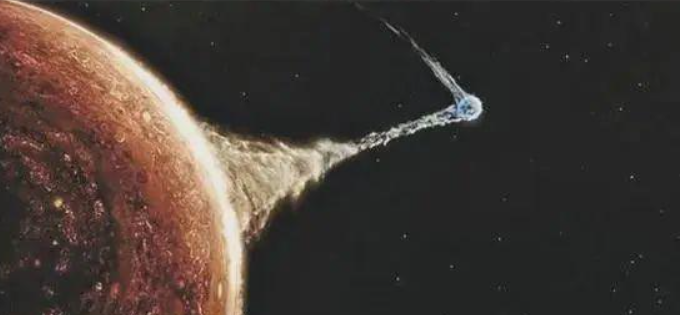
From the majestic waltz of planets around the Sun to the silent journey of a satellite across the night sky, the universe is in constant, graceful motion. A fundamental question often arises: why do these objects move in circles or ellipses, seemingly suspended in the void, rather than falling into the massive bodies they orbit or flying off into deep space? The answer lies in a delicate and perpetual interplay between two of nature’s most fundamental principles: gravity and inertia. This guide will explore the physics behind this cosmic dance, demystifying the magic that holds the cosmos together.
The Fundamental Forces of Orbital Motion
An orbit is not a state of zero gravity; it is a state of continuous freefall. To understand this, we must first appreciate the two key forces at play. One force constantly pulls an object inward, while a property of motion compels it to continue moving forward. The balance between these two creates the stable path we call an orbit.
Gravity: The Universe’s Invisible Tether
First conceptualized by Sir Isaac Newton, the Law of Universal Gravitation states that every particle of matter in the universe attracts every other particle with a force that is directly proportional to the product of their masses and inversely proportional to the square of the distance between their centers. For a spacecraft or a planet, the most significant gravitational pull comes from the largest nearby object—be it the Earth or the Sun. This gravitational force acts as a constant, invisible tether, relentlessly pulling the orbiting object towards the center of the massive body. Without this force, any moving object would simply travel in a straight line forever into the cosmos.
Inertia: The Tendency to Keep Moving
The second piece of the puzzle is inertia, as described by Newton’s First Law of Motion. An object in motion stays in motion with the same speed and in the same direction unless acted upon by an unbalanced force. A spacecraft, once launched and propelled to a certain speed, possesses this forward momentum. It has a powerful tendency to continue moving in a straight line. This is the “fly off into space” component of its motion.
The Perfect Balance: Falling and Missing
An orbit is achieved when an object’s forward velocity is perfectly balanced with the gravitational pull trying to drag it down. Newton famously illustrated this with a thought experiment known as Newton’s Cannonball. Imagine a cannon on a very tall mountain.
- If you fire the cannonball with a small amount of gunpowder, it travels a short distance before gravity pulls it to the ground.
- If you use more gunpowder, it travels much farther before landing.
- If you could give the cannonball enough horizontal velocity, its forward motion would be so fast that as it falls, the Earth’s surface curves away beneath it at the exact same rate.
In this scenario, the cannonball is continuously falling towards Earth, but it is also moving forward so quickly that it constantly misses. This state of “falling and missing” is precisely what an orbit is. The spacecraft is in a constant state of freefall, but its tangential velocity prevents it from ever getting closer to the ground.
The Geometry of Orbits: From Circles to Ellipses
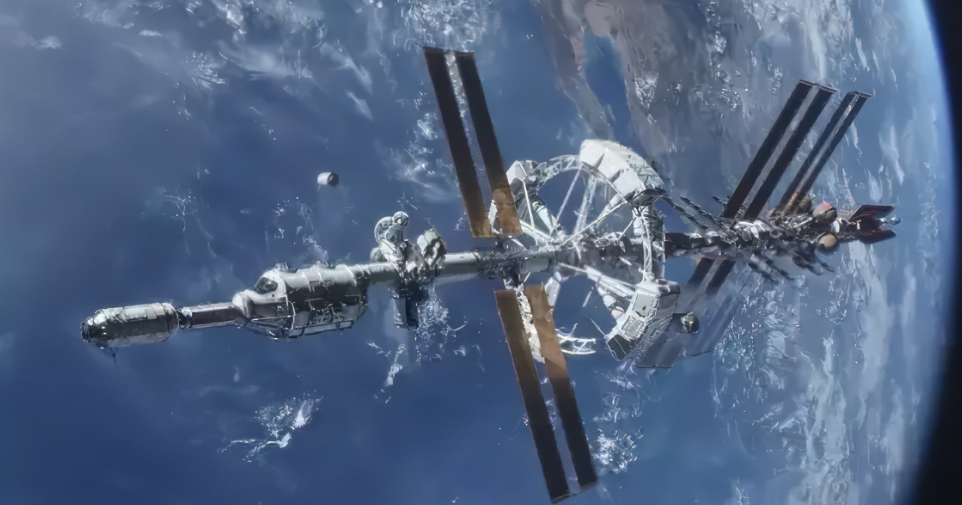
While we often visualize orbits as perfect circles, the reality is more nuanced. The vast majority of orbits, from tiny moons to massive planets, are not circles but ellipses. This discovery, made by Johannes Kepler in the 17th century, revolutionized our understanding of the solar system’s mechanics.
Introducing Kepler’s Laws of Planetary Motion
By meticulously analyzing observational data, Kepler formulated three laws that describe the motion of planets around the Sun. These laws apply to any object orbiting another.
- Kepler’s First Law (The Law of Ellipses): The path of every planet around the Sun is an ellipse with the Sun at one of the two foci. This means a planet’s distance from the Sun is not constant. It is sometimes closer and sometimes farther away.
- Kepler’s Second Law (The Law of Equal Areas): A line joining a planet and the Sun sweeps out equal areas during equal intervals of time. In practical terms, this means a planet moves fastest when it is closest to the Sun and slowest when it is farthest away.
- Kepler’s Third Law (The Law of Harmonies): The square of the orbital period of a planet is directly proportional to the cube of the semi-major axis of its orbit. This law provides a precise mathematical relationship between how far a planet is from the Sun and how long it takes to complete one orbit.
Key Orbital Parameters: Perihelion and Aphelion
Because orbits are elliptical, we use specific terms to describe the points of minimum and maximum distance. When an object is orbiting the Sun, its closest point is called the perihelion, and its farthest point is the aphelion. For an object orbiting the Earth, these points are called the perigee and apogee, respectively. It is at perihelion (or perigee) that an orbiting body achieves its maximum velocity, and at aphelion (or apogee) that its velocity is at its minimum, as described by Kepler’s Second Law.
Engineering Orbits: Spacecraft and Artificial Satellites
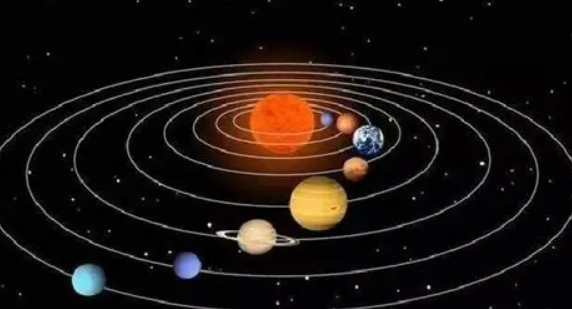
Unlike planets, which settled into their orbits naturally over billions of years, artificial satellites must be placed into their paths with incredible precision. This involves achieving a specific speed at a specific altitude, known as orbital velocity.
Achieving Orbit: The Concept of Orbital Velocity
Orbital velocity is the speed needed to maintain a stable orbit around a celestial body. If a spacecraft’s speed is too low for its altitude, gravity will win, and it will spiral back to Earth. If its speed is too high, its inertia will win, and it will escape Earth’s gravity altogether, flying off into space. For a stable Low Earth Orbit (LEO), a spacecraft must travel at a blistering speed of approximately 17,500 miles per hour (about 7.8 kilometers per second).
Types of Earth Orbits and Their Uses
Engineers choose specific orbits based on a satellite’s mission. Each type of orbit offers unique advantages for observation, communication, or scientific research.
- Low Earth Orbit (LEO): Ranging from about 160 to 2,000 kilometers in altitude, LEO is home to the International Space Station (ISS) and many Earth observation and spy satellites. Its proximity to Earth allows for high-resolution imaging, but the high speed means satellites move across the sky quickly.
- Geostationary Orbit (GEO): Located at a very specific altitude of 35,786 kilometers (22,236 miles) directly above the Earth’s equator, a satellite in GEO has an orbital period that exactly matches Earth’s rotation (24 hours). This makes it appear stationary from the ground, which is ideal for communications and weather satellites.
- Polar Orbit: These orbits pass over or near the Earth’s poles. As the Earth rotates beneath the satellite, a polar orbit allows the satellite to eventually scan the entire surface of the planet over time, making it perfect for global mapping and environmental monitoring.

The Grand Scale: Planetary Systems and Galactic Orbits
The same principles that govern a satellite’s path also dictate the grand waltz of the planets in our solar system. The formation of the solar system from a vast, rotating cloud of gas and dust (a solar nebula) set the stage for these stable, long-term orbits.
The Solar System’s Waltz: A Gravitational Dance Led by the Sun
The Sun contains over 99.8% of the total mass in the solar system. Its immense gravitational field is the dominant force that orchestrates the motion of all the planets, asteroids, and comets. The initial angular momentum of the solar nebula is why all planets orbit the Sun in the same direction and on roughly the same plane, known as the ecliptic plane. Each planet has found its stable orbital path, a gravitational “sweet spot” where its velocity perfectly counters the Sun’s pull.
Why Planets Don’t Crash into Each Other
The solar system is a remarkably stable place. This is due to the vast distances between planets and the gravitational harmony they have settled into over billions of years. Their orbits are not randomly placed but exist in a state of dynamic equilibrium. While they do exert small gravitational tugs on each other (perturbations), these are not significant enough to destabilize the entire system. This predictable, clockwork-like motion is a testament to the power and consistency of gravity over cosmic timescales.
Frequently Asked Questions (FAQ)
- Q1: Why don’t orbiting objects need constant fuel to stay in orbit?
- Once an object achieves orbital velocity, its inertia (the tendency to keep moving) and the force of gravity are in a self-sustaining balance. In the vacuum of space, there is virtually no air resistance to slow the object down. Therefore, it can continue in its orbital path indefinitely without needing any further propulsion, just like the Moon orbits the Earth without an engine.
- Q2: What is orbital decay?
- Orbital decay is the process where a satellite or spacecraft gradually loses altitude over time. This happens primarily in Low Earth Orbit (LEO), where there are still trace amounts of atmospheric particles. This faint atmospheric drag slowly bleeds off the satellite’s forward velocity, causing gravity to pull it into a lower and lower orbit until it eventually re-enters the atmosphere and burns up.
- Q3: Can an orbit be a perfect circle?
- Theoretically, yes, a circular orbit is a special type of elliptical orbit where the two foci coincide at the center. However, achieving and maintaining a perfectly circular orbit is practically impossible. Even the slightest variation in speed or the gravitational influence of other celestial bodies (like the Moon or other planets) will cause the orbit to become slightly elliptical.
- Q4: How did the planets get into their orbits in the first place?
- The planets formed from a rotating disk of gas and dust called the solar nebula that surrounded the young Sun about 4.6 billion years ago. As particles in the disk clumped together to form planetesimals and eventually planets, they inherited the angular momentum of the disk. This collective, rotating motion is what set the planets on their initial orbital paths in the same direction and on the same plane.
- Q5: What is the difference between gravity in space and on Earth?
- There is no difference in the fundamental force of gravity itself. The astronauts on the International Space Station experience about 90% of the gravity we feel on Earth’s surface. The reason they are “weightless” is not because of a lack of gravity, but because they, and the station itself, are in a constant state of freefall around the Earth. They are continuously falling together, which creates the sensation of floating.