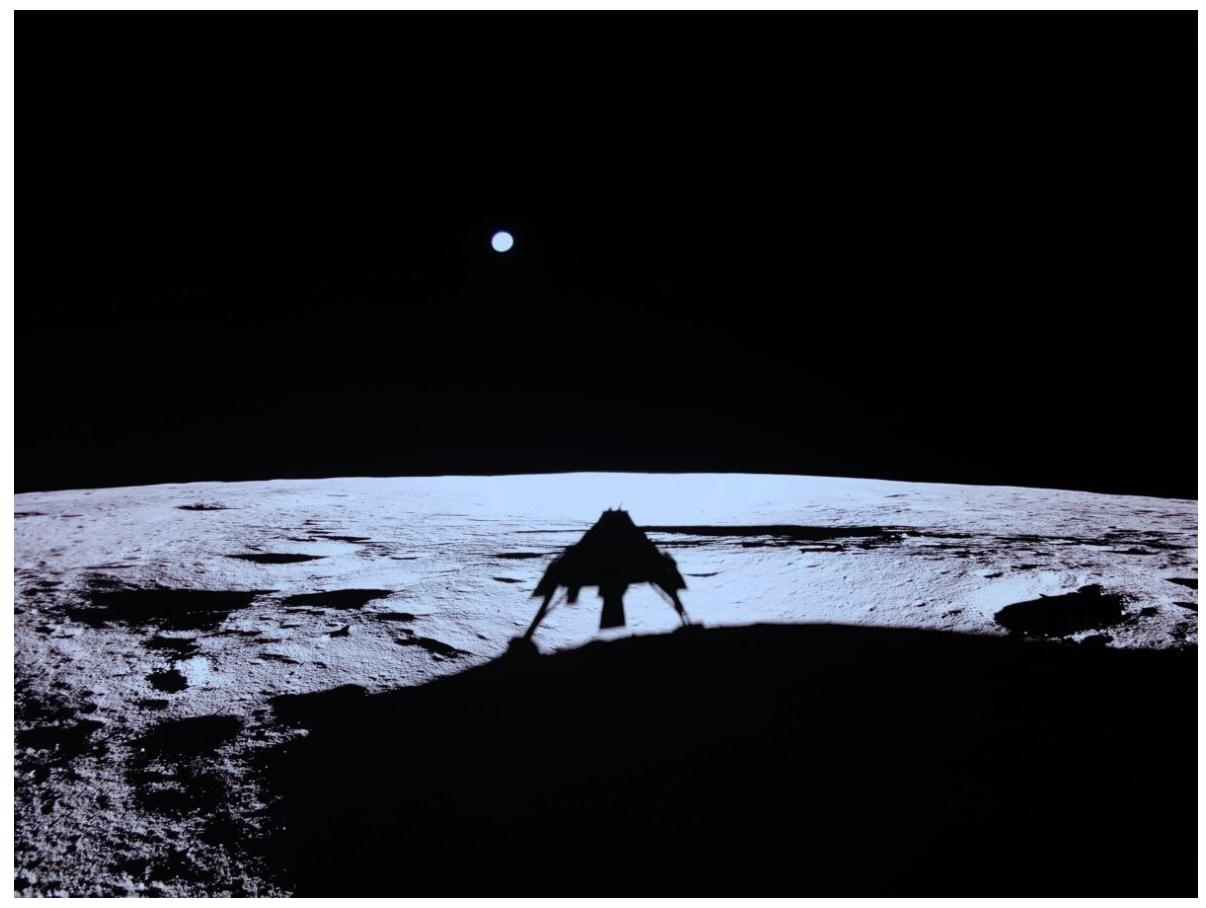
Firefly Aerospace’s Blue Ghost lunar lander has successfully completed its final major environmental test, a thermal vacuum (TVAC) simulation, marking a critical milestone for its upcoming journey to the Moon. This achievement, conducted at NASA’s Johnson Space Center, validates the lander’s design and resilience, ensuring it can withstand the harsh realities of space. As a key participant in NASA’s Commercial Lunar Payload Services (CLPS) initiative, the Blue Ghost mission is not just a single flight but a vital component of the larger Artemis program, which aims to establish a sustainable human presence on the Moon. This comprehensive guide explores the mission’s objectives, the technology behind the lander, and its profound implications for the future of lunar science and commercial spaceflight.
Understanding the Blue Ghost Mission and CLPS Initiative
The Blue Ghost mission is more than just a delivery service to the Moon; it represents a fundamental shift in how space exploration is conducted. It operates under the umbrella of NASA’s CLPS program, which partners with private American companies to deliver science and technology payloads to the lunar surface. This model fosters innovation, reduces costs for NASA, and builds a robust commercial space economy.
The Strategic Importance of CLPS
The Commercial Lunar Payload Services initiative is NASA’s strategy to outsource lunar logistics. Instead of building and operating its own landers for every robotic mission, NASA can simply purchase a spot on a commercial lander, much like booking cargo on a shipping vessel. This approach allows NASA to focus on developing core exploration technologies and scientific instruments while leveraging the speed and agility of the private sector. For companies like Firefly, it provides a foundational customer, enabling them to develop a sustainable business model for lunar transportation.
Supporting the Artemis Program
Every CLPS mission, including Blue Ghost, lays the groundwork for the Artemis missions, which will return astronauts to the Moon. The payloads delivered by these robotic landers gather crucial data about the lunar environment, test new technologies needed for long-term habitation, and scout for resources like water ice. Blue Ghost will deliver instruments that study the Moon’s regolith (soil), thermal properties, and interaction with the solar wind, providing vital information for future human explorers.

The Gauntlet: Deconstructing the Thermal Vacuum Test
Before a spacecraft can earn its ticket to space, it must survive a series of brutal tests on Earth that replicate the unforgiving conditions it will face. The thermal vacuum (TVAC) test is arguably the most critical of these, and Blue Ghost’s successful completion is a major engineering triumph.
What is a TVAC Test?
A TVAC test places the fully assembled spacecraft inside a large, specialized chamber from which all air is pumped out to create a hard vacuum, just like in space. Simultaneously, the chamber’s walls and internal heating elements subject the spacecraft to the extreme temperature cycles it will experience. This includes the intense heat of direct sunlight and the deep cold of shadow, with temperatures swinging by hundreds of degrees Celsius. The test, conducted at NASA’s historic Chamber B, ensures that all electronic components, structural elements, and mechanical systems function correctly in this hostile environment.
Why This Test is Mission-Critical
In the vacuum of space, heat does not dissipate through convection as it does on Earth. It can only be managed through radiation. The TVAC test validates the lander’s thermal control system—its network of radiators, heaters, and insulation—proving it can keep sensitive electronics within their operational temperature range. A failure in this system during the mission would be catastrophic, leading to the loss of the lander and its valuable payload.

Blue Ghost’s Payload: Science and Technology on Board
The primary purpose of the Blue Ghost lander is to safely transport a suite of scientific instruments and technology demonstrations to the lunar surface. The lander is scheduled to carry 10 NASA-sponsored payloads as well as several commercial instruments, making it a bustling hub of scientific activity upon landing.
Key NASA-Sponsored Instruments
While the full manifest is extensive, the NASA payloads are designed to address key scientific questions about the Moon. These instruments typically include:
- Regolith Adherence Characterization (RAC): An experiment to determine how lunar dust and soil stick to different materials, a critical factor for designing future spacesuits and equipment.
- Next Generation Lunar Retroreflectors (NGLR): Advanced reflectors that will allow for extremely precise measurements of the distance between Earth and the Moon, aiding studies in physics and relativity.
- Lunar Environment Heliospheric X-ray Imager (LEXI): An instrument to image the Earth’s magnetosphere and its interaction with solar wind from the unique vantage point of the Moon.
- Lunar Magnetotelluric Sounder (LMS): A device designed to probe the Moon’s interior structure and composition by studying electric and magnetic fields.
Commercial and International Payloads
In addition to its NASA cargo, Blue Ghost demonstrates its commercial viability by carrying payloads for other customers. This often includes instruments from international space agencies, universities, or private companies looking to test new technologies in the lunar environment, further cementing the lander’s role as a versatile platform for global space exploration.
Technical Specifications Checklist
The Blue Ghost lander is a sophisticated piece of engineering designed for precision and reliability. Below is a checklist of its key technical systems and their functions, which were validated during the recent environmental testing.
- Propulsion System: Uses a main engine for deceleration during lunar descent and multiple smaller thrusters for attitude control and precise maneuvering.
- Guidance, Navigation, and Control (GNC): A suite of sensors including star trackers, inertial measurement units, and a landing camera that work together to autonomously guide the lander to a safe and precise touchdown.
- Power System: Comprised of solar panels to generate electricity during the lunar day and batteries to store power for operations during the frigid lunar night.
- Communications Array: Features a high-gain antenna for sending large volumes of scientific data back to Earth and receiving commands from mission control.
- Payload Deck: The primary structure where the scientific instruments are mounted, providing them with power, data connections, and a stable platform for operations.
- Landing Gear: A robust system of legs and footpads designed to absorb the force of impact upon touchdown and ensure the lander remains stable on the uneven lunar surface.
Expert Advice: The Future of Lunar Exploration
The success of missions like Blue Ghost is pivotal for the entire space industry. Here are three key takeaways from an expert perspective on why this matters:
- Accelerating the Pace of Science: The CLPS model allows for a higher flight cadence than traditional, government-led programs. More frequent missions mean more data, faster testing of new technologies, and a more rapid expansion of our understanding of the Moon.
- De-risking Human Exploration: By sending robotic scouts first, NASA can identify the best landing sites, understand potential hazards like abrasive lunar dust, and map out resources before committing to crewed missions. Each CLPS landing makes future Artemis missions safer and more effective.
- Building a Cislunar Economy: These missions are the first step toward creating a self-sustaining economy in space. Commercial landers create a demand for launch services, satellite communications, and in-space resource utilization, fostering an entire ecosystem of new industries beyond Earth.
Frequently Asked Questions (FAQ)
- What is Firefly’s Blue Ghost lander?
- Blue Ghost is a robotic lunar lander developed by Firefly Aerospace. It is designed to deliver scientific instruments and other payloads to the surface of the Moon as part of NASA’s Commercial Lunar Payload Services (CLPS) program, supporting the broader Artemis missions.
- Why is the CLPS program important for NASA?
- The CLPS program allows NASA to partner with private companies for lunar payload delivery. This approach is faster, more cost-effective, and stimulates the commercial space industry, enabling NASA to focus its resources on developing deep-space exploration technologies for crewed missions.
- What happens during a thermal vacuum test?
- During a thermal vacuum (TVAC) test, a spacecraft is placed in a chamber that replicates the harsh environment of space. The air is removed to create a vacuum, and the spacecraft is exposed to extreme hot and cold temperatures to ensure all its systems and components function correctly under mission conditions.
- When is the Blue Ghost mission scheduled to launch?
- While specific launch dates can shift, the first Blue Ghost mission (Mission 1) is targeted for launch in the near future, following the successful completion of its final integration and testing phases. It is one of the next CLPS missions on NASA’s manifest.
- How does this mission support the Artemis program?
- The Blue Ghost mission supports Artemis by delivering scientific instruments that will study the lunar environment, characterize resources, and test technologies that are critical for future human missions. The data collected will inform the planning and execution of astronaut landings and the establishment of a sustainable lunar presence.