Historical Foundations: Interplanetary Probes Behind the Iron Curtain
The genesis of humanity’s reach into the cosmos was forged in the crucible of the Cold War. While much of the Western historical narrative focuses on the Apollo lunar landings, the Soviet Union was quietly and aggressively pioneering the robotic exploration of our neighboring planets. Interplanetary probes developed behind the Iron Curtain represent some of the most audacious and resilient engineering feats of the 20th century. These early missions laid the fundamental groundwork for planetary science, proving that human-made objects could not only traverse the vast, irradiated gulfs of deep space but also survive the hellish environments of alien worlds.
The Soviet interplanetary program was characterized by a philosophy of brute-force engineering combined with ingenious automated systems. Lacking the advanced miniaturized electronics available to their American counterparts, Soviet engineers relied on robust, heavy-duty components designed to withstand extreme acoustic vibration, high G-forces during launch, and the unpredictable thermal dynamics of deep space. This era was defined by intense secrecy, where failures were often masked under generic mission designations like “Kosmos,” while successes were broadcast globally as triumphs of the socialist system.
The Venera Program: Conquering the Morning Star
Perhaps the most crowning achievement of Soviet deep space exploration was the Venera program, a series of probes dedicated to unraveling the mysteries of Venus. Prior to these missions, scientists speculated that Venus might harbor oceans or even tropical jungles beneath its thick cloud cover. The Venera probes systematically dismantled these theories, revealing a crushing, toxic greenhouse environment.
- Venera 4 (1967): This mission marked the first time a human-made instrument performed in-situ analysis of another planet’s environment, transmitting data about the chemical composition of the Venusian atmosphere before being crushed by immense pressure.
- Venera 7 (1970): A monumental milestone in space exploration, Venera 7 became the first spacecraft to successfully soft-land on another planet and transmit data back to Earth. It survived the 90-atmosphere pressure and 475-degree Celsius temperatures for a brief but historic 23 minutes.
- Venera 13 (1982): Pushing the boundaries of durability, this lander captured the first color panoramic images of the Venusian surface and utilized a mechanical drilling arm to analyze soil samples, surviving for over two hours in an environment that melts lead.
The data harvested by these probes fundamentally altered planetary science, providing the first real-world model of a runaway greenhouse effect. The engineering solutions developed to protect delicate instruments from extreme heat and pressure—such as phase-change cooling materials and titanium pressure vessels—continue to inform the design of modern atmospheric entry vehicles.

Engineering Triumphs and Failures of Early Soviet Spacecraft
While the Venus missions were largely successful, the Soviet Union’s attempts to explore Mars were plagued by a frustrating string of failures, highlighting the immense difficulty of interplanetary navigation and systems reliability. The Martian environment, with its thin atmosphere and distance from the Sun, presented entirely different engineering challenges compared to Venus. Understanding these historical hurdles is crucial for appreciating the sophisticated autonomous systems utilized in modern rocketry.
The Soviet Mars program suffered from a combination of launch vehicle anomalies, premature component degradation in deep space, and software glitches during the complex entry, descent, and landing (EDL) sequences. However, these failures were not without their scientific merits. Each lost probe provided vital telemetry data that was meticulously analyzed to refine subsequent designs. The iterative process of testing, failing, and redesigning was a brutal but effective method of advancing aerospace engineering.
Comparative Analysis of Soviet Planetary Missions
To fully grasp the scope of Soviet interplanetary endeavors, it is essential to compare the differing design philosophies applied to the Venus and Mars missions. The table below outlines the core technological divergences based on the target planet’s environmental constraints.
| Mission Parameters | Venera (Venus) Probes | Mars Probes |
|---|---|---|
| Atmospheric Entry | Relied on thick atmosphere for aerodynamic braking; heavy heat shields. | Required complex parachute deployments and retro-rockets due to thin atmosphere. |
| Thermal Management | Cooling systems required to delay internal overheating (phase-change salts). | Heating systems required to keep instruments operational in freezing temperatures. |
| Structural Design | Spherical titanium pressure vessels designed to resist crushing forces. | Lightweight aluminum frames designed to maximize payload capacity. |
| Communication | Direct-to-Earth transmission during short survival windows. | Relied on orbital relays to transmit data from the surface over extended periods. |
The legacy of these early probes extends far beyond their immediate scientific returns. They established the foundational protocols for deep space tracking, telemetry, and command (TT&C). The harsh lessons learned regarding radiation hardening and autonomous fault-detection directly paved the way for the sophisticated electronics that power today’s commercial and government spaceflight initiatives.

The Reusable Revolution: Honda’s Milestone in Rocket Testing
Transitioning from the historical context of state-funded, expendable probes, the modern era of space exploration is defined by commercial innovation and the relentless pursuit of cost reduction. A paradigm shift is currently underway, driven by the realization that discarding multi-million-dollar launch vehicles after a single use is economically unsustainable for the future of space commercialization. In a surprising yet highly strategic move, automotive and aviation giant Honda has entered the aerospace sector, achieving a significant milestone in reusable rocket testing.
Honda’s foray into spaceflight is a masterclass in cross-industry technological synergy. By leveraging decades of expertise in mass manufacturing, advanced combustion engine design, and autonomous control systems originally developed for self-driving cars and robotics, Honda is uniquely positioned to disrupt the suborbital and low-Earth orbit (LEO) launch markets. Their recent successful testing of a reusable vertical takeoff and vertical landing (VTVL) prototype demonstrates the viability of applying automotive reliability standards to aerospace hardware.
Applying Automotive Precision to Aerospace Engineering
The core philosophy behind Honda’s reusable rocket program is to treat the launch vehicle not as a bespoke, hand-crafted piece of artillery, but as a reliable, rapidly turnaround vehicle—akin to a commercial airliner or a high-performance automobile. This requires a fundamental redesign of traditional rocket components.
- Advanced Engine Throttling: Unlike expendable rockets that burn at full thrust until fuel depletion, reusable rockets require engines capable of deep throttling. Honda has utilized its expertise in fluid dynamics and fuel injection to create rocket engines that can dynamically adjust thrust for precise, soft landings.
- Autonomous Guidance and Navigation: Landing a rocket vertically is a complex inverted pendulum problem. Honda has integrated proprietary sensor-fusion algorithms, adapted from their advanced driver-assistance systems (ADAS), to process real-time telemetry and execute micro-adjustments to aerodynamic control surfaces.
- Material Fatigue Management: Reusability introduces the challenge of thermal and mechanical fatigue. Honda’s materials science division has developed proprietary alloys and composite structures designed to withstand the extreme thermal cycling of multiple atmospheric re-entries without requiring extensive refurbishment.
This milestone is not merely a technical demonstration; it is a vital economic catalyst. By drastically reducing the cost per kilogram to orbit, Honda’s reusable architecture aims to democratize access to space, enabling academic institutions, smaller nations, and private enterprises to deploy satellite constellations and microgravity experiments that were previously financially prohibitive.

Mechanisms of Modern Reusability and Cost Reduction
The economic implications of Honda’s reusable rocket milestone extend deeply into the logistics of deep space exploration. While low-Earth orbit is the immediate target, the technologies being perfected in these VTVL tests are the exact mechanisms required to build the massive interplanetary staging infrastructure of the future. To understand the magnitude of this disruption, one must dissect the specific mechanisms of cost reduction enabled by rapid reusability.
Historically, the cost of spaceflight was dominated by hardware manufacturing. Every launch required a newly fabricated fuselage, fresh avionics, and pristine engines. Reusability shifts the primary cost drivers from manufacturing to fuel and localized refurbishment. This transition mirrors the evolution of the commercial aviation industry in the mid-20th century, where profitability was achieved through high flight cadence and minimized turnaround times.
The Turnaround Logistics Pipeline
Achieving true rapid reusability requires more than just landing the rocket intact; it requires a highly optimized ground operations pipeline. Honda’s approach emphasizes automated diagnostics and modular maintenance.
Upon landing, the vehicle undergoes an automated health check using an array of internal sensors that monitor acoustic signatures, structural strain, and thermal degradation during the flight. Instead of manually inspecting every valve and turbine, ground crews rely on predictive maintenance algorithms to identify components that are nearing the end of their lifecycle. If an engine anomaly is detected, the modular design allows for the rapid swapping of the entire propulsion unit, rather than grounding the vehicle for weeks of localized repairs. This “pit stop” mentality drastically increases the annual launch cadence, amortizing the initial research and development costs over hundreds of flights rather than just a handful.

The Next Frontier: NASA’s Nuclear-Powered Agile Lunar Operations
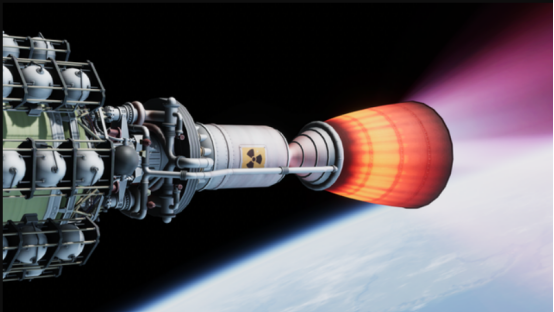
While commercial entities like Honda are perfecting the economics of Earth-to-orbit transportation, national space agencies are setting their sights on the ultimate prize: sustained human presence in deep space. However, the chemical propulsion systems that have powered spaceflight since the days of the Soviet probes are reaching their theoretical physical limits. To truly unlock the solar system, a generational leap in propulsion technology is required. Enter NASA’s Agile Lunar Operations Demonstration, a groundbreaking initiative centered around Nuclear Thermal Propulsion (NTP).
NASA, in collaboration with the Defense Advanced Research Projects Agency (DARPA), has initiated the Demonstration for Rocket to Agile Cislunar Operations (DRACO) program. The primary objective is to design, build, and fly a nuclear-powered rocket in space. This is not a concept for the distant future; it is an active, heavily funded operation poised to fundamentally change the rules of deep space travel. The cislunar space—the region between Earth and the Moon—will serve as the ultimate proving ground for this revolutionary technology.
Breaking the Chemical Barrier
Traditional chemical rockets rely on the combustion of a fuel and an oxidizer to generate thrust. The efficiency of a rocket engine is measured in Specific Impulse (Isp), which essentially denotes how many seconds a pound of propellant can produce a pound of thrust. The best chemical engines max out at an Isp of around 450 seconds. Nuclear Thermal Propulsion shatters this barrier.
- Unmatched Efficiency: An NTP system utilizes a nuclear fission reactor to superheat a liquid propellant, typically highly enriched hydrogen, expanding it through a nozzle to generate thrust. Because hydrogen is the lightest element, this process yields an Isp of 900 seconds or more—double the efficiency of the most advanced chemical rockets.
- Agile Maneuverability: In the strategic domain of cislunar space, the ability to rapidly change orbits is crucial. NTP allows spacecraft to perform high delta-v (change in velocity) maneuvers that would quickly deplete the fuel reserves of a chemical spacecraft, enabling unprecedented agility for both scientific and national security missions.
- Payload Maximization: The exponential increase in fuel efficiency means that spacecraft can carry significantly less propellant. This mass savings translates directly into larger payload capacities, allowing for heavier scientific instruments, thicker radiation shielding for crew quarters, or more extensive life support systems.
The Agile Lunar Operations Demonstration will test the reactor’s startup sequence, thermal management systems, and prolonged thrust capabilities in a safe, high-Earth orbit. Success in this demonstration will signal the beginning of the nuclear age of spaceflight, rendering chemical deep-space transit obsolete.

How Nuclear Thermal Propulsion Redefines Deep Space Travel
The implementation of Nuclear Thermal Propulsion is not merely an engineering upgrade; it is a physiological and logistical necessity for human missions to Mars and beyond. The harsh realities of deep space—specifically microgravity and cosmic radiation—pose severe threats to human health. The longer astronauts spend in transit, the higher their risk of developing catastrophic health issues. By fundamentally altering the speed of interplanetary travel, NASA’s nuclear-powered rockets directly address these biological limitations.
Current mission architectures relying on chemical propulsion dictate a transit time to Mars of approximately seven to nine months, depending on planetary alignment. This exposes the crew to immense doses of galactic cosmic rays (GCRs) and solar solar particle events (SPEs). Nuclear Thermal Propulsion possesses the raw power to cut this transit time in half, potentially reducing the journey to a mere 100 days. This reduction in exposure time is the single most effective method of protecting astronaut health, far surpassing the capabilities of passive physical shielding.
Reactor Safety and Operational Protocols
The integration of nuclear reactors into spaceflight naturally raises stringent safety concerns. However, the DRACO program operates under rigorous, modernized safety protocols designed to prevent any terrestrial contamination.
The High-Assay Low-Enriched Uranium (HALEU) reactor used in these modern designs is engineered to remain completely inert during launch. It is not activated until the spacecraft has reached a sufficiently high “nuclear safe orbit.” This ensures that in the highly unlikely event of a launch vehicle failure, the reactor material remains subcritical and poses no radioactive threat to the Earth’s biosphere. Furthermore, the reactor is designed with negative temperature coefficients, meaning that if the system begins to overheat, the nuclear reaction naturally slows down, providing an inherent, physics-based failsafe mechanism. By mastering these safety protocols, NASA is ensuring that the immense power of the atom can be harnessed responsibly for the exploration of the cosmos.

The Future Ecosystem of Interplanetary Logistics
When we synthesize the historical tenacity of Soviet planetary probes, the modern economic disruption of Honda’s reusable rockets, and the futuristic velocity of NASA’s nuclear thermal propulsion, a clear and cohesive blueprint for the future of interplanetary logistics emerges. We are no longer looking at isolated missions, but rather the development of a comprehensive, multi-tiered infrastructure capable of supporting a permanent human presence across the solar system.
This future ecosystem relies on the seamless integration of these disparate technologies. The journey begins on Earth, where commercial entities utilizing highly reliable, rapidly reusable launch vehicles—perfected by companies like Honda—will ferry massive amounts of cargo and structural components to low-Earth orbit at a fraction of historical costs. This cheap access to space enables the orbital assembly of massive interplanetary cruisers.
Bridging the Eras of Exploration
Once assembled in orbit, these massive vessels will not rely on the chemical engines that brought their components from the surface. Instead, they will be powered by advanced Nuclear Thermal Propulsion systems derived from NASA’s Agile Lunar Operations demonstrations. These nuclear engines will provide the high-thrust, high-efficiency propulsion required to push heavy payloads and human crews across the vast distances to Mars, the asteroid belt, and eventually the moons of Jupiter and Saturn.
Upon arrival at their destinations, the legacy of the early Soviet pioneers will be deeply felt. The automated descent systems, the robust environmental shielding, and the remote telemetry protocols utilized by modern landers and rovers will all owe a debt of gratitude to the engineering data bought and paid for by the crushed hulls of the Venera probes and the silent transmitters of the early Mars missions. This synergy of cheap Earth-to-orbit logistics, rapid interplanetary transit, and hardened planetary survival systems represents the ultimate culmination of humanity’s aerospace evolution.
Frequently Asked Questions (FAQ)
- What were the most significant achievements of the Soviet interplanetary probes?
- The Soviet Venera program achieved the first in-situ atmospheric analysis of another planet (Venera 4), the first successful soft landing and data transmission from another planet (Venera 7), and the first color panoramic images and soil analysis of the Venusian surface (Venera 13). These probes provided the foundational data for our understanding of extreme planetary environments and runaway greenhouse effects.
- How does Honda’s reusable rocket technology impact the space industry?
- Honda is applying its vast expertise in automotive mass manufacturing, autonomous guidance, and engine throttling to develop vertical takeoff and vertical landing (VTVL) reusable rockets. This technology drastically lowers the cost per kilogram of payload to orbit by shifting the expense from single-use hardware manufacturing to fuel and rapid, predictive maintenance turnaround, thereby democratizing access to space.
- What is NASA’s Agile Lunar Operations Demonstration (DRACO)?
- The DRACO (Demonstration for Rocket to Agile Cislunar Operations) program is a joint initiative by NASA and DARPA to develop and test a Nuclear Thermal Propulsion (NTP) system in space. The goal is to demonstrate a functional nuclear-powered rocket in cislunar space, proving its capability for high-efficiency, agile maneuvering.
- Why is Nuclear Thermal Propulsion (NTP) considered superior to chemical rockets for deep space travel?
- NTP utilizes a nuclear fission reactor to superheat liquid hydrogen, resulting in a Specific Impulse (Isp) of 900 seconds or more—roughly double the efficiency of the best chemical rockets. This allows for significantly faster transit times to destinations like Mars (reducing astronaut radiation exposure), greater payload capacities, and unprecedented maneuverability in deep space.
- Are nuclear-powered rockets safe to launch from Earth?
- Yes, modern NTP systems are designed with extreme safety protocols. The High-Assay Low-Enriched Uranium (HALEU) reactors remain completely inert and subcritical during the launch phase. The reactor is only activated once the spacecraft has achieved a designated “nuclear safe orbit” high above Earth, ensuring no radioactive risk to the biosphere even in the event of a launch failure.