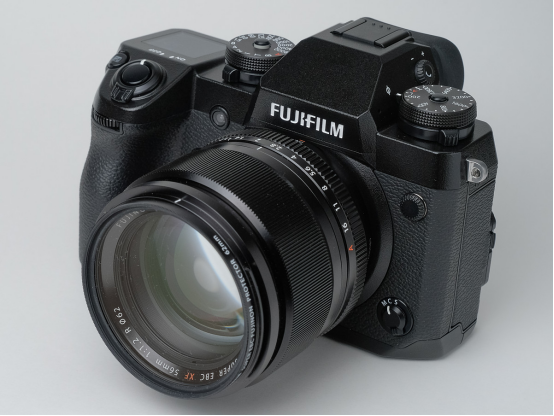
The Fujifilm X-H1 represents a pivotal moment in the evolution of the X-Series, bridging the gap between enthusiast-level photography and high-end professional cinematography. As the first Fujifilm camera to feature internal 5-axis In-Body Image Stabilization (IBIS), it redefined what was possible with the X-Trans sensor, providing a stable platform for both handheld video and long-exposure photography.
The Revolutionary IBIS System and Imaging Core
At the heart of the Fujifilm X-H1 is the 24.3-megapixel X-Trans CMOS III sensor, paired with the X-Processor Pro. While these components were seen in the X-T2, the X-H1 differentiates itself through its mechanical implementation. The IBIS system provides up to 5.5 stops of stabilization, utilizing three axial accelerometers and three axial gyro sensors.
Why IBIS Matters for X-Series Lenses
The introduction of IBIS was specifically designed to breathe new life into Fujifilm’s legendary prime lenses, such as the XF 35mm f/1.4 and XF 56mm f/1.2, which lack optical stabilization. With the X-H1, these lenses become viable tools for low-light handheld shooting, allowing photographers to keep ISO levels low while maintaining sharpness at slower shutter speeds.
-
Stabilization:
5-axis compensation for pitch, yaw, and roll. -
Dual Processor:
High-speed data processing for real-time stabilization calculations. -
Flicker Reduction:
Essential for indoor sports and event photography under fluorescent lighting.

Cinematic Excellence: Eterna and Video Workflow
The X-H1 was the first Fujifilm camera to introduce the “Eterna” film simulation. Modeled after professional motion picture film, Eterna is characterized by understated colors and deep shadow tones, providing a perfect starting point for color grading.
Advanced Video Specifications
Beyond film simulations, the X-H1 supports DCI 4K (4096 x 2160) at a high bitrate of 200Mbps. This allows for significantly more data retention in complex scenes compared to standard 4K. The camera also includes F-Log recording directly to the SD card, streamlining the workflow for professional videographers who require maximum dynamic range.
To manage the heat generated during high-bitrate recording, the X-H1 features a larger body design with passive cooling pathways, ensuring longer recording times without the risk of thermal shutdown—a common issue in smaller mirrorless bodies.

Professional Build Quality and Ergonomic Mastery
The X-H1 is built like a tank. Its magnesium alloy chassis is 25% thicker than that of the X-T2, and it features a high-durability coating that is scratch-resistant. This camera is designed to withstand the rigors of professional use in harsh environments, featuring comprehensive weather sealing against dust, moisture, and temperatures as low as -10°C.
The Top LCD and Enhanced Grip
Borrowing from the medium-format GFX 50S, the X-H1 includes a 1.28-inch sub-monitor on the top plate. This allows photographers to check exposure settings, battery life, and remaining storage at a glance, even when the camera is powered off. The redesigned grip is deeper and more contoured, providing a secure hold even when using heavy telephoto lenses like the XF 100-400mm.

Technical Comparison: X-H1 vs. Industry Standards
When evaluating the X-H1, it is helpful to see how it stacks up against its peers in terms of physical and technical capabilities.
| Feature | Fujifilm X-H1 | Fujifilm X-T2 |
|---|---|---|
| Stabilization | 5-Axis IBIS (5.5 Stops) | Lens-Based Only |
| Max Bitrate | 200 Mbps | 100 Mbps |
| Film Simulation | Eterna Included | Not Included |
| Build Material | Thick Magnesium Alloy | Standard Magnesium Alloy |
| Rear LCD | 3-Way Tilt (Touch) | 3-Way Tilt (Non-Touch) |

Expert Optimization and Pro Tips
To get the most out of the Fujifilm X-H1, users should look beyond the default settings. The camera’s “Boost Mode” is essential for professional work, as it increases the EVF refresh rate to 100fps and reduces shutter lag.
The Importance of the VPB-XH1 Battery Grip
While the X-H1 is powerful on its own, the Vertical Power Booster Grip (VPB-XH1) is a mandatory accessory for many. It expands the battery capacity to three batteries, enables 4K recording up to 30 minutes, and includes a headphone jack for audio monitoring.
Pro Tip:
When shooting video, use the “Silent Movie Control” mode. This allows you to adjust aperture, shutter speed, and ISO via the touchscreen, preventing the sound of physical dial clicks from being recorded by the internal microphones.

Frequently Asked Questions (FAQ)
-
Is the Fujifilm X-H1 still relevant in 2024?
- Absolutely. While newer models like the X-H2 exist, the X-H1 offers a unique “organic” image quality due to the 24MP sensor and remains the most affordable way to access a professional-grade Fuji body with IBIS and a top LCD.
-
Does the IBIS work with third-party manual lenses?
- Yes, but you must manually enter the focal length in the “Mount Adapter Setting” menu to ensure the stabilization algorithm calculates the correct movement.
-
How does the X-H1 handle overheating during video?
- Thanks to its larger body and internal heat dissipation design, the X-H1 is much more resistant to overheating than the X-T series. Using the battery grip further improves thermal performance.
-
Is the autofocus fast enough for sports?
- With the latest firmware updates, the X-H1 features improved phase-detection algorithms. While not as fast as the X-T5, it is more than capable for most sports and action when paired with “Boost Mode.”
-
What is the benefit of the leaf-spring shutter button?
- The X-H1 features a very sensitive leaf-spring shutter button. This minimizes camera shake during the press, allowing for sharper images at slow shutter speeds, though it requires a short learning curve to avoid accidental shots.