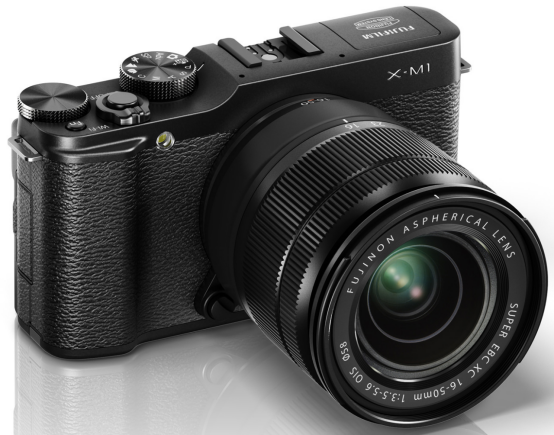
Unveiling the Fujifilm X-M1: A Retro Mirrorless Gem
The Fujifilm X-M1, often overshadowed by its siblings in the X-Series lineup, stands as a testament to Fujifilm’s commitment to delivering exceptional image quality and user experience in a compact, stylish package. Launched in 2013, it was positioned as a more accessible entry point into the X-mount system, foregoing an electronic viewfinder in favor of a smaller form factor and a tilting LCD screen. Despite these simplifications, it retained the highly acclaimed 16.3-megapixel APS-C X-Trans CMOS sensor, a revolutionary technology that set Fujifilm apart from its competitors.
This article serves as the ultimate guide to the Fujifilm X-M1, dissecting its design philosophy, technical capabilities, and enduring appeal. We will explore why this “hidden gem” continues to captivate photographers and how it holds up in today’s demanding digital landscape. From its iconic retro aesthetics to its unparalleled color science, the X-M1 offers a unique photographic journey that extends far beyond its initial market positioning.

Historical Context: The X-M1’s Place in Fujifilm’s Legacy
To truly appreciate the Fujifilm X-M1, one must understand its genesis within the broader Fujifilm X-Series narrative. Following the successful launches of the X-Pro1 and X-E1, which catered to enthusiasts and professionals with their advanced viewfinders and robust build, Fujifilm identified a need for a more compact and user-friendly model that could still deliver professional-grade image quality. The X-M1 was born from this vision, aiming to attract a wider audience without compromising on the core X-Trans sensor technology.
The “Why” Behind the X-M1’s Design
The primary design choice for the X-M1 was the omission of a built-in viewfinder, a decision that allowed for a significantly smaller and lighter body. This made it an attractive option for travel and everyday photography, where discretion and portability are paramount. Instead, it featured a high-resolution, tilting LCD screen, a feature highly valued for street photography and shooting from unique angles. This strategic simplification aimed to broaden the X-Series’ appeal, making the X-Trans sensor accessible to those who preferred a point-and-shoot style interface with interchangeable lens capabilities.
Evolution of the X-Series Lineup
The X-M1 represented a crucial expansion of the X-Series philosophy, demonstrating that Fujifilm could scale its advanced sensor technology across different price points and form factors. It paved the way for subsequent entry-level models like the X-A series (which used a conventional Bayer sensor) and cemented Fujifilm’s reputation for innovative retro-styled cameras that prioritized image quality and tactile control.

Design & Ergonomics: Embracing the Retro Aesthetic
The Fujifilm X-M1 immediately distinguishes itself with its striking retro design, a hallmark of the X-Series. Its compact, rangefinder-esque body evokes classic film cameras, appealing to photographers who appreciate both aesthetics and functionality. Despite its smaller size compared to its X-Pro and X-E siblings, the X-M1 feels solid and well-built, with a thoughtful arrangement of controls that prioritize intuitive operation.
Body Build and Materials
Constructed primarily from high-quality plastics with metal accents, the X-M1 strikes a balance between durability and lightweight portability. The textured grip provides a secure hold, while the overall finish exudes a premium feel. Its diminutive size makes it an ideal companion for discreet street photography or travel, easily slipping into a small bag without drawing undue attention.
Intuitive Control Layout
Fujifilm’s commitment to tactile controls is evident in the X-M1. It features dedicated dials for shutter speed and exposure compensation, allowing for quick adjustments without diving into menus. The mode dial provides easy access to various shooting modes, while the rear command dial and customizable Fn button offer further flexibility. While it lacks the dedicated aperture ring found on some XF lenses, the camera’s interface is designed to make manual adjustments straightforward and enjoyable.
The Tilting LCD Screen
The 3.0-inch, 920k-dot tilting LCD screen is a significant ergonomic advantage, especially in the absence of a viewfinder. It allows photographers to compose shots from high or low angles, enhancing creative possibilities and making it easier to shoot in crowded environments. The screen is bright and clear, offering excellent visibility even in challenging lighting conditions, though direct sunlight can still pose a challenge.

Image Quality: The X-Trans Sensor Advantage
At the heart of the Fujifilm X-M1 lies its 16.3-megapixel APS-C X-Trans CMOS sensor, paired with the EXR Processor II. This combination is the primary reason for the X-M1’s “hidden gem” status, delivering image quality that often rivals cameras with larger sensors and higher megapixel counts. The X-Trans sensor’s unique color filter array minimizes moiré and false colors without the need for an optical low-pass filter, resulting in incredibly sharp and detailed images with natural rendering.
Unparalleled Color Science and Film Simulations
Fujifilm’s renowned color science is a major draw for X-M1 users. The camera offers a suite of Film Simulations (Provia/Standard, Velvia/Vivid, Astia/Soft, Sepia, Monochrome, and Pro Neg Std/Hi) that emulate the look of classic Fujifilm film stocks. These are not mere filters but sophisticated color profiles that process images with exceptional fidelity and aesthetic appeal, directly in-camera. This feature significantly reduces post-processing time and encourages a more creative approach to photography.
Low Light Performance and Dynamic Range
Thanks to the X-Trans sensor’s design and the EXR Processor II, the X-M1 exhibits impressive low-light performance. It can comfortably shoot at higher ISOs (up to 6400 natively, expandable to 25600) with well-controlled noise and preserved detail. The dynamic range is also commendable, allowing for significant recovery of highlight and shadow detail in RAW files, making it versatile for various lighting conditions.
Lens Compatibility and Potential
The X-M1 benefits from the extensive and growing range of Fujinon X-mount lenses. From compact primes like the XF27mm F2.8 to versatile zooms, the camera pairs beautifully with high-quality optics, unlocking its full potential. The sensor’s ability to resolve fine detail truly shines when coupled with sharp Fujinon glass, producing images with beautiful clarity and character.

Performance & User Experience: Navigating the X-M1
While not a speed demon by modern standards, the Fujifilm X-M1 offers a respectable performance for its class and era, providing a satisfying user experience for its target audience. Its operation is generally smooth, though certain aspects reflect its position as an early X-Series model.
Autofocus System
The X-M1 utilizes a contrast-detection autofocus system. In good light, it is reasonably quick and accurate for static subjects. However, it can struggle with fast-moving subjects or in very low light conditions, where hunting may occur. For general photography, street scenes, and portraits, the AF system is perfectly adequate, but it’s not designed for demanding sports or wildlife photography. Manual focus, aided by focus peaking, is an excellent alternative for precise control.
Shutter Speed and Burst Shooting
The camera offers a maximum mechanical shutter speed of 1/4000s and a continuous shooting rate of up to 5.6 frames per second (fps). While 5.6 fps is decent, the buffer can fill relatively quickly when shooting RAW files, leading to brief pauses. For capturing decisive moments in everyday scenarios, it provides sufficient speed.
Menu System and Connectivity
The menu system is logical and relatively easy to navigate, though some options are nested deeply. A notable feature for its time was built-in Wi-Fi connectivity, allowing users to transfer images wirelessly to a smartphone or tablet via the Fujifilm Camera Remote app. This was a significant convenience for sharing photos on the go, enhancing the camera’s appeal as a portable and connected device.
Pro Tips for Maximizing Your Fujifilm X-M1
To truly unlock the potential of your Fujifilm X-M1 and elevate your photography, consider these expert recommendations:
Lens Recommendations
- Fujinon XF27mm F2.8: This pancake prime lens makes the X-M1 incredibly compact and discreet, perfect for street photography and everyday carry. Its sharpness and rendering are excellent.
- Fujinon XC16-50mm F3.5-5.6 OIS: Often bundled with the X-M1, this kit lens is surprisingly capable. It’s lightweight, versatile, and offers optical image stabilization, making it a great all-rounder.
- Manual Focus Primes: Given the X-M1’s contrast-detect AF limitations in challenging situations, pairing it with vintage or modern manual focus primes (e.g., 7artisans, Pergear, or adapted legacy lenses) can be incredibly rewarding. Focus peaking makes precise manual focusing straightforward.
Custom Settings and Film Simulations
- Customize Fn Button: Assign your most frequently used setting (e.g., ISO, White Balance, Film Simulation) to the Fn button for quick access.
- Experiment with Film Simulations: Don’t just stick to ‘Standard’. Velvia (Vivid) is great for landscapes, Astia (Soft) for portraits, and Monochrome + Red Filter for dramatic black and white.
- Set Up Custom Settings: The X-M1 allows you to save custom settings. Create profiles for different shooting scenarios (e.g., “Street,” “Portrait,” “Landscape”) with specific Film Simulations, highlight/shadow tones, and noise reduction levels.
Firmware Updates and Maintenance
- Check for Firmware: Ensure your X-M1 has the latest firmware installed. Fujifilm often releases updates that improve performance, add features, or fix bugs.
- Sensor Cleaning: Periodically check your sensor for dust, especially if you change lenses frequently. Use a blower bulb for light dust or a professional cleaning kit for stubborn particles.
- Battery Management: Carry spare batteries. While the X-M1’s battery life is decent, an extra battery ensures you don’t miss a shot during a long day of shooting.
Fujifilm X-M1 vs. Its Siblings & Competitors: A Comparison
Understanding where the X-M1 fits within the broader camera landscape helps appreciate its unique value proposition. Here’s a brief comparison with some contemporaries and close relatives:
| Feature | Fujifilm X-M1 | Fujifilm X-E1 | Fujifilm X-A1 | Sony NEX-3N |
|---|---|---|---|---|
| Sensor | 16.3MP APS-C X-Trans CMOS | 16.3MP APS-C X-Trans CMOS | 16.3MP APS-C Bayer | 16.1MP APS-C Bayer |
| Viewfinder | None | 2.36M-dot EVF | None | None |
| LCD Screen | 3.0″ Tilting (920k-dot) | 2.8″ Fixed (460k-dot) | 3.0″ Tilting (920k-dot) | 3.0″ Tilting (460k-dot) |
| Wi-Fi | Yes | No | Yes | No |
| Max ISO | 25600 | 25600 | 25600 | 16000 |
| Build Quality | Good (Plastic/Metal) | Excellent (Metal) | Good (Plastic) | Good (Plastic) |
| Primary Advantage | Compact X-Trans, Tilting LCD, Wi-Fi | Built-in EVF, Premium Build | Entry-level price, Conventional Sensor | Compact, Affordable APS-C |
Technical Checklist: What to Look for When Buying a Used X-M1
If you’re considering purchasing a pre-owned Fujifilm X-M1, a thorough inspection is crucial to ensure you’re getting a reliable camera. Use this checklist:
- Body Condition: Check for significant dents, scratches, or cracks. Minor cosmetic wear is normal, but deep damage can indicate drops or rough handling.
- LCD Screen: Inspect the screen for scratches, dead pixels, or discoloration. Test the tilting mechanism to ensure it moves smoothly and locks securely.
- Sensor Cleanliness: Take a photo of a plain, bright surface (like a white wall or clear sky) at a high aperture (f/16 or f/22) to reveal any dust spots on the sensor.
- Lens Mount: Ensure the lens mount is free of damage or excessive wear. Lenses should attach and detach smoothly without excessive play.
- Buttons and Dials: Test every button and dial for responsiveness and proper function. Ensure they click satisfyingly and don’t stick.
- Battery Compartment: Check for corrosion on the battery contacts, which can indicate water damage.
- Ports: Test the HDMI and USB ports if possible.
- Shutter Count: While not always easily accessible on older models, a lower shutter count generally indicates less use.
- Original Accessories: Ideally, the camera should come with its original battery, charger, and strap.
Frequently Asked Questions (FAQ)
- Is the Fujifilm X-M1 still a good camera in 2024?
- Absolutely. For photographers prioritizing image quality (especially color science), retro aesthetics, and a compact form factor on a budget, the X-M1 remains an excellent choice. Its X-Trans sensor still produces stunning photos, though its autofocus and video capabilities are dated compared to modern cameras.
- What kind of photography is the Fujifilm X-M1 best suited for?
- The X-M1 excels in street photography, travel, portraits, and everyday shooting. Its compact size and discreet appearance make it ideal for capturing candid moments, while its excellent image quality shines in well-lit conditions. It’s less suited for fast-action sports or professional video work.
- Does the X-M1 have an electronic viewfinder (EVF)?
- No, the Fujifilm X-M1 does not have a built-in electronic viewfinder. It relies solely on its 3.0-inch tilting LCD screen for composition and reviewing images. This design choice contributed to its smaller size and lower price point compared to models like the X-E1 or X-Pro1.
- What lenses are recommended for the Fujifilm X-M1?
- For maximum portability, the Fujinon XF27mm F2.8 pancake lens is highly recommended. The XC16-50mm F3.5-5.6 OIS kit lens offers great versatility. For prime lens enthusiasts, the XF35mm F1.4 or XF23mm F2 are excellent choices that pair well with the X-M1’s sensor capabilities.
- What is the main difference between the X-M1 and the X-A1?
- The primary difference lies in their sensors. The X-M1 uses Fujifilm’s proprietary 16.3MP APS-C X-Trans CMOS sensor, known for its unique color filter array and excellent image quality without an optical low-pass filter. The X-A1, on the other hand, uses a conventional 16.3MP APS-C Bayer sensor, making it a more traditional entry-level option.