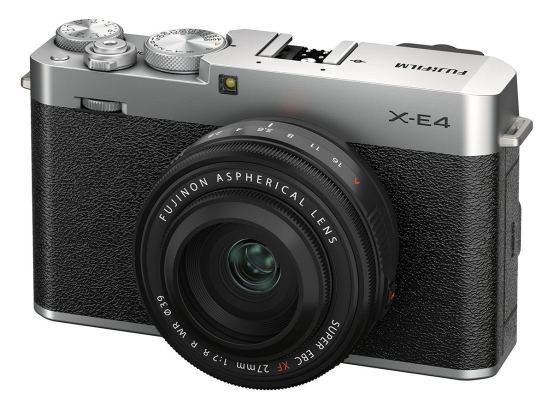
Introduction to the Fujifilm X-E Series: A Legacy of Compact Excellence
The Fujifilm X-E series stands as a testament to Fujifilm’s commitment to blending timeless design with cutting-edge imaging technology. Conceived as a more compact and rangefinder-style alternative to the flagship X-Pro line, the X-E series has consistently offered photographers a discreet yet powerful tool for capturing the world. Each iteration, from the foundational X-E1 to the highly refined X-E4, has built upon a core philosophy: delivering exceptional image quality, intuitive controls, and a truly enjoyable shooting experience within a beautifully crafted, portable body. This series appeals particularly to street photographers, travel enthusiasts, and anyone who appreciates a camera that feels as good to hold as it performs.
The Distinctive Appeal of the X-E Lineup
What sets the X-E series apart within the crowded mirrorless market is its unwavering dedication to a specific user experience. These cameras eschew large DSLR-like grips for a flatter, more streamlined profile, reminiscent of classic film rangefinders. This design choice not only contributes to their aesthetic charm but also enhances their portability and discretion, making them ideal companions for photographers who prefer to blend into their environment. Beyond aesthetics, the X-E cameras are renowned for their robust build quality, incorporating durable materials that ensure longevity and a premium feel in hand. The tactile dials and physical controls further reinforce a direct, engaging interaction with the photographic process, a hallmark of Fujifilm’s design ethos.
- Compact Form Factor: Designed for portability and discreet shooting, easily fitting into smaller bags.
- Rangefinder-Style Aesthetics: Classic, understated design that appeals to enthusiasts and professionals alike.
- Intuitive Physical Controls: Dedicated dials for shutter speed, aperture, and exposure compensation provide a direct, satisfying shooting experience.
- Premium Build Quality: Durable construction with high-quality materials ensures reliability and a luxurious feel.

Evolution of Design: From Retro Charm to Modern Minimalism
The design journey of the Fujifilm X-E series is a fascinating study in iterative refinement, moving from a distinctly retro aesthetic in its early models to a more streamlined, minimalist approach in its latest iteration, the X-E4. While all models share the fundamental rangefinder-style body, the nuances in their construction, button layouts, and overall physical interface tell a story of adapting to user feedback and evolving photographic trends. This evolution demonstrates Fujifilm’s careful balance between preserving heritage and embracing contemporary design principles, ensuring each camera feels both familiar and refreshingly new.
The Classic Beginnings: X-E1 and X-E2
The original Fujifilm X-E1, launched in 2012, established the series’ retro DNA. It featured a prominent electronic viewfinder (EVF) hump, a distinct front grip, and a generous array of physical dials and buttons. Its magnesium alloy top plate and classic silver-and-black finish immediately evoked the golden age of photography. The X-E2, introduced shortly after in 2013, largely retained this beloved design, focusing its improvements internally. Both models presented a robust, almost utilitarian retro charm, with a clear emphasis on tangible controls that made them a joy for photographers who appreciate a hands-on approach. The slightly larger body and pronounced grip provided a comfortable hold, especially with larger lenses.
Refinement and Simplification: X-E3
The Fujifilm X-E3 marked a significant step towards simplification. While maintaining the core X-E aesthetic, Fujifilm reduced the body size slightly and streamlined the button layout, notably removing the D-pad in favor of a joystick for autofocus point selection and menu navigation. This change, alongside the introduction of a touchscreen, aimed to offer a more modern and customizable user experience without sacrificing the essential control dials. The grip became less pronounced, contributing to an even more compact feel, aligning with a trend towards smaller, lighter mirrorless systems. This model successfully bridged the gap between the classic feel and modern functionality, appealing to both traditionalists and tech-savvy users.
The Apex of Minimalism: X-E4
The Fujifilm X-E4 represents the pinnacle of the series’ design evolution towards minimalism. It boasts the flattest top plate and most streamlined body of the entire series, almost completely eliminating the front grip for a sleek, block-like profile. This design choice makes it incredibly pocketable and discreet, especially when paired with compact prime lenses. While retaining essential dials, many physical buttons were removed or repurposed, encouraging greater use of the fully articulating touchscreen. The X-E4’s design is a bold statement, prioritizing ultimate portability and a clean, unobtrusive aesthetic, making it a favorite for those who value extreme compactness and a modern, understated look.

Sensor & Processor Advancements: Image Quality Through Generations
The heart of any digital camera lies in its sensor and image processor, and the Fujifilm X-E series has seen significant advancements in these critical components across its generations. Each new model has introduced improved sensor technology, primarily Fujifilm’s proprietary X-Trans CMOS sensors, coupled with more powerful image processors (EXR Processor and later X-Processor). These developments have consistently delivered enhanced image quality, improved low-light performance, broader dynamic range, and more sophisticated color science, cementing Fujifilm’s reputation for producing cameras with distinctive and beautiful output.
From X-Trans CMOS I to X-Trans CMOS 4
The Fujifilm X-E1 and X-E2 both featured the 16.3-megapixel APS-C X-Trans CMOS II sensor (the X-E1 actually had the X-Trans CMOS I, while the X-E2 upgraded to the II with phase detection pixels). This unique sensor design, which eschews a traditional Bayer array filter in favor of a more random pixel arrangement, effectively minimizes moiré and false colors without the need for an optical low-pass filter. The result was incredibly sharp, detailed images with natural-looking textures and Fujifilm’s renowned color reproduction, particularly with its Film Simulations. The X-E2’s upgrade to X-Trans CMOS II also brought on-sensor phase detection autofocus, significantly improving AF speed.
The Fujifilm X-E3 made a substantial leap with the 24.3-megapixel APS-C X-Trans CMOS III sensor and the X-Processor Pro. This combination delivered a noticeable boost in resolution, improved high ISO performance, and even faster processing speeds. The enhanced sensor and processor allowed for more detailed images, better noise control in challenging lighting conditions, and the introduction of new Film Simulations, further expanding creative possibilities. Dynamic range also saw improvements, offering greater flexibility in post-processing.
The latest iteration, the Fujifilm X-E4, incorporates the 26.1-megapixel APS-C X-Trans CMOS 4 sensor and the X-Processor 4. This is the same acclaimed sensor and processor found in higher-end Fujifilm models like the X-T4 and X-Pro3, guaranteeing top-tier image quality. It brings even higher resolution, superior low-light capabilities with an expanded native ISO range, and exceptional color fidelity. The X-Processor 4 also contributes to faster continuous shooting, quicker autofocus calculations, and more advanced video features, making the X-E4 a powerhouse in a remarkably small package.
- X-E1 (X-Trans CMOS I, 16.3MP): Pioneering sensor known for sharpness and unique color rendition.
- X-E2 (X-Trans CMOS II, 16.3MP): Introduced on-sensor phase detection for faster autofocus.
- X-E3 (X-Trans CMOS III, 24.3MP): Significant resolution increase, improved high ISO, and faster X-Processor Pro.
- X-E4 (X-Trans CMOS 4, 26.1MP): Latest generation sensor and processor, offering highest resolution, best low-light, and advanced features.

Focusing Systems & Performance: Speed, Accuracy, and User Experience
Autofocus performance is a critical aspect for any modern camera, directly impacting a photographer’s ability to capture decisive moments. The Fujifilm X-E series has seen substantial enhancements in its focusing systems, moving from contrast-detection-only to sophisticated hybrid systems that combine phase detection and contrast detection. These advancements have translated into significant improvements in speed, accuracy, and overall tracking capabilities, making each subsequent X-E model more versatile for a wider range of photographic scenarios.
From Contrast-Detect to Hybrid AF
The Fujifilm X-E1 relied solely on contrast-detection autofocus, which, while accurate in good light, could be noticeably slower, especially in dim conditions or when tracking moving subjects. This made it more suited for static subjects or deliberate, slower-paced photography, aligning with its classic rangefinder feel. The user experience with AF was more considered, requiring patience in certain situations.
The Fujifilm X-E2 introduced a game-changing improvement by incorporating on-sensor phase-detection pixels into its X-Trans CMOS II sensor. This hybrid AF system dramatically boosted autofocus speed and responsiveness, particularly for continuous shooting and tracking. The camera could now acquire focus much faster, reducing frustrating delays and making it a more capable tool for street photography or capturing fleeting moments. The addition of phase detection also improved focus accuracy in various lighting conditions.
The Fujifilm X-E3 further refined the hybrid AF system with its X-Trans CMOS III sensor and X-Processor Pro. It boasted a higher number of phase-detection points (91 points, expandable to 325), covering a broader area of the frame. This led to even faster and more precise autofocus, with enhanced tracking capabilities for subjects moving across the frame. The introduction of the AF joystick also made selecting focus points much more intuitive and rapid, significantly improving the user’s control over the focusing process.
The Fujifilm X-E4, with its X-Trans CMOS 4 sensor and X-Processor 4, features Fujifilm’s most advanced autofocus system to date. It utilizes 2.16 million phase-detection pixels spread across the entire sensor, offering lightning-fast and incredibly accurate AF. This system includes advanced subject tracking, face/eye detection that works exceptionally well, even in challenging profiles, and significantly improved low-light AF sensitivity down to -7EV. The X-E4’s AF performance rivals that of professional-grade cameras, making it highly capable for virtually any photographic genre, from fast-paced action to precise portraiture.
- X-E1: Contrast-detection only, slower performance, best for static subjects.
- X-E2: Hybrid AF (contrast + phase detection), significant speed improvement.
- X-E3: Enhanced hybrid AF with more points, faster processing, improved tracking, AF joystick.
- X-E4: Latest generation hybrid AF with 2.16M phase-detection pixels, advanced tracking, superior face/eye detect, -7EV low-light sensitivity.

Video Capabilities & Connectivity: Adapting to Modern Demands
While the Fujifilm X-E series is primarily celebrated for its photographic prowess, the demands of content creation have pushed camera manufacturers to increasingly integrate robust video capabilities. The X-E line has progressively evolved in this regard, moving from basic HD recording to advanced 4K options, catering to a broader audience that includes videographers and hybrid shooters. Alongside video, connectivity features like Wi-Fi and Bluetooth have become essential for seamless sharing and remote control, areas where the X-E series has also seen significant upgrades.
The Evolution of Video Recording
The early models, the Fujifilm X-E1 and X-E2, offered respectable Full HD (1080p) video recording at various frame rates. While perfectly adequate for casual use and capturing memories, their video features were not their primary selling point. The X-E2 did see some improvements in bitrate and overall quality compared to the X-E1, but neither was designed with serious videography in mind.
The Fujifilm X-E3 marked a pivotal moment by introducing 4K UHD (3840×2160) video recording at up to 30p. This was a significant upgrade, providing much higher resolution and detail, making it a viable option for more serious video projects. While not offering the most advanced codecs or extensive video features of higher-end Fujifilm models, it certainly elevated the X-E series’ standing as a hybrid tool. It also retained excellent Full HD options, including higher frame rates for slow-motion effects.
The Fujifilm X-E4 takes video capabilities to a new level, leveraging its powerful X-Processor 4. It can record 4K UHD at up to 30p with 4:2:0 8-bit internal recording, and impressively, 4K 4:2:2 10-bit external recording via HDMI. This opens up professional-grade color grading possibilities. It also offers DCI 4K (4096×2160) and high-speed Full HD recording at up to 240p for dramatic slow motion. The X-E4’s fully articulating screen is also a boon for videographers, allowing for easy self-shooting and monitoring from various angles, making it a truly capable tool for content creators.
Seamless Connectivity: Wi-Fi and Bluetooth
Connectivity features have become almost as important as image quality for many users. The Fujifilm X-E1 lacked built-in Wi-Fi, requiring an optional Eye-Fi card for wireless transfer. The X-E2 was the first in the series to integrate Wi-Fi, allowing for basic image transfer to smartphones and remote camera control via Fujifilm’s app. This was a crucial step towards modern convenience, enabling quick sharing of images on social media or for backup.
The Fujifilm X-E3 enhanced its wireless capabilities by adding Bluetooth Low Energy (BLE) in addition to Wi-Fi. Bluetooth allows for an always-on, low-power connection to a smartphone, facilitating seamless background image transfer and quicker pairing. This combination made connecting and sharing much more fluid and efficient. The remote control features also became more robust, offering greater control over camera settings from a mobile device.
The Fujifilm X-E4 continues with both Wi-Fi and Bluetooth, offering the most refined connectivity experience in the series. The improved app integration and faster transfer speeds ensure that images and videos can be quickly and easily shared or backed up. The ability to control the camera remotely is also highly responsive, making it ideal for self-portraits, group shots, or capturing wildlife from a distance. The X-E4 truly embodies the modern demand for a camera that not only captures stunning visuals but also integrates effortlessly into a digital workflow.
- X-E1: Full HD video, no Wi-Fi.
- X-E2: Improved Full HD video, built-in Wi-Fi.
- X-E3: Introduced 4K UHD video, Wi-Fi + Bluetooth.
- X-E4: Advanced 4K (including DCI, 10-bit external), high-speed Full HD, Wi-Fi + Bluetooth, fully articulating screen for video.

Key Features & Differentiators Across Models (X-E1, X-E2, X-E3, X-E4)
Understanding the specific advancements and unique selling points of each Fujifilm X-E camera is crucial for appreciating the series’ progression and for making an informed decision about which model best suits individual needs. While they all share the X-mount and a commitment to image quality, their feature sets, technological capabilities, and user interfaces have evolved significantly over time. This section provides a detailed breakdown of the primary differentiators, highlighting how each camera refined the X-E experience.
Comparative Overview of the X-E Series
The following table offers a concise yet comprehensive comparison of the key specifications and features across the Fujifilm X-E1, X-E2, X-E3, and X-E4. This allows for a quick glance at the major upgrades in sensor, processor, autofocus, video, and design elements, underscoring the continuous innovation within the line.
| Feature | Fujifilm X-E1 | Fujifilm X-E2 | Fujifilm X-E3 | Fujifilm X-E4 |
|---|---|---|---|---|
| Sensor | 16.3MP APS-C X-Trans CMOS I | 16.3MP APS-C X-Trans CMOS II | 24.3MP APS-C X-Trans CMOS III | 26.1MP APS-C X-Trans CMOS 4 |
| Processor | EXR Processor Pro | EXR Processor II | X-Processor Pro | X-Processor 4 |
| Autofocus | Contrast Detection | Hybrid AF (Phase Detect) | Hybrid AF (91/325 points) | Hybrid AF (2.16M PDAF pixels) |
| Video | 1080p Full HD | 1080p Full HD | 4K UHD @ 30p | 4K UHD/DCI @ 30p (10-bit HDMI) |
| LCD Screen | 2.8″ 460k-dot Fixed | 3.0″ 1.04M-dot Fixed | 3.0″ 1.04M-dot Touchscreen Fixed | 3.0″ 1.62M-dot Touchscreen Tilting |
| EVF | 2.36M-dot OLED | 2.36M-dot OLED | 2.36M-dot OLED | 2.36M-dot OLED |
| Connectivity | No Wi-Fi (Eye-Fi compatible) | Wi-Fi | Wi-Fi, Bluetooth LE | Wi-Fi, Bluetooth LE |
| Design Elements | Pronounced grip, classic retro | Similar to X-E1, internal upgrades | Streamlined, AF joystick, touchscreen | Ultra-minimalist, flat front, articulating screen |
| ISO Range (Native) | 200-6400 | 200-6400 | 200-12800 | 160-12800 |
| Continuous Shooting | ~6 fps | 7 fps | 8 fps (14 fps with electronic shutter) | 8 fps (20 fps with electronic shutter, 30 fps crop) |
Specific Model Highlights and Unique Selling Points
- Fujifilm X-E1: The pioneer. Its main differentiator was bringing the X-Trans sensor’s lauded image quality into a more compact, rangefinder-style body than the X-Pro1. It offered a pure, unadulterated photographic experience for those who valued image quality and classic controls over cutting-edge speed.
- Fujifilm X-E2: The refinement. Building upon the X-E1, the X-E2 retained the beloved design but significantly improved performance with its X-Trans CMOS II sensor and hybrid autofocus. This made it a much more versatile camera for capturing dynamic scenes, while still delivering the signature Fujifilm look. It was about enhancing usability without altering the core identity.
- Fujifilm X-E3: The modernizer. The X-E3 introduced the higher-resolution 24MP sensor, 4K video, and a touchscreen, alongside a streamlined body and the intuitive AF joystick. It struck a balance between traditional controls and modern features, appealing to photographers who wanted more advanced capabilities in a still-compact package.
- Fujifilm X-E4: The minimalist powerhouse. The X-E4 pushes the boundaries of compactness and performance. With the latest 26MP sensor and X-Processor 4, it offers top-tier image quality, advanced autofocus, and professional-grade video in the series’ most streamlined body. Its fully articulating screen caters to vloggers and diverse shooting angles, making it the most versatile and modern X-E to date.

Who is the Fujifilm X-E Series For? Ideal Users and Use Cases
The Fujifilm X-E series, with its distinct blend of retro aesthetics, compact dimensions, and powerful imaging capabilities, appeals to a specific demographic of photographers. It’s not a one-size-fits-all solution, but rather a carefully crafted tool for those who prioritize a particular kind of shooting experience. Understanding the ideal user and common use cases for these cameras can help potential buyers determine if an X-E model is the right fit for their photographic journey.
The Discerning Photographer’s Companion
At its core, the X-E series is designed for photographers who appreciate a tactile, engaging shooting experience. These are individuals who enjoy the process of photography as much as the final image. They value physical dials for exposure control, a high-quality electronic viewfinder (EVF), and a camera that feels good in the hand. The discrete nature of the X-E cameras also makes them ideal for situations where a larger, more imposing DSLR or even a bulky mirrorless camera might draw unwanted attention. This preference often translates into several key user types and their corresponding applications.
- Street Photographers: The compact size and understated design of the X-E cameras allow street photographers to be inconspicuous, blending into the environment without intimidating subjects. The rangefinder-style shooting position encourages a more observational approach, and the fast, silent electronic shutter (in later models) is invaluable.
- Travel Photographers: For those who prioritize light packing without compromising on image quality, an X-E camera is an excellent choice. Its small footprint means it won’t weigh down a travel bag, and its robust build can withstand the rigors of exploration. Paired with compact prime lenses, it offers a versatile and high-performance travel setup.
- Everyday Carry (EDC) Enthusiasts: Many photographers seek a camera they can carry with them daily, ready to capture unexpected moments. The X-E series excels here, easily fitting into a small bag or even a jacket pocket (especially the X-E4). It’s the camera you’ll always have with you, ensuring no photographic opportunity is missed.
- Minimalist Photographers: The streamlined design and focus on essential controls appeal to photographers who prefer simplicity and direct interaction with their tools. The X-E series encourages a more deliberate and thoughtful approach to composition and exposure, freeing the photographer from unnecessary complexity.
- Fujifilm Enthusiasts and Second Body Users: Existing Fujifilm users who love the brand’s color science and ergonomics often choose an X-E camera as a lighter, more portable second body alongside an X-T or X-Pro series camera. It offers a familiar interface and lens compatibility in a different form factor.
- Casual Videographers & Vloggers (X-E4): With the X-E4’s advanced video capabilities and articulating screen, it has become a strong contender for content creators who need a compact, high-quality camera for vlogging, short films, or documentary work, especially when paired with a small gimbal.

Making Your Choice: Which X-E Camera is Right for You?
Deciding which Fujifilm X-E camera best suits your needs involves carefully considering your budget, photographic priorities, and desired user experience. While all models deliver excellent image quality, the generational advancements in sensor, processor, autofocus, and video capabilities create distinct propositions. This section will help you navigate the choices by outlining the typical user profile for each X-E model, ensuring you select the perfect companion for your creative journey.
Tailoring Your Selection to Your Photographic Style
Each X-E camera, despite belonging to the same lineage, offers a unique blend of features and a slightly different character. Your ideal choice will depend on how much emphasis you place on modern conveniences versus a purely classic shooting feel, and whether cutting-edge performance in areas like video and autofocus is paramount.
- Fujifilm X-E1: The Purist’s Choice & Budget-Conscious Entry
The X-E1 is ideal for photographers seeking a truly
Independent gear note: Camera, lens, and brand names are used for identification and comparison only. Moon Station is not affiliated with, sponsored by, endorsed by, or authorized by the mentioned manufacturers or rights holders. Confirm current specifications, compatibility, warranties, and prices with official or qualified sources before purchasing equipment.