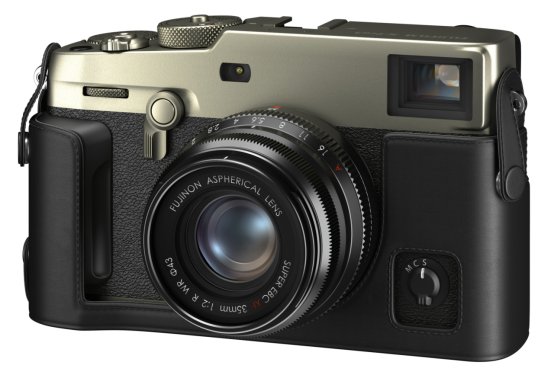
The Fujifilm X-Pro Series: A Legacy of Innovation and Design Philosophy
The Fujifilm X-Pro series represents a unique and revered segment within the mirrorless camera market, distinguished by its unwavering commitment to a tactile, rangefinder-inspired shooting experience. Since its inception, the X-Pro line has carved out a niche for photographers who appreciate classic aesthetics, durable construction, and a more deliberate approach to image-making. This philosophy is deeply embedded in every aspect of the cameras, from their robust magnesium alloy bodies and intuitive dial-based controls to the groundbreaking hybrid viewfinder system that seamlessly blends optical and electronic viewing options. The series isn’t merely about capturing images; it’s about fostering a deeper connection between the photographer and their tool, encouraging a slower, more thoughtful process that echoes the traditions of analogue photography while leveraging the pinnacle of digital imaging technology.
The Core Philosophy: Blending Heritage with Innovation
At the heart of the X-Pro series lies a powerful dichotomy: a deep reverence for photographic heritage combined with a relentless pursuit of technological advancement. Fujifilm engineers and designers have consistently strived to recreate the joy and ergonomics of classic film cameras, particularly rangefinders, while integrating state-of-the-art sensors, processors, and autofocus systems. This commitment ensures that photographers not only enjoy a premium user experience but also benefit from exceptional image quality, capable of producing stunning results in diverse shooting conditions. The X-Pro series caters to those who value the journey of creation as much as the final output, offering a bridge between the past and the future of photography.

Fujifilm X-Pro1: The Genesis of a Modern Classic
Launched in 2012, the Fujifilm X-Pro1 was a groundbreaking camera that challenged the prevailing conventions of the mirrorless market. It wasn’t merely another interchangeable lens camera; it was a statement. The X-Pro1 introduced Fujifilm’s now-iconic X-Trans CMOS sensor, a revolutionary design that eschewed the traditional Bayer filter array in favor of a more complex, pseudo-random pattern. This innovation was instrumental in reducing moiré and false colors without the need for an optical low-pass filter, resulting in images with exceptional sharpness, fine detail, and natural color rendition, often likened to film. Its arrival marked a pivotal moment, establishing Fujifilm as a serious contender in the professional and enthusiast camera segments.
Pioneering Design and Features
- Hybrid Multi Viewfinder: The X-Pro1 debuted the world’s first Hybrid Multi Viewfinder, allowing photographers to switch instantly between an optical viewfinder (OVF) and a high-resolution electronic viewfinder (EVF). The OVF provided a bright, clear, and unencumbered view of the scene, reminiscent of traditional rangefinders, while the EVF offered real-time exposure preview, focus peaking, and access to menu overlays. This dual functionality provided unparalleled versatility and immersion.
- Robust Build Quality: Crafted with a magnesium alloy top and bottom plate, the X-Pro1 exuded a premium feel and offered substantial durability. Its retro-inspired design, complete with mechanical dials for shutter speed and exposure compensation, resonated deeply with photographers who yearned for a more tactile and intuitive control scheme.
- X-Mount Lens System: Alongside the X-Pro1, Fujifilm introduced the X-Mount, a new lens system designed specifically for the X-Trans sensor. The initial trio of prime lenses (XF 18mm f/2, XF 35mm f/1.4, and XF 60mm f/2.4 Macro) quickly gained acclaim for their optical quality, contributing significantly to the camera’s overall appeal and image prowess.
Image Quality and User Experience
Despite its initial autofocus limitations, particularly in low light, the X-Pro1 quickly earned a reputation for its extraordinary image quality and unique user experience. The color science, derived from Fujifilm’s extensive film heritage, produced beautiful skin tones and vibrant landscapes directly out of the camera, minimizing the need for extensive post-processing. Users often praised the camera for slowing down their photographic process, encouraging a more deliberate composition and appreciation for the moment. This intentional design choice fostered a loyal community of photographers who valued the X-Pro1’s character over raw speed.

Fujifilm X-Pro2: Enhancing the Rangefinder Experience
Four years after the original, the Fujifilm X-Pro2 arrived in 2016, building upon the strong foundation of its predecessor while addressing key areas for improvement. It wasn’t a reinvention but a significant refinement, meticulously crafted to elevate the rangefinder shooting experience. The X-Pro2 introduced the new 24.3MP X-Trans CMOS III sensor and the X-Processor Pro, delivering a substantial boost in resolution, speed, and overall performance. This update cemented the X-Pro line’s position as a serious tool for demanding photographers, capable of handling a wider array of photographic scenarios with greater confidence and efficiency.
Key Advancements and Refinements
- Improved Hybrid Viewfinder: The Hybrid Multi Viewfinder in the X-Pro2 saw significant enhancements. The OVF gained a new electronic rangefinder (ERF) function, displaying a magnified view of the focus area in a small window, aiding precise manual focusing. The EVF was upgraded to a higher resolution (2.36 million dots) and refresh rate, offering a smoother and more detailed electronic viewing experience.
- Enhanced Autofocus System: One of the most critical upgrades was the autofocus system. The X-Pro2 featured 273 autofocus points, with 77 phase-detection points covering a larger area of the sensor. This dramatically improved AF speed and accuracy, especially with moving subjects, making the camera far more versatile than the X-Pro1.
- Weather Sealing and Dual SD Slots: The X-Pro2 introduced robust weather sealing, making it suitable for use in challenging environmental conditions, a crucial feature for professional photographers. Additionally, the inclusion of dual SD card slots provided redundancy and greater storage flexibility, enhancing its professional appeal.
- Acros Film Simulation: Fujifilm expanded its beloved film simulation modes with the introduction of “Acros,” a monochrome simulation renowned for its rich tonality, deep blacks, and fine grain structure, quickly becoming a favorite among black and white photographers.
Performance and User Feedback
The X-Pro2 was widely praised for its significant performance improvements without sacrificing the core X-Pro identity. The increased resolution provided greater cropping flexibility, while the faster processor allowed for quicker startup times and burst shooting rates. Photographers lauded the camera for its responsiveness and the tactile joy of its controls, which remained largely unchanged but felt more refined. The X-Pro2 became a go-to camera for street, documentary, and travel photographers who valued its discretion, image quality, and robust build.

Fujifilm X-Pro3: The Pure Photography Statement
Released in 2019, the Fujifilm X-Pro3 represented a radical departure in its design philosophy, pushing the boundaries of what a modern camera can be by intentionally limiting certain features to enhance the photographic experience. While retaining the beloved 26.1MP X-Trans CMOS 4 sensor and X-Processor 4 from the X-T3, the X-Pro3’s most striking and controversial feature was its hidden rear LCD screen. This design choice was a bold statement, encouraging photographers to rely more on the viewfinder and immerse themselves fully in the moment, echoing the experience of shooting with film cameras where immediate review is not an option.
A Purist’s Vision: Design and Ergonomics
- Hidden Rear LCD: The X-Pro3 features a 1.62-million-dot tilting LCD that folds inward, revealing only a small sub-monitor displaying film simulation, ISO, and white balance settings. To review images or access menus, users must tilt the screen downwards. This design intentionally minimizes screen-gazing, pushing photographers to focus on composition and the act of shooting rather than immediate playback.
- DURATECT Coating: For enhanced durability, the X-Pro3 introduced a new “DURATECT” coating on its Titanium body (available in specific colorways like Dura Black, Dura Silver, and Dura Copper). This surface hardening technology significantly improved scratch resistance, making the camera even more robust for professional use in demanding environments.
- Advanced Hybrid Viewfinder: The Hybrid Multi Viewfinder was further refined, offering a brighter OVF with reduced distortion and a higher-resolution 3.69-million-dot OLED EVF with improved color reproduction and contrast. The OVF’s electronic rangefinder function also saw improvements, providing an even more precise focusing aid.
- “Classic Neg” Film Simulation: Adding to Fujifilm’s acclaimed film simulation suite, the X-Pro3 introduced “Classic Neg,” inspired by classic color negative film, offering rich, slightly desaturated tones with enhanced contrast, perfect for street and documentary photography.
The Experience of Deliberate Photography
The X-Pro3 is not for everyone, and it was never intended to be. Its design choices are deliberate and polarizing, catering specifically to photographers who seek a more mindful and less distracted shooting process. By de-emphasizing the rear screen, Fujifilm aimed to foster a return to the fundamentals of photography, encouraging users to trust their instincts and focus on the scene unfolding before them. This “pure photography” approach resonated deeply with a segment of the photographic community, solidifying the X-Pro3’s status as a unique and opinionated camera.

Comparative Analysis: X-Pro1 vs. X-Pro2 vs. X-Pro3
Understanding the evolution of the X-Pro series requires a direct comparison of its key specifications and philosophical shifts across the three generations. While each camera maintains the core X-Pro identity, significant advancements in sensor technology, autofocus performance, and user interface design mark their distinctions. This table provides a concise overview, highlighting the progression and unique characteristics that define the X-Pro1, X-Pro2, and X-Pro3, enabling photographers to discern which model best aligns with their shooting style and priorities.
| Feature | Fujifilm X-Pro1 | Fujifilm X-Pro2 | Fujifilm X-Pro3 |
|---|---|---|---|
| Release Date | March 2012 | March 2016 | October 2019 |
| Sensor | 16.3MP X-Trans CMOS | 24.3MP X-Trans CMOS III | 26.1MP X-Trans CMOS 4 |
| Processor | EXR Processor Pro | X-Processor Pro | X-Processor 4 |
| Autofocus Points | 49 (Contrast-detect) | 273 (77 Phase-detect) | 425 (Phase-detect across 100% frame) |
| Hybrid Viewfinder | OVF/EVF (1.44M dots) | OVF/EVF (2.36M dots + ERF) | OVF/EVF (3.69M dots OLED + ERF) |
| Rear LCD Screen | 3.0″ 1.23M-dot Fixed | 3.0″ 1.62M-dot Fixed | 3.0″ 1.62M-dot Tilting (Hidden) + Sub-monitor |
| Video Capability | 1080p Full HD at 24fps | 1080p Full HD at 60fps | 4K at 30fps, 1080p at 120fps |
| Weather Sealing | No | Yes | Yes (Titanium body with DURATECT coating) |
| Dual SD Card Slots | No | Yes | Yes |
| New Film Simulations | None (Initial set) | Acros | Classic Neg |
Evolution of Key Technologies and User Experience
Each generation brought significant improvements. The X-Pro1 introduced the revolutionary X-Trans sensor and the concept of the hybrid viewfinder. The X-Pro2 refined this, dramatically boosting autofocus performance, adding weather sealing, and improving the EVF, making it a more robust and versatile tool for professionals. The X-Pro3, while sharing the same sensor and processor as the X-T3, made a philosophical leap with its hidden screen, emphasizing a purist, viewfinder-centric approach to photography. The progression shows a clear commitment to enhancing image quality, speed, and durability, while simultaneously experimenting with ergonomics to foster a specific kind of photographic engagement.

The Enduring Appeal and Future of the X-Pro Line
The Fujifilm X-Pro series has cultivated a dedicated following, not just for its technical capabilities, but for the unique photographic experience it offers. Its appeal stems from a harmonious blend of retro charm, exceptional build quality, intuitive controls, and outstanding image quality, all wrapped in a package that encourages a more intentional and enjoyable shooting process. Many photographers find that the X-Pro cameras inspire them to slow down, compose more thoughtfully, and connect more deeply with their subjects and the act of creation itself. This deliberate design philosophy stands in contrast to the rapid-fire, feature-packed trends of many contemporary cameras, ensuring the X-Pro line maintains a distinct and valued place in the market.
Why Photographers Choose X-Pro
- Tactile Control and Aesthetics: The physical dials for shutter speed, aperture (on lenses), and exposure compensation provide a satisfying and direct method of control, reminiscent of classic film cameras. The rangefinder-style body is both aesthetically pleasing and ergonomically comfortable for extended shooting.
- Hybrid Viewfinder Immersion: The ability to switch between the clear, unadulterated view of the OVF and the information-rich EVF offers unparalleled flexibility and allows photographers to tailor their viewing experience to the specific demands of the moment.
- Fujifilm Color Science: The renowned film simulations are a major draw, allowing photographers to achieve stunning, film-like colors and tones directly in-camera, reducing post-processing time and delivering immediate satisfaction.
- Durability and Build Quality: The robust construction, especially with the weather-sealed X-Pro2 and the DURATECT-coated X-Pro3, ensures that these cameras are reliable companions in diverse and challenging environments.
The Future of the X-Pro Series
While Fujifilm has not yet announced a successor to the X-Pro3, the enduring popularity and unique positioning of the series suggest that its legacy will continue. Future iterations would likely build upon the strengths of the current models, potentially integrating even more advanced autofocus capabilities, in-body image stabilization (IBIS), and further refinements to the hybrid viewfinder. However, any future X-Pro camera would undoubtedly remain true to its core tenets: a commitment to a premium, tactile, and intentional photographic experience, ensuring it remains a beloved choice for purists and enthusiasts alike. The X-Pro series is more than just a camera; it’s a statement about the art and joy of photography itself.
Frequently Asked Questions (FAQ)
- Q1: What is the main difference between the Fujifilm X-Pro series and the X-T series?
- The primary difference lies in their design philosophy and ergonomics. The X-Pro series features a rangefinder-style body with an off-center viewfinder (Hybrid Multi Viewfinder), emphasizing a more traditional, tactile shooting experience. The X-T series, conversely, has a DSLR-like body with a centrally located electronic viewfinder, often prioritizing speed, video features, and a more conventional control layout. Both offer excellent image quality, but cater to different shooting preferences.
- Q2: Is the hidden LCD screen on the X-Pro3 a practical feature or a gimmick?
- The hidden LCD on the X-Pro3 is a deliberate design choice aimed at encouraging a more immersive and less distracted photographic experience, similar to shooting with film cameras. For photographers who prefer to rely on the viewfinder and minimize chimping, it’s a practical feature that fosters a purist approach. For others who frequently review images or shoot from awkward angles, it can be less convenient. It’s a polarizing feature that speaks to a specific user base.
- Q3: Which X-Pro model is best for a beginner?
- While all X-Pro cameras offer a premium experience, the X-Pro2 is often recommended as a great starting point for those entering the series. It offers a significant leap in performance over the X-Pro1, with improved autofocus and weather sealing, but without the X-Pro3’s more radical design choices (like the hidden screen) that might be challenging for a beginner. The X-Pro1 can be a more budget-friendly entry, but its autofocus is slower.
- Q4: Can Fujifilm X-Pro cameras be used for professional work?
- Absolutely. Many professional photographers, especially those in street, documentary, travel, and portrait genres, use Fujifilm X-Pro cameras. The X-Pro2 and X-Pro3, with their robust build quality, weather sealing, excellent image quality, and advanced autofocus systems, are more than capable of handling professional assignments. Their discrete nature and intuitive controls are often advantageous in professional settings.
- Q5: What are the main benefits of the Hybrid Multi Viewfinder?
- The Hybrid Multi Viewfinder offers the best of both worlds: a bright, clear optical viewfinder (OVF) for an unencumbered, real-world view, ideal for street photography or discretion, and a high-resolution electronic viewfinder (EVF) that provides real-time exposure preview, focus peaking, and access to shooting information overlays. This versatility allows photographers to adapt their viewing method to different lighting conditions and shooting requirements, enhancing both immersion and precision.