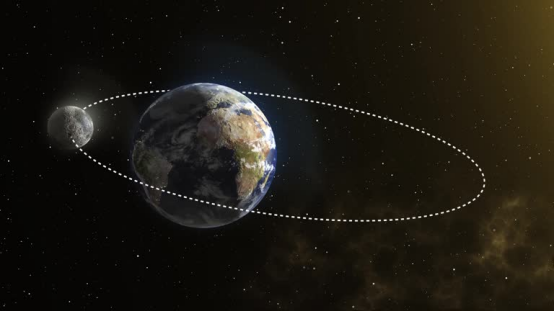
Basic concepts of the Earth-Moon system
The Earth and Moon form a complex tidal coupling system. The Moon’s gravitational pull causes tidal movements in the Earth’s oceans, solid crust, and atmosphere. These tidal forces not only affect ocean tidal heights and currents but also exert a weak but persistent braking effect on the Earth’s rotation rate. The slowing of the Earth’s rotation is closely related to the evolution of the Moon’s orbit; long-term observations show that the length of the Earth’s day is gradually increasing, while the Moon is gradually moving away from the Earth. Understanding the tidal evolution of the Earth-Moon system helps to reveal the history of the co-evolution of the Earth and Moon, as well as the intrinsic mechanisms of Earth’s dynamics and planetary system stability.
Formation mechanism of tidal forces
Tidal phenomena are primarily caused by the combined effects of gravitational differences and centrifugal forces. The Moon exerts varying gravitational pull on different regions of the Earth, resulting in ocean bulges and minor deformations of the solid crust. The Earth’s rotation causes tidal waves to move forward, causing the tidal bulges to lag slightly behind the direction of the Moon’s orbit. This hysteresis effect generates torque, slowly reducing the Earth’s rotational angular velocity while simultaneously transferring angular momentum to the Moon’s orbit, causing the Moon to gradually move away from the Earth. This process has lasted for billions of years and is the core driving mechanism behind the history of Earth’s rotation and the evolution of the Moon’s orbit.
Evidence of the evolution of historical tides
Paleontological and paleontological studies have provided historical evidence of the slowing of Earth’s rotation. Sedimentary rock layers, coral growth rings, and paleotidal records show that billions of years ago, Earth’s rotation period was approximately eighteen hours, while the modern Earth day is nearly twenty-four hours long. These records demonstrate the significant long-term cumulative effect of tidal braking. The Moon is moving away from Earth at a rate of approximately three centimeters per year, which is highly consistent with calculated tidal torque, providing observational validation for models of the Earth-Moon system’s tidal evolution.
The gradual expansion of the lunar orbit
The influence of Earth’s tides on the Moon’s orbit causes the Moon to move away from Earth while its orbital period lengthens. The increased lunar orbital radius gradually weakens the gravitational pull, but due to persistent tidal coupling, orbital expansion continues. The Apollo laser ranging experiment provided high-precision lunar orbital distance data, validating long-term tidal evolution models. This orbital change not only affects Earth’s tidal cycle but also has potential impacts on Earth’s climate system and stability, particularly affecting ocean circulation and rotational axis precession patterns on long-term scales.
Long-term effects of Earth’s rotation slowdown
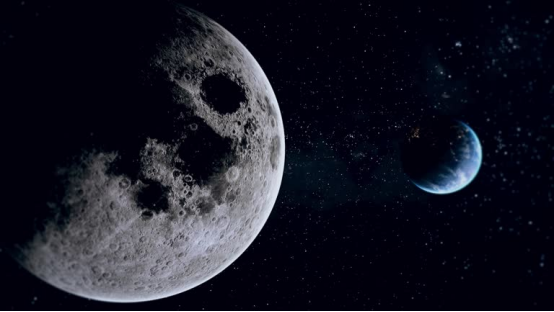
The slowing of Earth’s rotation has multifaceted impacts on the Earth system. The slower rotation leads to a gradual increase in day length, placing long-term adjustment pressure on the diurnal cycle and biological rhythms. The slower rotation also affects atmospheric circulation patterns, ocean circulation, and tidal energy distribution, thus influencing global climate stability. Long-term cumulative effects may cause a redistribution of crustal stress, affecting the frequency and intensity of earthquakes and volcanic activity. Although these effects manifest slowly, they have significant geological and ecological implications on a billion-year timescale, providing crucial parameters for planetary evolution research.
Tidal energy dissipation mechanism
Earth’s tidal braking primarily dissipates energy through ocean friction and solid crust deformation. Ocean tides, due to the complexity of seafloor topography and coastlines, generate turbulence and friction, converting tidal energy into heat. Deformation of the solid crust and mantle produces minute frictional losses, also contributing to the braking effect on Earth’s rotation. The energy dissipation efficiency varies with geological conditions and ocean distribution, reflecting the regulatory role of Earth’s internal structure and ocean evolution on tidal evolution, providing experimental evidence for planetary tidal dynamics research.
The significance of tidal evolution for the stability of the Earth-Moon system
Tidal evolution is crucial for the long-term stability of the Earth-Moon system. Tidal torque gradually adjusts the Earth’s rotation and the Moon’s orbit, bringing the system towards dynamic equilibrium. Stable day length and lunar orbit ensure tidal regularity, supporting marine ecosystems, climate stability, and geological activity. Simultaneously, tidal evolution influences changes in the Earth’s axial tilt, indirectly regulating seasonal intensity and climate cycles, providing long-term assurance for Earth’s habitability. These phenomena also have reference value in other planetary systems, contributing to an understanding of the universal laws governing tidal dynamics in planetary evolution.
Numerical simulation and future research directions
Modern numerical simulation techniques can reproduce the entire process of tidal evolution in the Earth-Moon system. By meticulously modeling Earth-Moon gravitational coupling, tidal dissipation, and angular momentum transfer, it is possible to predict changes in day length and lunar orbital adjustments on a billion-year timescale. Future research will combine high-precision satellite observations, paleogeological data, and tidal energy dissipation models to further validate long-term evolution hypotheses. Tidal simulations of multi-planetary systems also contribute to understanding the rotation and orbital stability of exoplanets and potentially habitable planets, providing theoretical support for planetary science and celestial mechanics research.
The connection between tidal evolution and the development of life on Earth
The slowing of Earth’s rotation and tidal evolution are not only physical processes but also have potential impacts on the evolution of life. The gradually lengthening day-night cycle provides a window of opportunity for ecosystems to adapt to biological rhythms, influencing photosynthesis and nocturnal physiological activities. Ocean tidal energy regulates coastal ecological environments, creating conditions for biodiversity evolution. Long-term tidal evolution is coupled with Earth’s climate change, indirectly affecting biological habitats and biogeochemical cycles, highlighting the crucial role of tidal dynamics in Earth’s life support systems.
International research collaboration and interdisciplinary significance
Research on the tidal evolution of the Earth-Moon system involves multiple disciplines, including astronomy, earth science, planetary science, and ecology. International collaboration helps integrate resources from satellite observations, geological sample analysis, and numerical simulations, improving research accuracy. Interdisciplinary approaches can link tidal evolution with Earth’s climate evolution, ecological adaptation, and planetary dynamics, providing a more comprehensive scientific perspective. Long-term monitoring and international cooperation are of significant strategic importance for understanding the co-evolutionary history of the Earth and Moon, and also provide references for deep space exploration and planetary habitability assessments.
Summary and Scientific Implications
The tidal evolution of the Earth-Moon system reveals the long-term effects of Earth’s rotational slowdown and the mechanism of the Moon’s gradual orbital expansion. Tidal torque regulates system stability through energy dissipation, profoundly influencing Earth’s day length, ocean circulation, climate patterns, and biological rhythms. Apollo data, paleogeological records, and modern numerical simulations collectively reveal the historical trajectory of the Earth-Moon system’s evolution. Understanding these processes not only deepens our understanding of Earth and Moon evolution but also provides a scientific basis for comparative planetology, future Earth-Moon exploration, and exoplanet habitability assessments. Long-term observations and interdisciplinary research will further refine the Earth-Moon system evolution model, providing a solid foundation for understanding the dynamics of planets within our solar system.