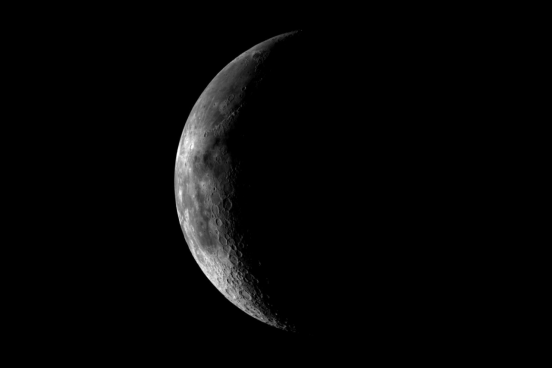
The unique radio-quiet environment on the far side of the moon
The far side of the Moon, historically separated from Earth, naturally shields it from radio interference, providing a unique environment for radio astronomy. Radio noise from Earth-based radio communications, radar signals, and satellite broadcasts severely limits low-frequency radio observations. The lunar topography, however, blocks the vast majority of radio pollution from Earth, offering an unprecedentedly clear window for detecting signals from the early universe. This radio quietness makes it an ideal location for low-frequency radio telescopes and a strategic choice for observing the dark ages of the universe.
The scientific significance of the Dark Ages of the Universe
The Dark Ages refer to the period hundreds of millions of years after the birth of the universe, before the formation of the first stars and galaxies. This period lacked intense light sources, but the 21-centimeter line radio signal from hydrogen atoms can serve as a detection window. Studying the Dark Ages helps understand the distribution of matter in the early universe, the process of gravitational collapse, and the initial conditions for the formation of cosmic structures. By observing the 21-centimeter line signal, scientists can reconstruct the evolution of cosmic temperature, hydrogen density distribution, and large-scale cosmic structure, providing direct observational evidence for modern cosmology.
Advantages of low-frequency radio telescopes on the far side of the moon
The advantages of low-frequency radio observations on the far side of the moon lie not only in the absence of Earth’s interference, but also in the elimination of ionospheric attenuation and scattering effects due to the lack of an atmosphere. Earth’s ionosphere is almost opaque below 3 MHz, while the moon’s lack of atmospheric obstruction allows signals from 0.1 MHz to 50 MHz to be transmitted stably. This provides crucial technical conditions for detecting hydrogen signals from the early universe. Low-frequency radio telescopes can achieve high-sensitivity observations through interferometry and space-based combination techniques, simultaneously monitoring the spatial distribution of long-wavelength signals, providing a feasible means to study the dark ages of the universe.
Technological Challenges in Exploring the Dark Ages
Despite the ideal environment on the far side of the moon, exploring the dark ages of space still faces several technological challenges. The extremely weak low-frequency radio signals necessitate highly sensitive receivers and ultra-low-noise amplifiers. Radio background noise and solar wind interference from the cosmic foreground can also affect observations, requiring long-term observation and signal superposition processing. Data transmission is another major challenge; since direct communication between the far side of the moon and Earth is impossible, relay satellites or orbital transponder technologies are needed to ensure data return. Scientists are developing deployable arrays, low-power electronic systems, and intelligent signal processing algorithms to meet the demands of long-term low-frequency observations.
Apollo Missions and Basic Data from the Far Side of the Moon
The Apollo and Chang’e lunar exploration missions provided fundamental topographic and geological data for subsequent radio astronomy. The far side of the moon has a complex topography, with basins and mountains forming natural shields, and some areas containing flat sedimentary zones, making them suitable for telescope deployment. Data on lunar gravity and crustal density distribution helped scientists select stable base station locations and assess the impact of lunar dust activity on equipment. Combining remote sensing optical and infrared observations allowed for the optimization of radio telescope design, ensuring long-term stable operation.
Methods for detecting signals from the early universe
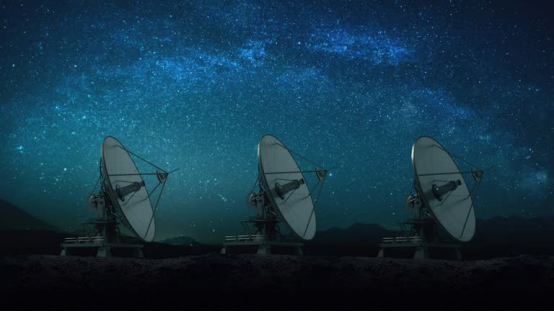
Detecting the dark ages of the universe primarily relies on the 21-centimeter hydrogen redshift signal. Low-frequency radio telescopes reconstruct the temperature and hydrogen distribution at different redshift layers of the universe by measuring the signal intensity distribution at different wavelengths. Interferometry can improve spatial resolution, decomposing the signal into two-dimensional or three-dimensional spatial structures, enabling a detailed depiction of the large-scale structure of the early universe. By observing data from different directions and time periods, scientists can distinguish the signal from local radio noise, improving observational accuracy.
Data processing and signal separation technology
The signals from the Dark Ages were extremely weak, far below the background noise of the Milky Way and other cosmic radio sources. Therefore, advanced data processing techniques are crucial. Scientists employ signal superposition, spectral analysis, filtering, and machine learning algorithms to distinguish early cosmic signals from radio interference. Coordinated observations using multiple antenna arrays can enhance signal sensitivity, while effective suppression of background noise is achieved through analysis of time series and frequency characteristics. The development of data processing techniques determines the feasibility and accuracy of cosmic Dark Age detection.
Development plan for radio astronomy facilities on the far side of the moon
Several national and international research institutions are currently planning to build low-frequency radio telescope arrays on the far side of the moon. For example, lightweight folding antennas, microsatellite arrays, and automated deployment modules are under development. Facility planning emphasizes stable deployment, long-term operational capability, and low-power management. Through modular design and scalable networks, larger aperture and higher sensitivity observation capabilities can be achieved. These facilities will lay the foundation for research during the Dark Ages of space and provide a multifunctional platform for future lunar science experiments.
Contributions to planetary science and cosmology
Radio observations on the far side of the Moon not only advance research into the Dark Ages but also have profound implications for planetary science and cosmology. Precise measurements of low-frequency signals allow scientists to study early galaxy formation, uneven distribution of matter, and the evolution of large-scale cosmological structures. The long-term, stable observational environment provided by the far side of the Moon contributes to supplementary research on the cosmic expansion rate, dark matter distribution, and the cosmic microwave background. Interdisciplinary applications tightly integrate radio astronomy, planetary science, and cosmology, driving advancements in fundamental science and technology.
Educational and Public Communication Value
The lunar far-side radio astronomy project has significant popular science and educational value. Through visualization simulations, data interaction platforms, and public education activities, the public can intuitively understand the early history of the universe and astronomical detection methods. The educational program can be integrated with physics, astronomy, and engineering courses to cultivate students’ interest in deep space exploration and radio astronomy. Science communication not only improves public scientific literacy but also contributes to international cooperation and project support, providing broad social awareness for future deep space exploration and basic scientific research.
Summary and Future Outlook
The unique radio-quiet environment on the far side of the Moon provides unprecedented conditions for exploring the Dark Ages of the universe. Using low-frequency radio telescopes and advanced data processing techniques, scientists can observe 21-centimeter hydrogen rays, reconstructing the structure and distribution of matter in the early universe. Missions such as Apollo provided crucial topographic and geological data, and international research institutions are planning long-term observation facilities. The development of radio astronomy on the far side of the Moon not only expands our understanding of the Dark Ages but also provides an important platform for planetary science, cosmology, and public education. In the future, combining multidisciplinary technologies and international cooperation, the far side of the Moon will become a vital window for humanity to explore the deepest history of the universe.