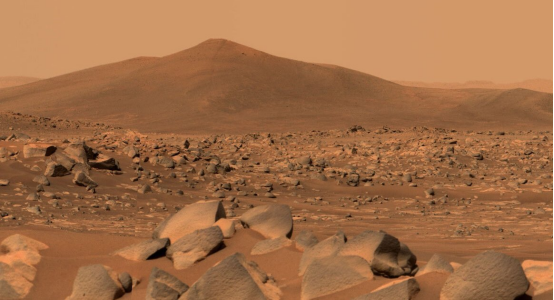
For decades, humanity has gazed at Mars as a static, frozen desert—a planetary fossil preserving the ancient history of our solar system. However, a recent renaissance in planetary science, driven by advanced robotic landers, high-resolution orbital imaging, and sophisticated laboratory simulations, has completely shattered this paradigm. Today, we understand Mars not as a dead world, but as a dynamic, evolving planet characterized by active seismology, shifting surface landscapes, complex atmospheric phenomena, and hidden reservoirs of volatile compounds. This comprehensive pillar page synthesizes the most critical recent discoveries in Martian exploration, offering an unprecedented deep dive into the geological and atmospheric mechanisms that continue to shape the Red Planet.
Unlocking Martian Seismology: Crustal Structure and Core State
The deployment of highly sensitive seismometers on the Martian surface has inaugurated a new era of extra-terrestrial geophysics. By recording and analyzing “marsquakes,” scientists have been able to peer deep into the planet’s interior, mapping its crustal thickness, mantle composition, and the exact state of its core. This seismic data acts as a planetary ultrasound, revealing the evolutionary history of Mars and explaining why its geological trajectory diverged so drastically from Earth’s.
The Architecture of the Martian Crust
Before direct seismic observation, estimates of the Martian crust relied heavily on gravity and topography models, which left significant margins of error. Recent seismic wave analyses have provided definitive measurements, revealing a crust that is highly stratified and structurally complex. The data indicates that the crust is divided into distinct layers, heavily fractured by billions of years of meteorite impacts and ancient tectonic activity.
- Upper Crustal Fracturing: The uppermost layer of the Martian crust is highly porous and broken, a direct result of relentless bombardment. This fractured zone extends roughly 10 kilometers deep and significantly slows down seismic wave propagation.
- Mid-to-Lower Crust Density: Beneath the fractured zone, the crust becomes more consolidated. The total thickness of the crust is now estimated to be between 24 and 72 kilometers, varying significantly depending on the geographical region (e.g., the dichotomy between the northern lowlands and southern highlands).
- Thermal Implications: The concentration of heat-producing radioactive elements within this crustal structure provides crucial clues about the planet’s thermal evolution and its current lack of a global magnetic field.
Understanding this crustal layering is vital for future colonization and resource extraction, as the porous upper crust may serve as a massive reservoir for subsurface ice and other trapped volatiles.
Revealing the Liquid Core
Perhaps the most groundbreaking revelation from Martian seismology is the definitive confirmation regarding the state of the planet’s core. By analyzing seismic waves that travel through the deep interior and bounce off the core-mantle boundary, geophysicists have determined that Mars possesses a completely liquid iron-nickel core, enriched with lighter elements such as sulfur, oxygen, carbon, and hydrogen.
| Planetary Feature | Earth | Mars |
|---|---|---|
| Core State | Solid inner core, liquid outer core | Entirely liquid core |
| Core Radius | Approx. 3,485 km | Approx. 1,830 km |
| Light Element Content | Relatively low | High (Sulfur, Oxygen, Carbon) |
| Global Magnetic Field | Active (Geodynamo) | Extinct |
The high concentration of light elements lowers the melting point of the core, preventing it from solidifying. This entirely liquid state explains the absence of an active geodynamo. Without the convection currents driven by a solidifying inner core, Mars cannot generate a global magnetic field, a factor that profoundly influenced its atmospheric loss over billions of years.

The Enigma of Buried Carbon Dioxide on Mars
One of the greatest mysteries in planetary science is the fate of the thick, warming atmosphere that Mars possessed in its ancient past. While solar wind stripping accounts for a significant portion of atmospheric loss, recent geological and chemical modeling suggests that a massive amount of carbon dioxide did not escape into space. Instead, some carbon dioxide on Mars may be buried beneath our feet, locked within the planet’s crust in various chemical and physical states.
Mechanisms of Carbon Sequestration
The transition of Mars from a warm, wet world to a frigid desert involved complex interactions between its atmosphere, surface water, and rocky crust. When liquid water was abundant, it facilitated the absorption of atmospheric CO2, leading to widespread carbon sequestration processes that mirror those found on Earth, albeit under different planetary constraints.
- Carbonate Formation: In the presence of liquid water, atmospheric CO2 reacts with silicate rocks to form carbonate minerals. Orbital spectrometers have detected carbonate deposits in regions like the Nili Fossae, indicating that a portion of the ancient atmosphere is chemically bound to the rock.
- Clathrate Hydrates: Under the extreme cold and pressure of the Martian subsurface, CO2 can become trapped within the crystal lattice of water ice, forming clathrate hydrates. These structures can store immense volumes of gas and remain stable as long as the temperature remains sufficiently low.
- Adsorption in Regolith: The highly porous nature of the Martian soil (regolith) allows for the physical adsorption of CO2 molecules directly onto the surface of dust and rock particles.
These buried reservoirs of carbon dioxide represent a “fossilized atmosphere.” Unlocking the exact volume of this sequestered gas is critical for understanding the planet’s historical climate models and evaluating the theoretical feasibility of future terraforming efforts.
Implications for Astrobiology
The presence of buried carbon dioxide and associated carbonates carries profound implications for astrobiology. The aqueous environments required to form these minerals are exactly the types of habitable niches where ancient microbial life could have thrived. By targeting these specific geological formations, future rovers and sample return missions can maximize their chances of finding biosignatures preserved within the rock record.

Active Morphological Changes in the Northern Martian Landscape
Contrary to the long-held belief that the Martian surface is a static museum of ancient impacts, continuous high-resolution orbital monitoring has revealed that the northern Martian landscape is undergoing active changes. Driven by extreme seasonal temperature fluctuations and wind dynamics, the topography of the northern hemisphere is continuously being sculpted before our very eyes.
Aeolian Dynamics and Shifting Dunes
Wind is the primary geological agent currently operating on the surface of Mars. The northern polar region and its surrounding plains are home to vast dune fields known as the Olympia Undae. High-Resolution Imaging Science Experiment (HiRISE) camera data has shown that these immense sand dunes are actively migrating, with ripple patterns shifting significantly between Martian years.
The movement of these dunes requires wind speeds much higher than previously thought necessary in the thin Martian atmosphere. This aeolian activity not only reshapes the landscape but also continuously exhumes fresh geological material, exposing it to weathering and providing fresh targets for orbital spectroscopy.
Seasonal Frost and Surface Avalanches
The most dramatic active changes in the northern landscape are driven by the seasonal cycle of carbon dioxide frost. During the harsh Martian winter, up to a third of the planet’s atmospheric CO2 freezes onto the surface, creating a vast polar ice cap. As spring arrives, the sudden sublimation of this ice back into gas drives violent geological processes.
- Steep-Slope Avalanches: On the steep scarps of the northern polar layered deposits, the sublimation of frost destabilizes loose dust and rock, triggering massive avalanches. Orbiters have captured these dust clouds billowing down cliffs in real-time.
- Gully Formation: The rapid expansion of sublimating CO2 gas can fluidize dry sand and dust, causing it to flow down crater walls in a manner that mimics liquid water, carving intricate gully systems that are actively lengthening and branching today.
These dynamic processes highlight a complex, seasonally driven surface environment that forces scientists to constantly update their models of Martian erosion and landscape evolution.

Laboratory Breakthroughs: Recreating Martian Spider-Like Structures
Among the most bizarre and uniquely Martian geological features are the “araneiforms,” commonly referred to as Martian spider-like structures. Found predominantly in the planet’s southern polar region, these intricate, branching troughs look like giant spiders carved into the surface. For years, their formation mechanism remained a theoretical hypothesis, until scientists successfully recreated Martian spider-like structures in the lab, confirming one of the most fascinating geological processes in the solar system.
The Kieffer Model of Sublimation
The prevailing theory for the formation of these structures is known as the Kieffer model. According to this hypothesis, the process begins during the Martian winter when a translucent layer of carbon dioxide ice forms over the dark regolith. As spring approaches, sunlight penetrates the clear ice and heats the dark soil beneath.
The heated soil causes the bottom of the ice layer to sublimate directly into CO2 gas. Because the gas is trapped beneath the impermeable ice slab above, pressure builds up dramatically. Eventually, the ice cracks, and the high-pressure gas explosively vents into the atmosphere. As the gas rushes toward the vent, it scours the loose soil beneath the ice, carving the deep, branching, spider-like channels into the bedrock.
Validating the Theory on Earth
To move this theory from hypothesis to proven fact, researchers utilized specialized vacuum chambers designed to simulate Martian atmospheric pressure and temperature conditions. The groundbreaking experiment involved several highly controlled steps:
- Simulating the Regolith: Researchers utilized a specialized granular material that mimics the thermal and physical properties of Martian soil.
- Applying the CO2 Ice: A block of solid carbon dioxide (dry ice) was lowered onto the simulated regolith within the vacuum chamber.
- Inducing the Sublimation Pressure: By heating the bottom of the chamber, the researchers induced the exact sublimation dynamics proposed by the Kieffer model.
The results were spectacular. As the CO2 gas forcefully escaped through a central vent in the ice, it carved distinct, branching, spider-like dendritic patterns into the simulated soil. This laboratory recreation provided the first empirical physical evidence that the Kieffer model is correct, proving that active CO2 sublimation is a powerful geomorphic agent capable of carving solid planetary surfaces.

Atmospheric Phenomena: Latest Observations of Auroras on Mars and Jupiter
Auroras are among the most visually stunning atmospheric phenomena in the universe, typically associated with planets possessing strong global magnetic fields, like Earth and Jupiter. However, recent orbital data has unveiled a complex and surprising reality regarding Martian atmospheric light shows. The latest observations of auroras on Mars and Jupiter highlight the vastly different ways solar wind interacts with planetary atmospheres, providing deep insights into planetary magnetic environments.
The Unique Nature of Martian Auroras
Because Mars lacks a global dipole magnetic field, it should theoretically not experience auroras in the traditional sense. However, the MAVEN (Mars Atmosphere and Volatile Evolution) spacecraft and the Emirates Mars Mission (Hope probe) have recorded extensive and highly unique auroral activity across the Red Planet.
Martian auroras manifest in three primary forms, deeply tied to the planet’s localized crustal magnetism and direct solar wind interactions:
- Proton Auroras: These occur during the Martian summer when the planet is closest to the sun. Solar wind protons interact with the extended hydrogen corona surrounding Mars, creating a widespread, diffuse ultraviolet glow across the entire dayside of the planet.
- Discrete Auroras: These are highly localized and occur primarily in the southern hemisphere. They are driven by patchy, ancient crustal magnetic fields that act as mini-umbrellas, funneling charged particles down into the atmosphere to create concentrated bursts of ultraviolet light.
- Diffuse Auroras: Triggered by intense solar storms, these global events can light up the entire Martian night sky as energetic particles penetrate deep into the atmosphere, unhindered by a global magnetic shield.
Comparative Planetology: Mars vs. Jupiter
To truly understand the mechanics of planetary auroras, scientists constantly compare the relatively weak, localized auroras of Mars with the colossal, continuous auroras of Jupiter. Jupiter’s auroras are the most powerful in the solar system, driven by a magnetic field 20,000 times stronger than Earth’s and fed by volcanic material from its moon, Io.
While Jupiter’s auroras are a testament to the power of a massive, internally generated geodynamo and rapid planetary rotation, Martian auroras serve as a stark reminder of a planet that has lost its global shield. By studying the latest observations of auroras on Mars and Jupiter simultaneously, astrophysicists can develop universal models of plasma physics and solar wind interactions that apply to exoplanets across the galaxy.

The Interconnected Future of Martian Planetary Science
The synthesis of data from seismometers, orbital spectrometers, high-resolution cameras, and laboratory simulations is driving a profound paradigm shift. The discoveries of a liquid core, buried carbon dioxide, active surface morphology, and complex atmospheric auroras are not isolated facts; they are deeply interconnected components of the Martian planetary system.
Synthesizing Planetary Evolution
The liquid nature of the Martian core directly explains the lack of a global magnetic field. The absence of this field allowed the solar wind to strip away the ancient, thick atmosphere, while a significant portion of the carbon dioxide was driven underground, becoming buried in the crust. This atmospheric thinning led to the extreme cold that currently dominates the planet, setting the stage for the seasonal CO2 frost cycles that carve the spider-like structures and trigger the avalanches seen in the northern landscapes today.
Every new data point helps refine our understanding of planetary habitability. As we prepare for future human exploration and potential sample return missions, this holistic understanding of Mars—from its deep seismic interior to its glowing ultraviolet upper atmosphere—will be the foundation upon which our interplanetary future is built. The Red Planet is actively speaking to us through its marsquakes, shifting sands, and atmospheric glows; we are finally developing the scientific vocabulary required to listen.
Frequently Asked Questions (FAQ)
- What causes marsquakes if Mars does not have active tectonic plates like Earth?
- While Mars lacks a globally active system of shifting tectonic plates, it still experiences marsquakes due to continuous planetary cooling and contraction. As the planet cools, its crust shrinks and fractures, releasing energy in the form of seismic waves. Additionally, meteorite impacts and localized volcanic stresses in regions like Cerberus Fossae contribute to the seismic activity recorded by landers.
- Could the buried carbon dioxide on Mars be used for future terraforming?
- Theoretically, yes. If a massive amount of carbon dioxide is sequestered in clathrate hydrates and carbonate rocks near the surface, highly advanced future technologies could potentially heat the crust or use chemical processes to release this greenhouse gas back into the atmosphere. This would be a crucial first step in thickening the atmosphere and warming the planet to support liquid water.
- How do scientists know the Martian core is completely liquid?
- Geophysicists determined the state of the Martian core by analyzing seismic waves generated by marsquakes. Specifically, they measured how shear waves (S-waves) and compressional waves (P-waves) traveled through the planet. S-waves cannot travel through liquids. The seismic data showed that S-waves were reflecting off the core-mantle boundary rather than passing through, providing definitive proof that the entire core remains in a liquid state.
- Are the Martian spider-like structures related to biological activity?
- No, the araneiforms (spider-like structures) are entirely geological and meteorological in origin. They are formed by the explosive sublimation of carbon dioxide ice during the Martian spring. Trapped gas builds pressure beneath the ice and violently escapes, scouring the intricate, branching channels into the dirt. Laboratory experiments on Earth have successfully replicated this purely physical process.
- Can Martian auroras be seen with the naked human eye?
- Most Martian auroras, including the widespread proton auroras and localized discrete auroras, emit light primarily in the ultraviolet spectrum, which is completely invisible to the naked human eye. However, during extremely intense solar storms, it is theoretically possible that diffuse auroras could excite oxygen atoms enough to produce a faint visible glow, though it would be vastly dimmer than the vibrant auroras seen on Earth.