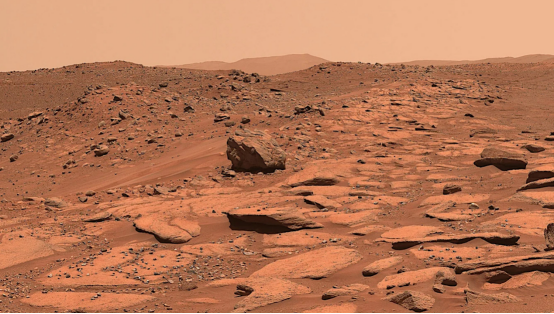
The Foundations of Martian Astrobiology
The quest to understand whether life exists beyond Earth has found its most compelling laboratory right next door in our solar system. Martian astrobiology is an interdisciplinary scientific field dedicated to investigating the biological potential of Mars. This encompasses the study of the planet’s climatic evolution, its geological history, and the intricate chemical processes that could have either sparked life or preserved its remains. Billions of years ago, Mars was not the frozen, desiccated wasteland we observe today. Geological evidence overwhelmingly suggests that early Mars featured a thick atmosphere, a strong magnetic field, and abundant liquid water on its surface—conditions remarkably similar to early Earth during the exact epoch when terrestrial life first emerged.
Understanding the foundations of this field requires a deep dive into planetary evolution. When Mars lost its global magnetic field, the solar wind gradually stripped away its atmosphere, leading to a catastrophic drop in surface pressure and temperature. Consequently, surface water either escaped into space or retreated into subterranean ice reservoirs. Astrobiologists are therefore tasked with reconstructing these ancient environments to determine how long they remained habitable and whether life had sufficient time to take root before the planet underwent its drastic environmental shift.
Defining the Scope of the Extraterrestrial Life Search
The search for Martian life is fundamentally divided into two distinct chronological paradigms: the search for extinct past life and the search for extant present life. The former focuses on the Noachian period (approximately 4.1 to 3.7 billion years ago), a time when surface conditions were most hospitable. Scientists look for fossilized microbial mats, stromatolites, or chemical imbalances trapped in ancient sedimentary rocks. Conversely, the search for extant life looks toward the present day, focusing on subsurface environments where geothermal heat might sustain liquid water brines, potentially offering a refuge for extreme microbial organisms that survived the planet’s surface desiccation.
The “Follow the Water” Strategy
For decades, the guiding mantra of NASA and international space agencies has been to “follow the water.” Because all known terrestrial life requires liquid water as a solvent for biochemical reactions, identifying regions on Mars that currently harbor or historically hosted water is the logical first step. This strategy has successfully directed orbital and surface missions to ancient river deltas, paleolake beds, and hydrothermal mineral deposits. By mapping hydrated minerals such as clays and sulfates from orbit, scientists can pinpoint the exact locations where rovers should land to conduct highly targeted astrobiological investigations.

Historical Milestones in the Search for Martian Life
The scientific pursuit of Martian life is not a recent endeavor; it is built upon decades of ambitious exploration and intense scientific debate. The trajectory of this research has been marked by profound technological leaps, transitioning from early telescopic observations that sparked wild speculations about artificial canals, to the deployment of sophisticated robotic laboratories capable of sniffing out complex organic molecules in the Martian dirt.
Each milestone in this journey has fundamentally reshaped our understanding of the Red Planet. Early missions were designed with the optimistic hope of finding active, metabolizing organisms right on the surface. However, as our understanding of the harsh Martian radiation environment deepened, the scientific community recalibrated its expectations, shifting focus toward deep subsurface exploration and the painstaking search for ancient, degraded biosignatures.
The Viking Landers and Early Biological Experiments
In 1976, NASA’s Viking 1 and Viking 2 landers achieved the first successful touchdowns on Mars, carrying with them a suite of three dedicated biology experiments designed to detect the metabolism of living microorganisms. The Labeled Release (LR) experiment famously yielded positive results, showing the release of radioactive gas when Martian soil was injected with a nutrient broth. However, the Gas Chromatograph-Mass Spectrometer (GCMS) failed to detect any organic molecules in the soil. The scientific consensus eventually concluded that the LR results were likely caused by non-biological, highly reactive oxidants (like perchlorates) in the Martian regolith rather than living microbes. Despite the ambiguous biological results, Viking established the baseline for all future in-situ planetary exploration.
Martian Meteorites and the ALH84001 Controversy
In 1996, the search for Martian life experienced a seismic paradigm shift with the analysis of meteorite ALH84001. Discovered in Antarctica, this rock was definitively traced back to Mars via trapped atmospheric gases. A team of NASA scientists announced that the meteorite contained features highly suggestive of ancient biological activity. These included microscopic structures resembling fossilized nanobacteria, complex organic molecules known as polycyclic aromatic hydrocarbons (PAHs), and specific formations of magnetite crystals that, on Earth, are typically produced by magnetotactic bacteria. While subsequent years of rigorous peer review demonstrated that non-biological processes could also produce these features, the intense debate surrounding ALH84001 single-handedly catalyzed the modern field of astrobiology and spurred funding for a new generation of Mars rovers.
- Meteorite ALH84001: Discovered in the Allan Hills of Antarctica in 1984, recognized as Martian in 1993.
- Magnetite Crystals: The specific purity and morphology of the magnetite found in the meteorite closely mimic those produced by Earth-based biology.
- Carbonate Globules: Indicate that the rock was infiltrated by liquid water while still on Mars, providing a micro-environment suitable for life.
The legacy of the ALH84001 controversy is profound. It taught the scientific community that extraordinary claims require extraordinary evidence, leading to the development of much stricter criteria for what constitutes a definitive biosignature in extraterrestrial samples.

Modern Scientific Strategies and Biosignature Detection
Today, the search for life on Mars relies on a highly sophisticated, multi-tiered approach centered on the concept of biosignatures. A biosignature is any substance, object, or pattern whose origin specifically requires a biological agent. Because the Martian surface is bombarded by ultraviolet and cosmic radiation, any organic material exposed to the surface over geological timescales will be heavily degraded. Therefore, modern strategies involve drilling into rocks to access pristine samples, utilizing advanced spectroscopy, and searching for a convergence of evidence rather than a single “smoking gun.”
Astrobiologists categorize biosignatures into several distinct types, each requiring different analytical techniques. By combining data from multiple instruments, scientists aim to build a comprehensive context that rules out abiotic (non-living) chemical reactions.
Identifying Chemical and Morphological Biosignatures
Chemical biosignatures involve the detection of complex organic molecules, specific isotopic ratios, or biominerals that are typically produced as byproducts of metabolism. For example, life on Earth preferentially uses lighter isotopes of carbon (Carbon-12 over Carbon-13) in enzymatic reactions. Finding a distinct isotopic fractionation in Martian organic matter would be a strong indicator of biological processes. Morphological biosignatures, on the other hand, refer to physical structures left behind by life, such as microscopic cellular fossils or macroscopic structures like stromatolites—layered mounds formed by the growth of microbial mats in shallow water.
| Biosignature Type | Description | Martian Application & Examples |
|---|---|---|
| Chemical / Isotopic | Distinct ratios of isotopes or complex organic molecules (e.g., amino acids, lipids). | Analyzing carbon isotope ratios in methane or drilling for preserved lipids in ancient mudstones. |
| Morphological | Physical structures created by biological entities (microfossils, stromatolites). | Using high-resolution cameras to scan rock outcrops for micro-textural patterns in sedimentary layers. |
| Mineralogical | Minerals whose formation is catalyzed by biological activity. | Searching for specific concentrations of magnetite or biologically induced carbonate precipitation. |
This multi-instrument approach is critical because abiotic processes can sometimes mimic biological ones. By requiring a convergence of chemical, morphological, and mineralogical evidence within a habitable geological context, scientists can confidently distinguish true signs of life from geological anomalies.
The Role of Earth’s Extremophiles as Analogues
To understand what life on Mars might look like, scientists study extremophiles on Earth—organisms that thrive in environments previously thought to be completely inhospitable. Analog environments such as the hyper-arid core of the Atacama Desert, the subglacial lakes of Antarctica, and the acidic, iron-rich waters of the Rio Tinto in Spain provide invaluable testing grounds for Mars rover instruments. By studying how microbes in the Atacama survive by extracting trace moisture from the atmosphere, or how endolithic bacteria live inside rocks to protect themselves from UV radiation, astrobiologists can refine their search parameters and instrument calibration for Mars.

Key Robotic Missions Exploring Mars Habitability
The theoretical frameworks of astrobiology are put to the ultimate test by a fleet of highly advanced robotic explorers. These rovers and orbiters are not merely cameras; they are mobile analytical chemistry laboratories capable of performing complex experiments in one of the most unforgiving environments in the solar system. The progression of these missions reflects a strategic evolution from characterizing the broad geological history of Mars to actively hunting for specific signs of ancient life.
Each mission builds upon the discoveries of its predecessors. Where the Mars Exploration Rovers (Spirit and Opportunity) confirmed that liquid water once flowed on the surface, the subsequent generation of rovers was designed to determine if that water was actually habitable, and ultimately, to search for the biological remnants that might have thrived within it.
Curiosity Rover and the Gale Crater Discoveries
Landing in Gale Crater in 2012, NASA’s Curiosity rover was tasked with determining whether Mars ever offered an environment capable of supporting microbial life. Gale Crater was chosen because it contains a massive, layered mountain (Mount Sharp) that preserves a geological record of the planet’s changing climate. Curiosity’s findings have been monumental. The rover discovered an ancient, habitable lakebed environment that contained all the elemental building blocks of life (carbon, hydrogen, nitrogen, oxygen, phosphorus, and sulfur). Furthermore, Curiosity’s Sample Analysis at Mars (SAM) instrument has detected various complex organic molecules preserved in ancient mudstones, as well as seasonal fluctuations of methane in the Martian atmosphere—a phenomenon that remains a tantalizing mystery, as methane can be produced by both geological and biological processes.
Perseverance Rover and the Jezero Crater Delta
Building on Curiosity’s success, the Perseverance rover landed in Jezero Crater in 2021 with an explicit astrobiology mandate: to seek signs of ancient life and collect a cache of Martian rock and soil samples for eventual return to Earth. Jezero Crater is the site of a spectacular ancient river delta, an environment that, on Earth, is incredibly efficient at trapping and preserving organic matter and biosignatures. Perseverance is equipped with cutting-edge instruments like PIXL (Planetary Instrument for X-ray Lithochemistry) and SHERLOC (Scanning Habitable Environments with Raman & Luminescence for Organics & Chemicals), which allow scientists to map the distribution of organic molecules and minerals at a microscopic scale.
- SHERLOC Instrument: Uses an ultraviolet laser to detect organic compounds and astrobiologically relevant minerals with extreme precision.
- Sample Caching System: Perseverance is actively drilling core samples, sealing them in ultra-clean titanium tubes, and leaving them on the Martian surface.
- Ingenuity Helicopter: While primarily a technology demonstration, the successful flights of Ingenuity have proven that aerial scouting can aid future astrobiology rovers in identifying hard-to-reach geological targets.
The data returned by Perseverance thus far indicates that the rocks at the base of the Jezero delta have experienced significant interactions with liquid water, containing diverse organic compounds that make them prime candidates for harboring ancient biosignatures.
The Ambitious Mars Sample Return (MSR) Campaign
The ultimate culmination of current robotic exploration is the Mars Sample Return (MSR) campaign, a proposed joint endeavor between NASA and the European Space Agency (ESA). While rovers are incredibly capable, they are constrained by mass, power, and the harsh Martian environment. To definitively prove the existence of past life, scientists need to examine Martian rocks using the full analytical power of Earth-based laboratories—utilizing synchrotron particle accelerators, nanoscale electron microscopes, and advanced mass spectrometers that are simply too large to send to space. The MSR campaign aims to send a retrieval lander to collect the tubes cached by Perseverance, launch them into Martian orbit, and safely transport them back to Earth, potentially revolutionizing our understanding of life in the universe.
The Debate: Past Extinct Life vs. Present Subsurface Refuges
As our understanding of Martian geology deepens, a profound debate continues to shape the future of astrobiological exploration: should we focus our limited resources on hunting for the fossilized remains of ancient life, or is there a legitimate possibility that life on Mars never truly died out, but simply migrated underground? Both hypotheses possess compelling scientific merit and require vastly different exploration strategies and technological capabilities.
The surface of Mars today is undeniably hostile. The lack of a thick atmosphere allows lethal doses of ultraviolet and cosmic radiation to sterilize the topsoil, while the extreme cold and low pressure cause any exposed liquid water to instantly boil or freeze. However, planetary scientists understand that the surface does not dictate the conditions of the deep interior.
The Habitable Noachian Period
Proponents of the “extinct life” hypothesis point to the Noachian period as the most logical window for biogenesis. During this era, Mars possessed a thick atmosphere, active volcanism, and widespread surface water. The argument posits that life may have originated in warm, nutrient-rich hydrothermal vent systems or shallow surface lakes. However, as the planet’s core cooled and the atmosphere was lost, the surface became uninhabitable too rapidly for life to adapt. Therefore, the best chance of finding life is to look for fossilized micro-structures or chemical signatures locked in ancient sedimentary rocks that have been shielded from radiation through geological burial and only recently exposed by wind erosion.
Brines, Methane, and Modern Subsurface Potential
Conversely, the “extant life” hypothesis suggests that as surface conditions deteriorated, microbial life could have retreated deep underground. Radar observations from orbiters like Mars Express have detected highly reflective anomalies beneath the southern polar ice cap, which many scientists interpret as subglacial lakes of hypersaline liquid water (brines). Furthermore, naturally occurring radioactive decay in the Martian crust could drive a process called radiolysis, breaking down water molecules to produce hydrogen gas, which deep-subsurface lithoautotrophic microbial ecosystems could use as an energy source—much like the deep biosphere found in Earth’s crust. The unexplained seasonal spikes of atmospheric methane detected by the Curiosity rover continue to fuel this debate, as subsurface methanogenic bacteria remain a viable, albeit unproven, explanation for these emissions.
Frequently Asked Questions (FAQ)
- What is a biosignature in the context of Martian astrobiology?
- A biosignature is any morphological, chemical, or isotopic feature that provides scientific evidence of past or present life. On Mars, this could include complex organic molecules, fossilized microbial mats (stromatolites), or specific mineral formations that are known to be catalyzed exclusively by biological processes rather than abiotic chemical reactions.
- Why is the discovery of organic molecules on Mars not definitive proof of life?
- While organic molecules are the building blocks of life as we know it, they can also be produced abundantly through non-biological processes. Meteorite impacts, volcanic activity, and complex photochemistry can all synthesize organic carbon compounds. Therefore, finding organics is necessary but not sufficient; scientists must find organics arranged in specific, complex patterns that only life produces.
- How does the Perseverance rover differ from the Curiosity rover?
- While both are highly advanced nuclear-powered rovers, their core missions differ. Curiosity was designed to determine if Mars was ever habitable, which it successfully proved by exploring Gale Crater. Perseverance was designed specifically to seek out actual signs of ancient life in Jezero Crater and to collect and cache pristine rock samples for a future return mission to Earth.
- Could humans contaminate Mars with Earth life?
- Yes, this is a major concern known as forward contamination. Space agencies adhere to strict planetary protection protocols, assembling rovers in ultra-clean rooms and subjecting them to rigorous sterilization procedures. This ensures that any biological signatures detected on Mars are genuinely Martian and not hitchhiking microbes from Earth.
- Why is the Mars Sample Return (MSR) mission considered crucial?
- Robotic rovers, despite their sophistication, are limited by the miniaturization required for space travel. Bringing Martian samples back to Earth allows the global scientific community to analyze them using massive, cutting-edge laboratory equipment—such as synchrotrons and nanoscale mass spectrometers—providing the definitive resolution needed to prove the existence of extraterrestrial life.