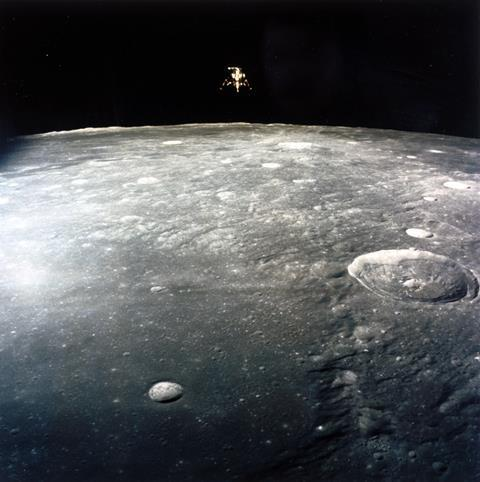
Research Background of Lunar Seismology
Lunar seismology is a crucial tool for exploring the Moon’s internal structure and geological activity. By monitoring moonquakes and microseismic waves, scientists can infer the physical properties of the Moon’s crust, mantle, and core, providing direct evidence for understanding the Moon’s evolutionary history. Although lunar seismic activity is weaker than Earth’s, long-term stable observational data can reveal internal thermal states, structural layering, and fault characteristics. Seismometers deployed during the Apollo program provided humanity with the first systematic lunar seismic data, laying the foundation for modern lunar seismology research.
Apollo earthquake data overview
Between 1969 and 1977, the Apollo missions installed multiple seismometers on the lunar surface, covering various regions near the Moon. These instruments recorded lunar seismic signals ranging from meteorite impacts and tidal stress to internal fault movement. Data analysis shows that lunar seismic events can be divided into two categories: deep-focus earthquakes and shallow-focus earthquakes. Deep-focus earthquakes mostly occur in the lunar mantle region, reaching depths of up to 700 kilometers, and while their magnitudes are relatively small, their frequency is high. Shallow-focus earthquakes are mainly concentrated in crustal fault regions; although their magnitudes are limited, they provide important information about surface structure and fault distribution. The instantaneous seismic waves generated by meteorite impacts provide a natural experiment for inverting internal structures.
New understanding of lunar crust structure
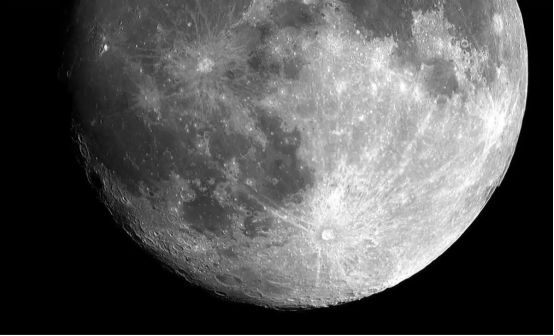
Apollo seismic data reveals that the lunar crust exhibits a distinctly non-uniform distribution, with significant differences in thickness between the northern and southern hemispheres. The northern hemisphere crust is thinner and more homogeneous in lithology, while the southern hemisphere is thicker and contains more high-density rock components. This crustal variation is likely closely related to early large-scale impacts and geological evolution. By analyzing the propagation velocity and reflection characteristics of seismic waves, scientists can map the lunar crustal thickness, infer rock composition and temperature distribution, and provide fundamental data for understanding lunar geodynamics.
Information on mantle properties and thermal evolution
The lunar mantle is of significant value in seismological research. Apollo data indicates that the lunar mantle has a relatively stable overall structure and limited thermal convection. The propagation speed of deep-focus seismic waves matches the physical properties of the mantle, suggesting that the Moon’s interior is cooler than Earth’s and its thermal evolution is slower. This discovery explains the earlier concentration of lunar volcanic activity and the near cessation of modern volcanic activity. Furthermore, the mantle structure directly influences lunar tidal response and fault activity, providing a reference for modeling the Moon’s long-term thermal history.
A New Understanding of Core State
Seismological studies have also revealed that the lunar core may have been partially liquid or a soft-solid structure. This discovery was made through analysis of core wave velocity and reflection characteristics from deep-source seismic waves. The state of the core directly affects the generation mechanism of the lunar magnetic field and its early internal dynamics. Although the modern lunar magnetic field is extremely weak, seismic data suggests that early core convection may have been active, forming local or temporary magnetic fields, providing clues for understanding the lunar magnetic history and geological evolution.
Lunar seismic activity patterns and their geological significance
Lunar earthquakes are primarily triggered by meteorite impacts, tidal stress, and crustal faulting. Apollo observations show that shallow-focus earthquakes are concentrated near faults and craters, while deep-focus earthquakes are distributed globally. Through long-term monitoring, scientists have discovered a periodicity in lunar earthquake occurrence, closely related to changes in lunar orbit and tidal stress. These findings help explain the mechanism of tension release within the Moon and provide a basis for assessing potential seismic risks for future lunar base construction.
Data processing and inversion methods
Data recorded by Apollo seismographs underwent meticulous analysis, including phase identification, arrival time determination, and wave velocity inversion. Differences in P-wave and S-wave propagation were used to determine the thickness of the lunar crust and mantle. Combined with reflection and refraction patterns, scientists were able to infer mantle layering, core size, and physical state. The integration of multi-point observation data with meteorite impact events resulted in a more accurate three-dimensional model of the Moon’s interior. These methods provide technical references for modern seismology and lay the foundation for earthquake research on other planets.
Technical Challenges of Lunar Seismology
The collection and analysis of Apollo data faced challenges such as low signal-to-noise ratio, limited instrument lifespan, and environmental interference. Extreme temperature variations on the lunar surface, dust cover, and remote operation limited instrument stability. Scientists improved accuracy through data filtering and multiple observation stacking, while also using modern simulation and computational methods for inversion, compensating for observational deficiencies. Technological innovations have made it possible to deploy high-precision seismic networks and deep-penetration exploration in the future, propelling lunar interior research to greater depths.
Scientific and practical value
Lunar seismology not only reveals the Moon’s internal structure but also provides crucial insights for future lunar exploration. Understanding crustal thickness, fault distribution, and core conditions helps assess the safety and long-term stability of lunar bases. Furthermore, the data provides a basis for comparative planetology; by comparing it with seismology from Earth and Mars, we can understand the commonalities and differences in planetary evolution. Knowledge of the Moon’s internal structure also supports resource exploration and scientific experiment planning, laying the foundation for future deep space missions.
Future research directions
Future lunar seismological research will rely on multi-point seismograph networks, high-resolution data acquisition, and in-situ detection techniques. Combining modern remote sensing, gravity measurements, and magnetic field detection will enable the creation of more complete models of the lunar interior. Deep seismic drilling and long-term monitoring will further reveal the core state and mantle dynamic processes. International cooperation and technological innovation will propel lunar seismology into a new phase, providing abundant data for understanding the Moon and other terrestrial planets, and offering scientific support for long-term manned exploration.
Education and Public Communication
The findings in lunar seismology have significant value for popular science education. Through data visualization and simulation, the public can intuitively understand the Moon’s internal structure, seismic activity, and planetary evolution. Educational programs can integrate Earth seismology and space science courses to enhance students’ interest and understanding of planetary science. Science communication not only improves public scientific literacy but also provides social support for international lunar exploration cooperation, promoting a positive interaction between scientific research and public education.
Summary and Scientific Implications
Apollo seismic data has revealed new insights into the Moon’s crust, mantle, and core, advancing our understanding of the Moon’s internal structure and geological activity. Studies show that the Moon’s internal thermal evolution is slow, its core may be partially liquid, and seismic activity is closely related to tidal stress and fault movement. Lunar seismology not only deepens our understanding of the Moon but also provides important references for comparative planetology, future lunar base construction, and deep space exploration. Long-term observations and technological innovations will further refine lunar internal models, laying a solid scientific foundation for human exploration of the Moon and other planets in the solar system.