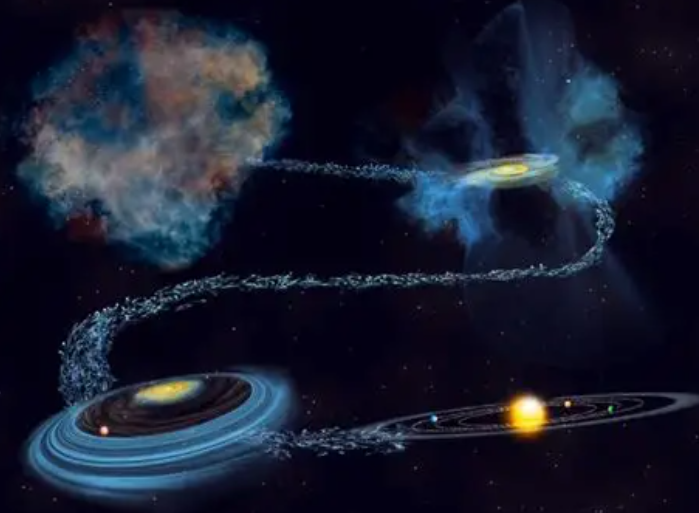
The question of how life began on Earth remains one of the greatest mysteries in modern science. While the traditional “primordial soup” theory suggests life emerged from chemical reactions in Earth’s early oceans, an alternative and increasingly popular hypothesis suggests we might be looking in the wrong place. Panspermia, the idea that life exists throughout the Universe and is distributed by space debris, proposes that the “seeds” of life were delivered to Earth from elsewhere.
The Panspermia Hypothesis: Life’s Cosmic Journey
Panspermia is not a single theory but a collection of hypotheses sharing a common theme: life did not originate on Earth. Instead, it traveled here. This concept challenges the geocentric view of biology, suggesting that the universe is a vast, interconnected biological system.
Lithopanspermia: Hitchhiking on Rocks
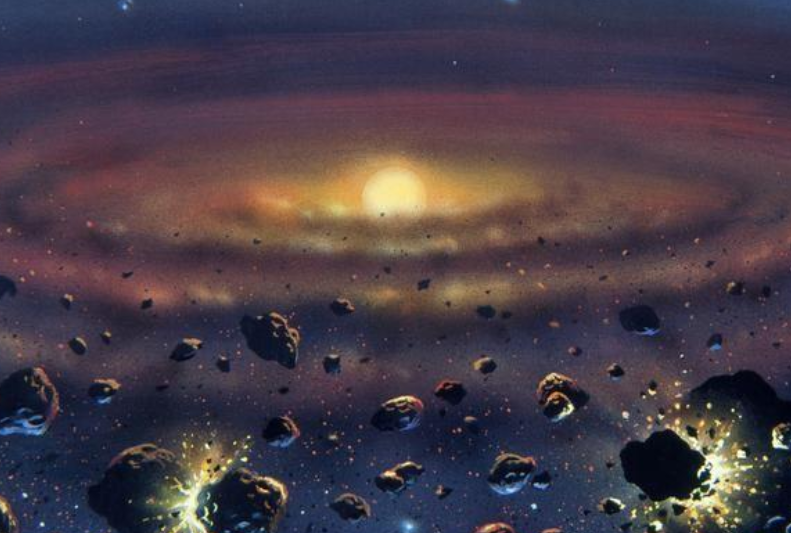
Lithopanspermia is the transfer of organisms between solar systems via interstellar boulders or meteorites. When a large impact occurs on a planet harboring life, debris can be ejected into space with enough velocity to escape the planet’s gravity. If these rocks contain hardy microorganisms, they could theoretically survive the vacuum of space for millions of years.
Radiopanspermia: Driven by Light
This variation suggests that microscopic life forms could be propelled through space by the radiation pressure of stars. While individual microbes would be highly vulnerable to cosmic radiation, this theory explores the limits of biological endurance in the harsh environment of the void.
Mechanisms of Interstellar Transfer: How Life Travels
For life to survive a journey across the stars, it must overcome three major hurdles: the initial ejection into space, the long-term survival in a vacuum, and the atmospheric entry onto a new planet.
| Phase of Journey | Primary Challenges | Biological Solutions |
|---|---|---|
| Ejection | Extreme G-forces and heat | Protection within deep rock layers |
| Transit | UV radiation, vacuum, cold | Anhydrobiosis and DNA repair |
| Entry | Atmospheric friction and heat | Ablative shielding of meteorites |
The Resilience of Extremophiles
On Earth, we find “extremophiles”—organisms that thrive in conditions previously thought to be sterile. Bacteria like Deinococcus radiodurans can survive massive doses of radiation, while tardigrades can endure the vacuum of space. These organisms serve as the biological proof-of-concept for the panspermia theory.
The Role of Comets and Asteroids as Biological Couriers
Comets and asteroids are more than just “space rocks”; they are the chemical archives of our solar system. Analysis of meteorites, such as the Murchison meteorite that fell in Australia in 1969, has revealed a wealth of organic compounds, including amino acids—the building blocks of proteins.
Chemical Precursors vs. Living Cells
It is important to distinguish between “pseudo-panspermia” (the delivery of organic molecules) and “hard panspermia” (the delivery of actual living organisms). Most scientists agree that space debris delivered the necessary chemicals for life to Earth, but whether it delivered life itself remains a subject of intense debate.
The Martian Connection
Mars was likely habitable long before Earth was. With a thinner atmosphere and lower gravity, it is much easier for rocks to be knocked off Mars and sent toward Earth. Some scientists hypothesize that we are all originally Martians, descended from microbes that made the journey across the inner solar system billions of years ago.
Expert Insights: Pro Tips for Understanding Astrobiology
-
Look for Biosignatures:
When evaluating planetary habitability, scientists look for methane or oxygen ratios that cannot be explained by geology alone. -
Consider the Time Scale:
Evolution takes billions of years; panspermia allows life to “jump-start” on a new planet rather than waiting for slow chemical evolution. -
Follow the Water:
Liquid water is the universal solvent for life as we know it, making moons like Europa and Enceladus prime candidates for finding extraterrestrial life.
Frequently Asked Questions (FAQ)
-
Has any life actually been found in space?
- To date, no definitive evidence of extraterrestrial life has been confirmed. However, organic molecules and amino acids have been found in numerous meteorites and comets.
-
Can bacteria really survive the heat of re-entry?
- Yes, experiments have shown that if a microbe is embedded deep enough within a meteorite (at least a few centimeters), the interior remains cool even as the exterior melts away during atmospheric entry.
-
Is panspermia the same as the “Ancient Aliens” theory?
- No. Panspermia is a biological and physical hypothesis based on the natural movement of microorganisms. It does not require or imply the intervention of intelligent extraterrestrials.
-
What is “Directed Panspermia”?
- This is a more speculative theory, suggested by Francis Crick, that life may have been intentionally spread to other planets by an advanced civilization.
-
Why does it matter if life started elsewhere?
- If panspermia is true, it means life is likely common throughout the galaxy and that all life shares a single, cosmic ancestry.