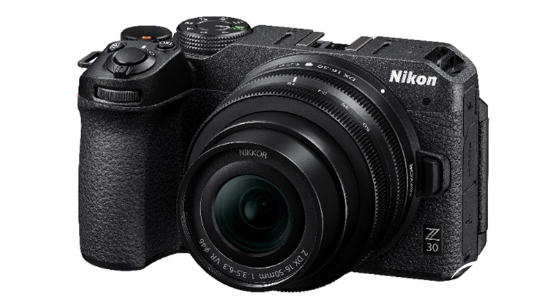
The transition from traditional DSLR systems to mirrorless technology has opened new horizons for content creators, and Nikon’s Z-series DX-format cameras stand at the forefront of this evolution. By utilizing the large Z-mount, Nikon has managed to squeeze professional-grade light-gathering capabilities into remarkably compact bodies. The Nikon Z30 and Nikon Z50 represent two distinct philosophies within the same ecosystem: one focused on the modern vlogging and livestreaming era, and the other serving as a balanced bridge for traditional enthusiasts and entry-level photographers.
Understanding Nikon’s DX-Format Mirrorless Ecosystem
Nikon’s DX-format mirrorless cameras utilize an APS-C size sensor, which provides a 1.5x crop factor compared to full-frame (FX) sensors. This system is designed to offer a balance between high-quality imaging and portability. Both the Z30 and Z50 share the same core 20.9-megapixel CMOS sensor and the EXPEED 6 image-processing engine, ensuring that the fundamental image quality—dynamic range, color reproduction, and low-light performance—remains consistent across both models.
The Power of the EXPEED 6 Engine
The EXPEED 6 processor is the brain behind the operation, handling everything from high-speed continuous shooting to sophisticated autofocus algorithms. It enables both cameras to reach an ISO sensitivity of up to 51,200 (expandable), making them capable performers in challenging lighting conditions. Furthermore, this engine facilitates the internal recording of 4K Ultra HD video without a heavy crop, preserving the wide field of view that is essential for handheld vlogging and landscape photography.
The Z-Mount Advantage
The large diameter of the Z-mount allows more light to reach the sensor, particularly at the corners of the frame. This design reduces vignetting and allows for lenses with faster maximum apertures. Whether you are using the compact 16-50mm kit lens or adapting professional F-mount glass via the FTZ adapter, the mount provides a future-proof foundation for any creator’s kit.

Nikon Z30: The Purpose-Built Vlogging Powerhouse
The Nikon Z30 is a camera stripped of traditional distractions to focus entirely on the needs of video creators. By removing the Electronic Viewfinder (EVF), Nikon has achieved a sleeker, more pocketable profile that feels less like a traditional camera and more like a high-end production tool. This design choice is intentional, catering to a generation of creators who prefer the “smartphone-style” workflow of using a rear screen for composition.
Enhanced Audio and Visual Cues
One of the standout features of the Z30 is its integrated stereo microphone, which is significantly larger than those found on standard mirrorless cameras. It also includes a dedicated “tally light” on the front of the body, which glows red when the camera is recording. This simple addition is a game-changer for solo creators, providing immediate visual confirmation that the camera is rolling without needing to check the screen.
Extended Recording and Thermal Management
Unlike many compact cameras that suffer from overheating during long takes, the Z30 is engineered for endurance. It can record up to 125 minutes of continuous Full HD footage, provided there is enough battery power or external USB-C power. This makes it an ideal choice for long-form content like sit-down interviews, podcasts, or long-duration livestreams where traditional 30-minute limits would be a hindrance.
- Vari-angle Touchscreen: The 3.0-inch monitor flips out to the side, allowing for unobstructed viewing even when a tripod or microphone is attached to the top.
- USB Power Delivery: The camera supports constant power via USB-C, allowing it to function as a high-end webcam for hours on end.
- Simplified Controls: The REC button is prominently placed for easy access while the camera is pointed at the user.

Nikon Z50: The Versatile All-Rounder for Enthusiasts
While the Z30 targets the video-first crowd, the Nikon Z50 is built for those who still value the traditional photography experience. It maintains a classic DSLR-like silhouette, complete with a high-resolution Electronic Viewfinder (EVF). This makes the Z50 a superior choice for outdoor photography where glare might make a rear screen difficult to see, or for photographers who prefer the stability of holding a camera to their eye.
Ergonomics and Build Quality
The Z50 features a deeper, more substantial handgrip compared to the Z30. This makes it much more comfortable to use with larger, heavier lenses. The body is also partially weather-sealed, providing a level of durability that allows for shooting in light rain or dusty environments. It feels like a “miniature Z6,” offering a professional tactile experience in a much lighter package.
The Tilt-Down Screen Logic
Interestingly, the Z50 uses a tilt-down screen mechanism. While this allows for “selfie” mode, it can be blocked by a tripod. This design highlights the Z50’s primary focus as a stills camera first, where a tilting screen is often preferred for low-angle or high-angle landscape shots because it keeps the screen in line with the optical axis of the lens.

Technical Specifications and Performance Comparison
To understand which camera fits your workflow, a direct comparison of their technical capabilities is essential. Both cameras are remarkably similar under the hood but differ significantly in their physical execution and software priorities.
| Feature | Nikon Z30 | Nikon Z50 |
|---|---|---|
| Sensor | 20.9MP APS-C CMOS | 20.9MP APS-C CMOS |
| Viewfinder | None | 2.36m-dot OLED EVF |
| Screen Type | Fully Articulating Vari-angle | 180-degree Tilt-down |
| Max Video | 4K UHD @ 30p (No Crop) | 4K UHD @ 30p (No Crop) |
| Continuous Shooting | 11 fps | 11 fps |
| Weight | Approx. 350g (Body Only) | Approx. 395g (Body Only) |
| Recording Limit | 125 mins (FHD) / 35 mins (4K) | 29 mins 59 secs (All modes) |
As seen in the table, the Z30 holds a significant advantage for long-form video recording, whereas the Z50 is better equipped for those who need an EVF for precision framing in photography.

Autofocus and Subject Tracking Mechanisms
Both the Z30 and Z50 utilize a hybrid autofocus system with 209 points, covering approximately 90% of the sensor area. This ensures that subjects can be tracked accurately even when they move toward the edges of the frame. The system includes Eye-Detection AF and Animal-Detection AF for both stills and video, which is critical for modern content creators.
Eye-Detection in Practice
For vloggers using the Z30, the Eye-Detection AF is a vital tool. It locks onto the user’s eye instantly, ensuring that the focus remains sharp even as the creator moves or talks. On the Z50, this feature is equally useful for portrait photography, allowing the photographer to focus on composition while the camera handles the technical aspect of focusing on the subject’s eyes.
Low-Light AF Performance
The “Low Light AF” mode on both cameras allows the system to focus in environments as dark as -4 EV. This is particularly useful for evening street photography or indoor events. While not as fast as the flagship Z9, the AF system in these DX cameras is more than capable of handling everyday shooting scenarios with high reliability.

Operational Workflow and Connectivity Features
In the age of instant sharing, connectivity is just as important as image quality. Nikon has integrated several features into the Z30 and Z50 to streamline the path from the camera to the social media feed. Both cameras utilize the SnapBridge app, which uses Bluetooth and Wi-Fi to transfer images and videos to a smartphone automatically.
SnapBridge and Remote Control
The SnapBridge app is not just for file transfers; it also acts as a powerful remote control. For Z30 users, this means you can see a live view of yourself on your phone screen and trigger recording from a distance. For Z50 users, it’s a great way to take long-exposure landscape shots without touching the camera and causing shake.
Webcam Utility and Streaming
Nikon’s Webcam Utility software allows both cameras to be used as high-quality webcams via a simple USB connection. This is a massive upgrade over standard laptop webcams, providing the “bokeh” (background blur) and low-light clarity that makes professional livestreams stand out. The Z30, however, is better suited for this due to its superior thermal management and USB power delivery.

Final Verdict: Which Nikon DX Camera Should You Buy?
Choosing between the Nikon Z30 and the Nikon Z50 ultimately comes down to your primary use case. Both cameras are excellent entry points into the Nikon Z ecosystem, but they serve different masters. One is a modern video tool, while the other is a classic hybrid camera.
Choose the Nikon Z30 if:
- You are a vlogger: The articulating screen and tally light are indispensable.
- You do long livestreams: The 125-minute recording limit and USB power are key.
- You want the lightest kit: The lack of an EVF makes it incredibly portable for travel.
Choose the Nikon Z50 if:
- You love photography: The EVF is essential for traditional shooting and bright sunlight.
- You need a better grip: The ergonomics are superior for larger lenses.
- You want a hybrid balance: It handles stills and short video clips with equal competence.
Regardless of your choice, both cameras benefit from the exceptional Z-mount lens library, ensuring that as your skills grow, your gear can grow with you. The Z30 and Z50 are not just “entry-level” cameras; they are sophisticated imaging partners designed to help you tell your story with professional clarity.
Frequently Asked Questions (FAQ)
- Q1: Can I use full-frame (FX) lenses on the Nikon Z30 or Z50?
- Yes, you can use any Nikon Z-mount FX lens on these cameras. Because of the APS-C sensor, the effective focal length will be multiplied by 1.5x. You can also use older Nikon F-mount DSLR lenses via the FTZ or FTZ II adapter.
- Q2: Does the Nikon Z30 have In-Body Image Stabilization (IBIS)?
- No, neither the Z30 nor the Z50 features sensor-shift IBIS. Instead, they rely on optical Vibration Reduction (VR) built into the lenses. For video, they also offer Electronic VR, which adds a slight crop but significantly smoothes out handheld movement.
- Q3: Is the 20.9MP sensor enough for professional work?
- Absolutely. 20.9MP is more than enough for high-quality social media content, website imagery, and even large prints. The lower pixel density on an APS-C sensor actually helps with low-light performance and noise control compared to higher-resolution sensors of the same size.
- Q4: Can the Nikon Z50 record 4K video?
- Yes, the Nikon Z50 records 4K UHD video at up to 30p using the full width of the sensor. However, it is limited to approximately 30 minutes per clip, unlike the Z30 which can record much longer sessions.
- Q5: Which camera is better for travel?
- The Nikon Z30 is slightly smaller and lighter because it lacks the viewfinder “hump.” However, if you are traveling to very sunny locations, the Z50’s viewfinder might be worth the extra weight to help you see your composition clearly.