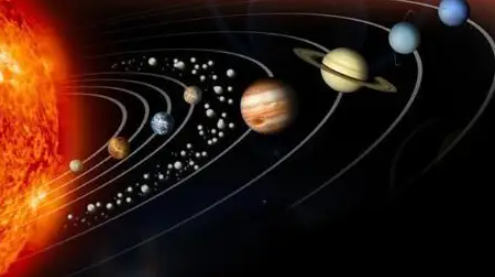
The solar system is far more than just a collection of eight major planets orbiting a central star. It is a dynamic environment filled with intricate structures and smaller celestial bodies that hold the keys to understanding our cosmic history. Among the most visually stunning and scientifically intriguing of these features are planetary rings, the small moons of Mars, and the dwarf planet Ceres. Each of these entities tells a unique story of gravitational struggle, violent collisions, and slow, methodical accretion over billions of years.
By examining the latest data from missions like NASA’s Dawn and the observations of the Martian surface, scientists are reconstructing the timeline of our solar system. This guide delves into the mechanisms that create the shimmering rings of gas giants, the debate surrounding the capture of Phobos and Deimos, and the chemical composition that suggests Ceres may have migrated from the outer reaches of the solar system to its current home in the asteroid belt.
The Mechanics of Planetary Ring Formation
Planetary rings are not solid sheets of material; rather, they are composed of billions of individual particles of ice, rock, and dust, ranging in size from microscopic grains to the size of large buildings. While Saturn is the most famous for its spectacular ring system, all four of the outer gas giants—Jupiter, Saturn, Uranus, and Neptune—possess rings of varying density and composition. The formation of these rings is a subject of intense study, involving complex gravitational dynamics and the history of moon destruction.
The Roche Limit and Tidal Disruption
One of the primary theories regarding ring formation involves the Roche Limit. This is the theoretical distance from a planet within which the tidal forces of the planet are stronger than the internal gravity holding a satellite together. If a moon or a large comet wanders inside this limit, the gravitational pull on the side closest to the planet is significantly stronger than the pull on the far side. This differential force effectively “shreds” the object into countless fragments.
- Tidal Forces: The stretching effect caused by a planet’s gravity that can overcome the structural integrity of a small body.
- Fragment Distribution: Once shredded, the debris spreads out into a flat disk due to the conservation of angular momentum and frequent collisions between particles.
- Orbital Stability: Over time, these particles settle into stable orbits, creating the distinct bands we observe from Earth.
Collisions and Cometary Capture
Beyond the Roche Limit theory, many scientists believe that rings are the result of massive collisions. When two small moons collide, or when a moon is struck by a large asteroid or comet, the resulting debris field can populate a ring system. Furthermore, some rings may be formed by the capture of passing comets or Kuiper Belt objects that were pulled into orbit and subsequently broken apart by the planet’s gravity or atmospheric drag. This process explains why some rings are composed primarily of water ice (like Saturn’s) while others are darker and more carbonaceous (like those of Uranus).
The Martian Moon Enigma: Phobos and Deimos
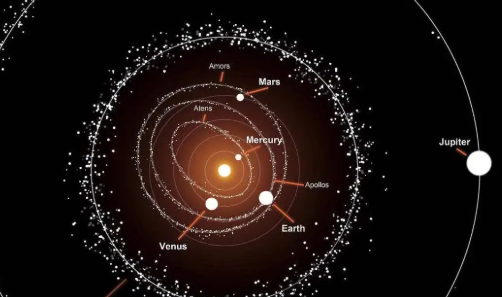
Mars possesses two tiny, lumpy moons: Phobos and Deimos. Unlike Earth’s Moon, which is large and spherical, the Martian moons look more like captured asteroids. For decades, astronomers have debated whether these moons were indeed snared by Mars’ gravity or if they formed in place following a catastrophic impact. This debate is central to our understanding of how terrestrial planets interact with the surrounding debris of the early solar system.
The Asteroid Capture Hypothesis
The visual appearance and spectral signatures of Phobos and Deimos strongly resemble D-type asteroids, which are common in the outer asteroid belt. They are dark, low-density bodies composed of carbon-rich materials. This led to the hypothesis that Mars used its gravity to “capture” these passing rocks. However, the capture theory faces a significant hurdle: the orbits of Phobos and Deimos are nearly perfectly circular and aligned with Mars’ equator. A captured object would typically have a highly elliptical or inclined orbit unless a secondary mechanism, such as a thick primitive atmosphere, provided enough drag to circularize their paths.
The Giant Impact Theory
An alternative theory, gaining popularity through computer simulations, suggests that a large object—perhaps the size of a protoplanet—slammed into Mars early in its history. This impact would have ejected a massive amount of debris into orbit, forming a disk around the planet. Over time, this material would have coalesced into several moons. While most of these moons would have eventually crashed back into Mars, Phobos and Deimos could be the final survivors of this violent process. This theory better explains the circular, equatorial orbits of the moons, even if their surface composition remains a mystery.
| Feature | Phobos | Deimos |
|---|---|---|
| Mean Radius | 11.1 km | 6.2 km |
| Orbital Period | 7.66 hours | 30.35 hours |
| Surface Composition | Carbonaceous Chondrite | Carbonaceous Chondrite |
| Orbital Fate | Spiraling inward (will crash) | Spiraling outward (will escape) |
Ceres: The Evolution of a Protoplanet
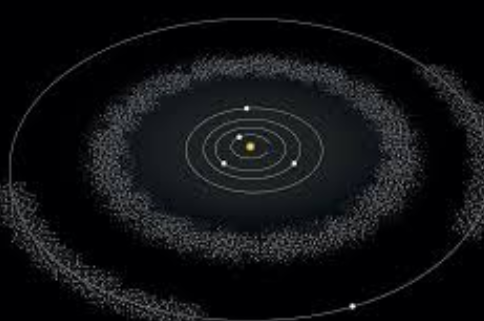
Located in the heart of the asteroid belt, Ceres is the largest object between Mars and Jupiter and is classified as a dwarf planet. Unlike its irregular neighbors, Ceres is spherical, suggesting it has undergone differentiation—the process where heavier materials sink to the core while lighter materials rise to the surface. Ceres is effectively a “fossil” from the early solar system, a protoplanet that never quite reached the size of a full planet due to the gravitational interference of Jupiter.
From Dust to Differentiated Body
Ceres began its life as a collection of dust and ice in the solar nebula. As it grew through accretion, internal heat—generated by the decay of radioactive isotopes—caused the interior to melt. This allowed a rocky core to form, surrounded by a mantle composed of water ice and clay minerals. Recent data from the Dawn spacecraft has even suggested the presence of a subsurface “brine” or salty ocean, making Ceres a primary target for astrobiological research.
The Ammonia Mystery and Migration
One of the most startling discoveries about Ceres is the presence of ammonia-rich clays on its surface. Ammonia ice is typically found in the colder, outer regions of the solar system, beyond the “frost line” where temperatures are low enough for volatile compounds to freeze. The presence of these minerals on Ceres suggests two possibilities: either Ceres formed much further out (perhaps near Neptune) and migrated inward, or it incorporated material that drifted into the inner solar system from the outer reaches. This discovery reshapes our understanding of how material was redistributed during the chaotic early stages of planetary formation.

Comparative Analysis of Small Celestial Bodies
When we look at planetary rings, the moons of Mars, and Ceres together, we see a pattern of gravitational dominance and environmental adaptation. Rings represent the destructive power of gravity within the Roche Limit. Mars’ moons represent the balance between capture and impact-driven formation. Ceres represents the survival of a protoplanet in a region dominated by the gravitational “bullying” of Jupiter.
The Role of Volatiles and Ice
Ice plays a critical role in all three phenomena. In planetary rings, ice provides the high reflectivity we see in Saturn’s bands. In the case of Ceres, ice is a major constituent of its mantle and possibly its geological activity (cryovolcanism). Even the Martian moons are thought to potentially harbor small amounts of water ice deep within their interiors, hidden beneath a layer of regolith. The distribution of these volatiles across the solar system is a roadmap for scientists trying to trace the movement of water—and the potential for life—throughout the cosmos.
Future Exploration and Missions
The study of these bodies is far from over. Future missions, such as the Japanese MMX (Martian Moons eXploration), aim to land on Phobos and return a sample to Earth. This could finally settle the capture vs. impact debate. Similarly, proposals for follow-up missions to Ceres aim to explore its “bright spots” (salt deposits) and investigate the habitability of its subsurface brines. As our technology improves, so too will our understanding of these celestial building blocks.
Frequently Asked Questions (FAQ)
- Q1: Why doesn’t Earth have rings like Saturn?
- Earth lacks rings primarily because it does not have a large enough reservoir of debris or a moon that has crossed its Roche Limit. Additionally, Earth’s proximity to the Sun means that ice—the primary component of bright rings—would sublimate (turn to gas) due to solar radiation. The rings of the outer planets are stable because they are far enough from the Sun to remain frozen.
- Q2: Will Mars’ moon Phobos eventually collide with the planet?
- Yes. Phobos is currently spiraling inward toward Mars at a rate of about 1.8 meters every century. In approximately 30 to 50 million years, it will either cross the Roche Limit and be torn apart into a ring or crash directly into the Martian surface, creating a massive impact crater.
- Q3: Is Ceres considered a planet or an asteroid?
- Ceres is officially classified as a dwarf planet. While it resides in the asteroid belt, it is much larger and more complex than a typical asteroid. It has enough gravity to have pulled itself into a spherical shape and has a differentiated internal structure, which distinguishes it from the irregular, rocky asteroids it shares space with.
- Q4: How did the “bright spots” on Ceres form?
- The bright spots, most notably in Occator Crater, are primarily composed of sodium carbonate (a type of salt). Scientists believe these deposits were left behind when briny water from the interior reached the surface and evaporated. This process suggests that Ceres was geologically active in the relatively recent past.
- Q5: Can planetary rings form around small bodies like asteroids?
- Surprisingly, yes. Astronomers have discovered rings around the centaur Chariklo and the dwarf planet Haumea. This proves that ring formation is not exclusive to giant planets and can occur around any body with the right gravitational conditions and a source of debris.